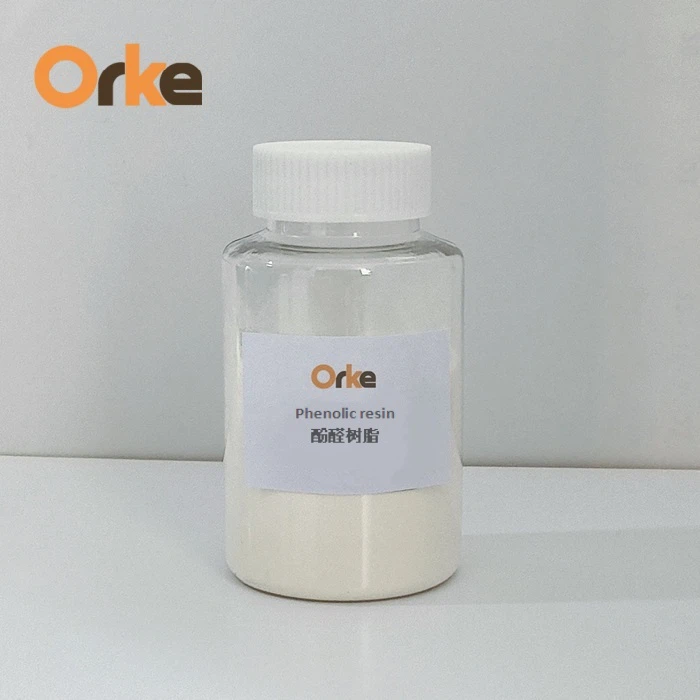

The quality of fireworks products depends not only on the combustion system and coloring materials, but also on the binding of components, storage stability, and batch consistency. For fireworks manufacturers, selecting the right binder helps control production quality and reduce performance variation.
Phenolic resin has good heat resistance, mechanical properties, and adjustable curing characteristics, and is widely used in industrial bonding and composite materials. However, whether it is suitable for fireworks products must be judged on the basis of the specific resin grade, application conditions, and safety evaluation results. Industrial-grade phenolic resin cannot simply be used directly in pyrotechnic systems.
1. The Role of Phenolic Resin in Fireworks Applications
Phenolic resin is a class of polymers formed by the condensation reaction of phenolic compounds with aldehyde compounds. Depending on synthesis conditions, molecular structure, and curing system, products with different processing and final performance characteristics can be obtained [1].
In pyrotechnic systems, binders are mainly used to maintain the binding state and uniformity of material components. Publicly available pyrotechnic chemistry literature indicates that dextrin is a common firework binding material, but the requirements for binders differ across applications [2][3].
Therefore, Phenolic Resin For Fireworks should be regarded as an application-specific material requiring dedicated validation, not as a universal binder naturally suitable for all fireworks products.
2. Performance Aspects to Focus on for Fireworks-Grade Phenolic Resin
For procurement teams, the following four aspects deserve particular attention:
(1) Processing and Curing Characteristics
Resin type, curing behavior, viscosity, softening characteristics, and batch stability all affect actual processing performance. Different phenolic resins have different curing behaviors, and suitability cannot be judged from the product name alone [1].
(2) Moisture and Storage Stability
Moisture can affect the curing process and final material properties of phenolic resin. He, Riedl, and Aït-Kadi (2003) showed that in powdered phenol–formaldehyde resol resins, water participates in the curing system and its content affects the curing process [4]. Note on system boundary: this study was conducted on resol systems. For the novolac + HMTA systems commonly used in fireworks, the effect of moisture must be validated separately and cannot be directly inferred from resol data.
Procurement should require suppliers to provide moisture specifications under clearly defined test conditions, and evaluate them in combination with actual packaging, transport, and storage environments-rather than judging product quality solely from marketing descriptions such as "moisture-proof" or "low hygroscopicity."
(3) Thermal Decomposition and Emission Behavior
The thermal decomposition behavior of phenolic resin depends on resin structure, synthesis conditions, temperature, and surrounding atmosphere. Bouajila et al. (2003) tracked changes in volatile compounds during thermal degradation of crosslinked phenolic resins in controlled atmospheres (inert and oxidizing) [5]. Johnston, Doyle, and Orzel (1988) reported that the major decomposition products of phenolics include carbon monoxide (CO), phenols, cresols, and small amounts of formaldehyde, with the specific composition and release quantity depending on resin structure, atmosphere, and temperature program [6].
Therefore, it cannot be broadly claimed that phenolic resin produces only carbon dioxide and water after combustion, nor can it be directly defined as a non-toxic material. Practical application requires attention to relevant emissions, occupational exposure, and applicable regulations [7].
(4) Product Consistency and Quality Control
For batch production enterprises, stable raw-material quality is more important than pursuing a single performance indicator. Attention should focus on particle size (for powder products), moisture, free phenol, free formaldehyde, and batch-to-batch performance variation.
Reference anchor: In industry practice, pyrotechnic-grade novolac typically targets free phenol below 1.0% and free formaldehyde below 0.5%. These are directional reference values, not universal guarantees; specific limits must be confirmed with the supplier TDS and batch COA.
3. Why Phenolic Resins for Different Applications Cannot Be Substituted Arbitrarily
Phenolic resins are highly application-specific. For example:
- Phenolic Resin For Oil Fields: focuses on bonding and medium resistance in specific oilfield environments.
- Phenolic Resin For Friction Materials: focuses on thermal stability and mechanical properties required for friction materials.
- Phenolic Resin For Composite Materials: focuses on composite processing and interfacial bonding requirements.
- Electronic Grade Phenolic Resin: focuses on electrical performance and purity control required for electronic materials.
Although these products belong to the phenolic resin family, their formulation design, quality indicators, and performance requirements may differ significantly. Likewise, ordinary industrial-grade phenolic resin cannot be deemed suitable for fireworks production merely because of good heat resistance. Validation must be carried out against the actual application.
4. What Fireworks Manufacturers Should Verify When Procuring Phenolic Resin
Procurement teams are advised to request the following documents from suppliers:
- TDS (Technical Data Sheet): to confirm resin type, main performance characteristics, and recommended application range.
- SDS (Safety Data Sheet): to understand chemical hazards, storage, and occupational protection requirements.
- COA (Certificate of Analysis): to verify moisture, free phenol, free formaldehyde, and other agreed quality indicators.
- Quality stability documentation: to understand batch consistency, shelf life, packaging, and storage conditions.
- Application validation records: to confirm whether the product has real, traceable test records for the target application.
It should be noted that fireworks are products with special fire and explosion risks, and their manufacture and storage must comply with applicable safety regulations. NFPA 1124 (2026 edition) sets out relevant requirements for the manufacture, transportation, and storage of fireworks and pyrotechnic articles [8].
Fireworks-Grade Phenolic Resin Procurement Inquiry Parameter Table
| Parameter | What to Confirm | Why It Matters |
|---|---|---|
| Resin type | Novolac (with HMTA) or resole | Determines curing system and processing window |
| Free phenol / free formaldehyde | Batch COA; directional reference: free phenol ≤1.0%, free formaldehyde ≤0.5% | Reduces exposure risk and early-ignition pathways |
| Particle size (for powder) | D10/D50/D90 and span; sieve or laser diffraction data | Affects dispersion uniformity and burn-rate consistency |
| Moisture | Supplier-specified test method and limit | Affects curing behavior and storage stability |
| Curing window | DSC curve or supplier-recommended cure schedule | Ensures compatibility with existing production line |
| Application validation | Traceable test records in a representative pyrotechnic formulation | Confirms actual suitability, not just nominal specification |
5. How to Select the Right Phenolic Resin For Fireworks
The right phenolic resin is not the one with the highest parameters, but the one whose performance best matches the target application.
For fireworks manufacturers, procurement decisions should comprehensively consider material performance, production stability, supplier quality-management capability, and regulatory requirements.
If you are looking for phenolic resin for fireworks applications, you are welcome to contact us with your target application, product form, and quality requirements.
We can help evaluate suitable grades based on actual product specifications and provide corresponding TDS, SDS, COA, and other technical documents to help you judge product suitability and reduce raw-material selection risk.
Welcome to contact us for product technical documents and procurement quotations, and to further discuss your phenolic resin procurement needs.
What This Article Does NOT Claim
- This article does not claim that phenolic resin is suitable for all fireworks products. Traditional binders such as dextrin remain common choices in some scenarios.
- This article does not claim that the moisture and thermal-decomposition data cited here can be directly extrapolated to all phenolic systems. Resol and novolac + HMTA systems have different curing chemistry, and conclusions must be validated for the specific system.
- This article does not provide specific formulation ratios, curing process parameters, or safety operating procedures. These must be developed and validated by the manufacturer under applicable regulations.
- The conclusions of the cited literature are valid only under the specific conditions of each study.
References
- Pizzi, A., & Ibeh, C. C. (2022). Phenol-Formaldehyde Resins. In Handbook of Thermoset Plastics, 4th Edition, pp. 13–40. Elsevier. DOI: 10.1016/B978-0-12-821632-3.00013-0. [General reference for resin types, curing behavior, and processing characteristics; see the section on phenolic resin curing and processing.]
- University of Nebraska–Lincoln, Department of Chemistry. (2024). Rebecca Lai and the Chemistry of Fireworks. [B/C-level university outreach webpage, used as background information for the statement that dextrin is a common firework binding material; not a peer-reviewed source.]
- Mocella, C., & Conkling, J. A. (2019). Chemistry of Pyrotechnics: Basic Principles and Theory, 3rd Edition. CRC Press. [Authoritative pyrotechnic chemistry reference; see the chapter on binders and pyrotechnic compositions.]
- He, G., Riedl, B., & Aït-Kadi, A. (2003). Curing Process of Powdered Phenol-Formaldehyde Resol Resins and the Role of Water in the Curing Systems. Journal of Applied Polymer Science, 89(5), 1371–1378. DOI: 10.1002/app.12417. [Study conducted on powdered resol systems; the effect of moisture on novolac + HMTA systems must be validated separately.]
- Bouajila, J., et al. (2003). Phenolic Resins (IV): Thermal Degradation of Crosslinked Resins in Controlled Atmospheres. Polymers and Polymer Composites, 11(5), 345–357. DOI: 10.1177/096739110301100501. [Tracks changes in volatile compounds during thermal degradation in inert and oxidizing atmospheres.]
- Johnston, P. K., Doyle, E., & Orzel, R. A. (1988). Phenolics: A Literature Review of Thermal Decomposition Products and Toxicity. Journal of the American College of Toxicology, 7(2), 201–220. DOI: 10.3109/10915818809014520. [Reports that major decomposition products of phenolics include CO, phenols, cresols, and small amounts of formaldehyde, depending on resin structure, atmosphere, and temperature program.]
- Pośniak, M., Kozieł, E., & Jeżewska, A. (2001). Occupational Exposure to Harmful Chemical Substances While Processing Phenol-Formaldehyde Resins. International Journal of Occupational Safety and Ergonomics, 7(3), 263–276. DOI: 10.1080/10803548.2001.11076490. [Reference for occupational exposure during phenolic resin processing.]
- National Fire Protection Association (NFPA). (2026). NFPA 1124: Code for the Manufacture, Transportation, and Storage of Fireworks and Pyrotechnic Articles. [Current edition; establishes fire and life safety requirements for the manufacture, transportation, and storage of fireworks and pyrotechnic articles.]