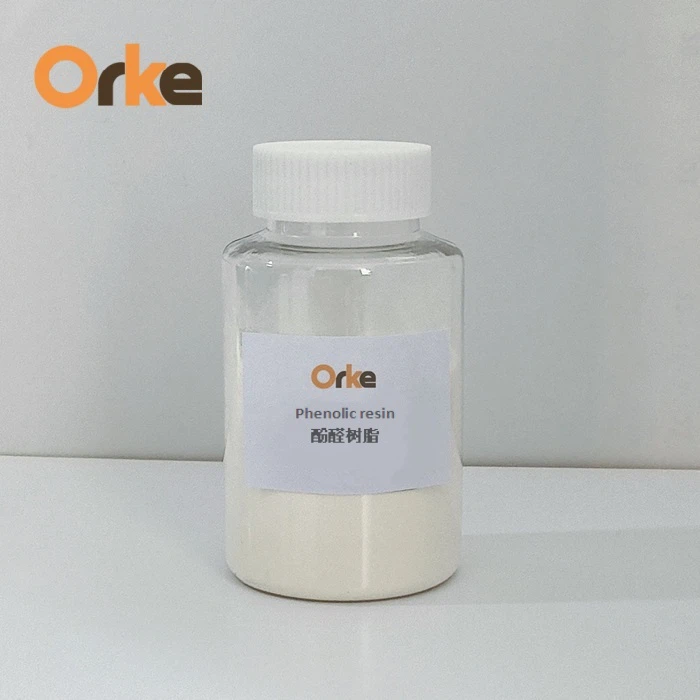

In fireworks manufacturing, binder selection is far more than "sticking the powder together." It determines whether a star can maintain structural integrity during the brief window between launch and burst, and it directly affects burn-rate consistency, storage life, and batch-to-batch reproducibility. The question most frequently asked by procurement teams is: how much more expensive is Phenolic Resin For Fireworks than traditional binders such as dextrin and starch, and is the premium worth it? Answering this requires examining four dimensions: thermal decomposition temperature, chemical compatibility, batch consistency, and life-cycle cost.
1. Thermal Stability: More Than "High Temperature Resistance"
From ignition to completion of the pyrotechnic effect, the binder is exposed to a rapidly rising gas-temperature environment. The critical requirement is that it must maintain sufficient mechanical integrity during the very short interval before the composition begins to react. Thermogravimetric studies of phenolic resin pyrolysis show a multi-stage degradation behavior [1]; literature-reported first-stage decomposition onset values for cured phenolic resins fall in the approximate 340–480 °C range, with the main degradation stage extending to roughly 460–640 °C - exact values depend on the resin system, cure degree, heating rate, and atmosphere, and should be read from batch-specific TGA curves rather than treated as fixed thresholds [1]. In comparison, dextrin-the most commonly used water-soluble binder in fireworks-degrades at substantially lower temperatures; literature-reported values for starch/dextrin-based binders concentrate in the approximate range of 200–340 °C, where glycosidic-bond cleavage dominates, depending on dextrin type and test conditions [7]. This gap means that in formulations containing highly active metal fuels or strong oxidizers, a dextrin matrix may lose its binding function before the composition enters the main reaction stage, leading to star fragmentation or uncontrolled burn rate.
It should be noted that this does not mean phenolic resin can "withstand" the thousands of degrees of the flame front. Its value lies in maintaining the structural integrity of the grain during the millisecond-to-second time scale between ignition and burst, so that all components participate in the reaction according to the designed time sequence. Ouyang's study on the Ba(NO₃)₂/Mg system provides quantitative evidence: the phenolic-resin-bound formulation achieved a peak combustion temperature of 1,594.5 °C and a burn rate of 12.5 mm/s, compared with only 1,432.6 °C and 9.0 mm/s for the nitrocellulose-bound system [2]. The mechanism reported in the study is an exothermic interaction between the phenolic resin and the Ba(NO₃)₂ oxidizer that occurs before the Mg–oxidizer reaction, contributing heat release ahead of the main metal-fuel reaction [2]. [This mechanism is specific to the Ba(NO₃)₂/Mg system studied; it is not asserted as a general explanation for all phenolic-bound formulations.]
2. Chemical Compatibility and Storage Stability
Potassium nitrate, potassium perchlorate, and certain metal salts in pyrotechnic compositions can attack the binder matrix under humid conditions. Dextrin is highly hygroscopic; after absorbing moisture, its binding strength decreases and the burn rate drifts. After curing, phenolic resin forms a highly crosslinked hydrophobic network; the 24-hour water absorption of cured phenolic resins is typically on the order of a few tenths of a percent, with the exact value dependent on formulation, cure degree, and test conditions - supplier batch data measured per ASTM D570 [6] should be used as the acceptance basis rather than any generalized figure. This gives cured phenolic a clear advantage in high-humidity production or storage environments. Redkar, Mujumdar, and Singh, in a study on the Mg/KNO₃/phenolic resin system, found that the performance of the formulation was not significantly affected after exposure to extreme environments at 45 °C and −26 °C, and that the presence of phenolic resin reduced the ignition temperature of the system [3].
This has direct implications for procurement decisions: if the target market is a high-temperature, high-humidity region, or if the product needs to be stored across seasons, the batch-rejection and return costs caused by binder hygroscopicity often exceed the purchase-price difference of the resin itself.
3. Why "All Phenolic Resins" Are Not Interchangeable
Phenolic resin is a large material family, and different application scenarios have fundamentally different requirements for molecular weight distribution, curing kinetics, and impurity limits. Phenolic Resin For Oil Fields focuses on stability in brine and high-temperature downhole environments. Phenolic Resin For Friction Materials emphasizes wear and braking performance under friction-heat cycles. Phenolic Resin For Composite Materials pursues mechanical strength and interfacial adhesion. Electronic Grade Phenolic Resin is designed around high purity and low ionic migration for copper-clad laminates and encapsulation. None of these grades is designed to "decompose at a controlled rate in a pyrotechnic composition while minimizing residue." Direct substitutes may fail to meet basic pyrotechnic manufacturing requirements in batch consistency, burn-rate predictability, or residual monomer levels. Pyrotechnic-grade products require dedicated specifications for particle size distribution, cure profile, and free phenol/free formaldehyde limits; their inspection items differ systematically from the industrial grades above.
4. The Real Cost Picture: Unit Price Is Not Total Cost
From published market surveys, the raw-material cost of traditional binders such as dextrin is generally lower than that of pyrotechnic-grade phenolic resin. However, the absolute price spread depends strongly on purchase volume, region, and grade; small-quantity retail prices can be several times higher than bulk prices [8]. Therefore, any unit-price comparison must specify the procurement volume and regional market. More importantly, this comparison ignores three key cost items.
The first is scrap rate. The hygroscopicity of dextrin and batch-to-batch burn-rate drift directly increase scrap rates in star forming and drying. In scaled production, even a few percentage points of scrap-rate reduction can cover the resin price difference. The second is process stability from consistency. Phenolic resin produced by synthetic routes has far smaller batch fluctuations in molecular weight and curing behavior than natural-source dextrin or gum arabic, and burn-rate consistency and color purity are precisely the core quality indicators of commercial fireworks. The third is storage and transport losses. A hydrophobic cured resin matrix reduces dependence on packaging seal rating and lowers humidity-control costs and long-term inventory deterioration risks in warehousing.
From a life-cycle perspective, the premium paid for pyrotechnic-grade phenolic resin buys predictability: predictable burn rate, predictable storage life, and predictable batch output. For commercial manufacturers whose quality bottom line is "every shot works as designed," the return on this premium usually appears as reduced scrap, lower rework, and fewer customer complaints.
5. Safety and Compliance Are Not Add-Ons
Pyrotechnic compositions are regulated energetic materials. In the U.S. market, consumer fireworks must comply with CPSC 16 CFR 1500 and 1507; as of the current eCFR text, phenolic resin is not listed in the prohibited-chemicals list of 16 CFR 1507.2 [4]. NFPA 1124 sets systematic fire-safety and separation requirements for the manufacture, transportation, and storage of fireworks and pyrotechnic articles, and binder selection indirectly affects dust control, mixing safety, and the thermal stability of finished products [5]. It is important to distinguish: uncured resin may contain residual phenol and formaldehyde, which are toxic and flammable; therefore, pyrotechnic-grade products typically target free formaldehyde below 0.5% and free phenol below 1.0% as supplier specification limits to reduce exposure risk during mixing - these are supplier-spec typical targets, not regulatory thresholds [9]. Verifying the residual-monomer data and thermal decomposition curve in the supplier's TDS is a basic step in assessing whether incoming material meets pyrotechnic manufacturing safety expectations.
6. Back to the Procurement Decision
If your product line consists mainly of display shells and stars with large volume, long storage cycles, high-humidity markets, or strict burn-rate consistency requirements, the premium for pyrotechnic-grade phenolic resin has a clear technical basis. If the product is small-batch, short-cycle, and extremely cost-sensitive low-end consumer goods, traditional binders may still be adequate in some scenarios. In either case, making decisions on "price per kilogram" alone will miss the real costs of scrap, rework, and batch failure. It is recommended that, at the sample stage, suppliers be required to provide same-batch thermal analysis curves, residual-monomer data, and burn-rate consistency records for at least three batches, and that actual costs be calculated using your own production line's scrap rate and storage-test data.
7. Pyrotechnic-Grade Phenolic Binder Procurement Verification Checklist
| Verification Item | Required Information | Why It Matters |
|---|---|---|
| Thermal decomposition onset | TGA curve for the specific batch; first-stage onset and main decomposition stage | Confirms thermal stability window relative to the composition; literature ranges are orientation values only |
| Free phenol / free formaldehyde | Batch COA; typical supplier-spec targets: free phenol ≤1.0%, free formaldehyde ≤0.5% (not regulatory thresholds) | Reduces exposure risk during mixing and storage |
| Particle size distribution | D10/D50/D90 and span; sieve or laser diffraction data | Affects dispersion uniformity and burn-rate consistency |
| Cure profile | DSC curve or supplier-recommended cure schedule | Ensures compatibility with existing production line |
| Burn-rate consistency | Records for at least three batches in a representative formulation | Directly linked to batch-to-batch reproducibility |
| Water absorption | 24-hour water absorption per ASTM D570 or equivalent, batch-specific | Indicates storage stability in humid environments |
What This Article Does NOT Claim
- This article does not claim that phenolic resin is superior to dextrin in every fireworks formulation. Small-batch, short-cycle, extremely cost-sensitive low-end consumer goods may still be suitable for traditional binders.
- This article does not claim that the "340–480 °C / 460–640 °C" TGA ranges are universal decomposition temperatures for all pyrotechnic-grade phenolic resins. They are literature-orientation ranges; specific values depend on resin grade, cure degree, heating rate, atmosphere, and test conditions, and batch-specific TGA curves govern.
- This article does not claim the "few tenths of a percent" 24-hour water absorption figure as a specification value. It is an order-of-magnitude orientation; per-batch ASTM D570 data from the supplier are the acceptance basis.
- This article does not assert the Ouyang combustion mechanism as a universal explanation. The reported exothermic resin–Ba(NO₃)₂ interaction prior to the Mg reaction is specific to that system; binder combustion behavior in other formulations must be measured.
- This article does not claim any specific unit-price range is universally applicable to pyrotechnic-grade phenolic resin. Prices vary with purchase volume, region, and grade; supplier quotations and scrap-rate data should be used for actual cost calculation.
- This article does not provide specific formulation ratios or process parameters. These must be developed and validated by the manufacturer under applicable regulations.
If you would like to further discuss binder selection for a specific formulation system, sample arrangements, or a technical data package, please contact us.
References
- Zheng, F., Ren, Z., et al. "Elucidating Multiple-Scale Reaction Behaviors of Phenolic Resin Pyrolysis via TG-FTIR and ReaxFF Molecular Dynamics Simulations." Journal of Analytical and Applied Pyrolysis, 2021, 157: 105222. [TG-FTIR characterization of multi-stage phenolic resin pyrolysis under inert atmosphere. Literature-orientation ranges commonly reported for cured phenolic resins: first-stage decomposition onset approximately 340–480 °C; main degradation stage approximately 460–640 °C. Exact values depend on resin system, cure degree, heating rate, and atmosphere and should be read from batch-specific TG curves.]
- Ouyang, D.-H. "Effect of Different Binders on the Combustion Characteristics of Ba(NO₃)₂/Mg-containing Pyrotechnic Mixtures." Central European Journal of Energetic Materials, 2013, 10(2), 209–215. [Phenolic-resin-bound system: peak combustion temperature 1,594.5 °C, burn rate 12.5 mm/s; nitrocellulose-bound system: 1,432.6 °C, 9.0 mm/s. Mechanism per the source: an exothermic reaction between the phenolic resin and Ba(NO₃)₂ occurs before the Mg/Ba(NO₃)₂ reaction. PR formulation in the study: Ba(NO₃)₂ 56.5 wt%, Mg 38.5 wt%, PR 5 wt%.]
- Redkar, A. S., Mujumdar, V. A., & Singh, S. N. "Study on Magnesium-Based Pyrotechnic Composition as a Priming Charge." Defence Science Journal, 1996, 46(1), 41–47. DOI: 10.14429/dsj.46.4048. [Mg/KNO₃/phenolic resin system: performance under extreme hot (45 °C) and cold (−26 °C) environmental conditions not significantly affected; phenolic resin plays a vital role in reducing the ignition temperature of the Mg/KNO₃ system. Note: some repository metadata display an incorrect year; 1996 is confirmed by the journal volume/issue record.]
- U.S. Consumer Product Safety Commission. 16 CFR Part 1500: Hazardous Substances and Articles; Administration and Enforcement Regulations; 16 CFR Part 1507: Fireworks Devices. Washington, DC: CPSC. [As of the current eCFR text, phenolic resin is not listed in the prohibited-chemicals list of 16 CFR 1507.2; regulatory lists are subject to revision and should be re-verified against the current eCFR at the time of procurement.]
- National Fire Protection Association. NFPA 1124: Code for the Manufacture, Transportation, and Storage of Fireworks and Pyrotechnic Articles. Quincy, MA: NFPA, 2026 edition. [Current-edition title; covers manufacture, transportation, and storage, including dust-control and separation requirements. Earlier editions also covered retail sales.]
- ASTM International. ASTM D570: Standard Test Method for Water Absorption of Plastics. West Conshohocken, PA: ASTM International. [Reference method for 24-hour water absorption; batch-specific supplier data measured per this method constitute the acceptance basis.]
- Kaczmarska, K., et al. (2017). Thermoanalytical (TG-DTG-DSC) study of a starch-based binder for casting applications. [Reported glycosidic-bond cleavage and main degradation stage concentrated in the 200–342 °C range for starch-derived binders; used here to anchor the dextrin degradation range. Full bibliographic details to be confirmed against the original publication. Values vary by dextrin/starch type and test conditions - B-level literature range.]
- Commercial market survey data for dextrin and phenolic resins, 2026. [B/C-level commercial data; exact prices vary by region, purchase volume, and grade. Bulk and retail channels can differ by an order of magnitude.]
- Industry specification summaries for pyrotechnic-grade phenolic resin. [Typical supplier-spec targets: free phenol ≤1.0%, free formaldehyde ≤0.5%; these are supplier specification values, not regulatory thresholds, and vary by supplier and grade.]