


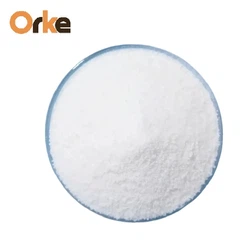

If you have held a flexible plastic film that resists tearing, a hot-melt adhesive that seals a cardboard box in seconds, or a paint that dries to a glossy finish, there is a strong likelihood that hydrogenated dicyclopentadiene (DCPD) resin contributed to that performance. Over the past several decades, this material has evolved from an underutilized byproduct of ethylene cracking into a foundational tackifier and modifier in modern industrial chemistry. Its history is one of catalytic innovation, waste valorization, and precise adaptation to modern manufacturing standards.
Origins: The C5 Fraction and Early Hydrocarbon Resins
The story begins in the mid-20th century, when the expansion of steam cracking to meet global demand for olefins generated substantial light hydrocarbon byproduct streams. Among these, the raw C5 stream contained significant quantities of cyclopentadiene (CPD). Because CPD readily undergoes a thermal Diels-Alder reaction to form dicyclopentadiene (DCPD), refiners and petrochemical plant operators isolated this reactive dimer. Initially, limited high-value processing pathways existed, leading operators to burn excess streams as fuel or process them into coarse, unrefined resins.
In the 1950s, commercial efforts focused on polymerizing C5 diolefins and cyclic monomers. This work yielded first-generation C5 hydrocarbon resins-cost-effective tackifiers utilized in adhesives, rubber compounding, and road marking paints. However, early unhydrogenated C5 resins exhibited pronounced technical drawbacks: darker initial color (Gardner 11–18), unsaturated double bonds prone to oxidation, thermally induced discoloration, and distinct odors. These baseline properties restricted early aliphatic resins to low-end applications where optical clarity and long-term thermal stability were not required.
DCPD Resins: Improved Properties but Persistent Drawbacks
By the early 1960s, process chemists established that isolating and thermal-polymerizing purified DCPD generated resins with improved cohesive strength and elevated ring-and-ball softening points compared to mixed C5 streams. Unhydrogenated DCPD resins formed cycloaliphatic backbone structures that enhanced thermal resistance and polymer compatibility.
Despite these advancements, residual double bonds within the bicyclic core remained susceptible to oxidative degradation. Upon exposure to elevated processing temperatures, UV light, or atmospheric oxygen, these unhydrogenated resins underwent crosslinking and chromophore formation, resulting in yellowing, embrittlement, and loss of adhesive tack. These aging characteristics limited unhydrogenated DCPD resins in clear packaging films, light-colored hygiene hot-melt adhesives, and high-performance exterior coatings.
Throughout the 1960s and 1970s, industrial research addressed olefin saturation. Early catalytic hydrogenation was applied to aromatic C9 hydrocarbon resins; however, high operating pressures, high catalyst consumption, and low throughput initially restricted hydrogenated resins to specialized niches. Applying complete catalytic saturation to cycloaliphatic DCPD polymers required specialized heterogeneous catalysts that could saturate sterically hindered double bonds without cleavage of the polymer backbone.

The Hydrogenation Breakthrough: 1980s–1990s
Driven by environmental regulations limiting volatile organic compound (VOC) emissions and the industrial shift from solvent-based formulations toward solvent-free hot-melt adhesives (HMAS) and waterborne systems, demand grew for water-white, low-odor tackifiers in the 1980s.
Early fixed-bed and slurry hydrogenation trials on DCPD polymers often resulted in chain scission (depolymerization), which caused a sharp decrease in molecular weight and softening point. Advances in supported heterogeneous noble metal (e.g., Palladium, Pd) and transition metal (e.g., Nickel, Ni; Cobalt, Co) catalysts resolved this challenge during the late 1980s and early 1990s.
Supported Palladium catalysts demonstrated high selectivity for double-bond saturation with minimal impact on resin softening points and yield. Conversely, Nickel-based catalyst systems offered cost efficiency while requiring precise temperature control to mitigate minor softening point suppression caused by cycloaliphatic ring rearrangement.
Commercial production of fully hydrogenated DCPD resin expanded significantly throughout the 1990s. The fully saturated cycloaliphatic structure yielded a water-white, thermally stable tackifier with negligible odor and high resistance to oxidation.

Market Expansion: 2000s–2010s
Throughout the 2000s, adoption of hydrogenated DCPD resins accelerated across hygiene products, automated packaging, tapes, labels, and specialty coatings.
Compared to alternative tackifier classes, hydrogenated DCPD resins established a distinct technical profile. While hydrogenated C9 resins possess higher glass transition temperatures ($T_g$) and rigid aromatic/naphthenic structures suitable for aromatic block copolymers, hydrogenated DCPD resins offer superior aliphatic compatibility, balanced tack, and low density. Compared to rosin ester tackifiers, hydrogenated DCPD resins display superior thermal stability and lower acid values without susceptibility to ester hydrolysis.
During the 2010s, process optimization focused on energy integration, catalyst recycling, and feedstock purification. In parallel, sustainable chemistry initiatives explored bio-derived cyclopentadiene pathways from lignocellulosic furfural intermediates. While fossil-derived DCPD remains the primary commercial feedstock, ongoing process developments continue to assess bio-based cycloaliphatic building blocks to reduce lifecycle carbon intensity.
Current Landscape and Technical Considerations
Hydrogenated DCPD resins represent a vital product segment within the global hydrocarbon resin industry. Regional manufacturing hubs, particularly across East Asia and North America, have expanded total hydrogenation capacity to meet rising global demand in non-woven hygiene articles, automotive hot melts, and low-VOC assembly adhesives.
For formulation engineers evaluating hydrogenated DCPD resins, selection depends on key physical and chemical parameters:
| Technical Parameter | Standard Specification Range | Test Method Reference | Formulation Relevance |
| Softening Point (R&B) | 85 – 125°C (Standard); Up to 140°C (Specialty) | ASTM E28 / ISO 4625 | Controls heat resistance, open time, and application temperature window. |
| Color (Hazen / Gardner) | Water-white (Hazen < 50); Gardner ≤ 1 | ASTM D1209 / ASTM D1544 | Essential for clear adhesives, clear packaging films, and hygiene applications. |
| Number Average Molecular Weight ($M_n$) | 400 – 1,000 g/mol | Gel Permeation Chromatography (GPC) | Dictates melt viscosity, polymer compatibility, and cohesive strength. |
| Acid Value | < 0.1 mg KOH/g | ASTM D974 | Indicates structural purity; prevents reactivity with acid-sensitive polymers or catalysts. |
| Bromine Number | < 2.0 g $\text{Br}_2$/100g | ASTM D1159 | Measures residual unsaturation; lower values correlate directly with enhanced UV and thermal stability. |
Selection Framework for Formulators
To optimize adhesive and coating performance, resin selection should follow specific formulation criteria:
Base Polymer Compatibility: Hydrogenated DCPD resins demonstrate high compatibility with Polyolefin Elastomers (POE), Ethylene-Vinyl Acetate (EVA) with low-to-medium VA content, Metallocene Polyethylene (mPE), Amorphous Poly-alpha-olefins (APAO), and Styrenic Block Copolymers (SBS, SIS, SEBS).
Regulatory Compliance: For food-contact packaging adhesives, specify grades certified under FDA 21 CFR 175.105 (Adhesives) and EU Regulation (EU) No 10/2011 regarding plastic materials intended to come into contact with food.
Melt Viscosity Profiling: Select lower softening point grades (85–100°C) to reduce application temperatures in heat-sensitive non-woven assembly, or higher softening point grades (115–125°C) to enhance creep resistance in packaging adhesives exposed to high ambient temperatures.,
Comparison with Alternative Hydrogenated Resins
| Resin Type | Chemical Backbone | Key Performance Attributes | Primary Industrial Applications |
| Hydrogenated DCPD Resin | Cycloaliphatic | Balanced tack/cohesion, water-white color, low odor, broad polyolefin compatibility | Non-woven hygiene PSAs, packaging HMAs, medical tapes, specialty coatings |
| Hydrogenated C9 Resin | Hydrogenated Aromatic / Poly-cyclohexyl | High glass transition temperature ($T_g$), high hardness, excellent compatibility with styrenic end-blocks | High-temperature assembly adhesives, printing inks, rubber tackification |
| Hydrogenated C5 Resin | Saturated Linear Aliphatic | Low viscosity, excellent pressure-sensitive tack, low temperature flexibility | Packaging tapes, quick-stick hot melts, road markings |
| Hydrogenated C5/C9 Copolymer Resin | Mixed Aliphatic / Cycloaliphatic / Aromatic | Tunable compatibility, high tack, balanced shear resistance | Specialty pressure-sensitive adhesives, automotive sealant formulations |
Conclusion
The technological evolution of hydrogenated DCPD resin illustrates the value of chemical transformation and waste valorization in petrochemical manufacturing. By converting a reactive C5 cracking byproduct into a fully saturated, high-performance cycloaliphatic tackifier, the chemical industry has delivered essential raw material options for low-VOC, durable, and clear formulations. As adhesive and coating technologies progress toward lower processing temperatures and demanding regulatory environments, hydrogenated DCPD resins remain a key component in modern formulation science.
References
1,Mildenberg, R., Zander, M., & Collin, G. (2008). Hydrocarbon Resins. Wiley-VCH. https://doi.org/10.1002/9783527615179
2,Speight, J. G. (2014). The Chemistry and Technology of Petroleum (5th ed.). CRC Press. https://doi.org/10.1201/b16559
3,Gary, J. H., Handwerk, G. E., & Kaiser, M. J. (2007). Petroleum Refining: Technology and Economics (5th ed.). CRC Press. https://doi.org/10.1201/9781420051339
4,Brandrup, J., Immergut, E. H., & Grulke, E. A. (1999). Polymer Handbook (4th ed.). John Wiley & Sons.
5,Benedek, I., & Feldstein, M. M. (2009). Applications of Pressure-Sensitive Products. CRC Press. https://doi.org/10.1201/9781420059397
6,Donker, C. P., & Kanger, R. J. (1996). Process for the hydrogenation of hydrocarbon resins. U.S. Patent No. 5,502,124. U.S. Patent and Trademark Office.