



Professionals in PVC, acrylics, and coatings manufacturing are likely familiar with TBPA-short for tert-butyl peroxyacetate ( CAS 107-71-1). This peroxy initiator is widely used in free-radical polymerization, yet the market surrounding it involves complexities beyond its basic chemical function. This article examines the key challenges shaping the TBPA landscape-from supply chain dynamics to evolving regulatory requirements and shifting customer demands.
TBPA is a high-solids organic peroxide with a balanced half-life-fast enough for efficient polymerization, but stable enough for bulk handling, making it a common choice for numerous industrial processes. It is synthesized through the acid-catalyzed esterification of tert-butyl hydroperoxide (TBHP) with acetic anhydride, typically under sulfuric acid or sulfonic resin catalysis. Commercial formulations are supplied as 50% or 70–75% solutions in odorless mineral spirits or isododecane to mitigate handling hazards. Despite its reliable performance, the TBPA market faces several structural challenges.
Feedstock Volatility and Supply Fragility
A significant portion of the raw materials feeding into peroxy initiators originates from the same petrochemical feedstock pipeline that has experienced considerable volatility in recent years. Benzene and other petrochemical feedstock prices have moved within a 25–40% annual range over recent years, directly influencing initiator margins when contract terms lag. When energy prices spike, chemical plants producing basic alcohols reduce non-urgent production, which cascades down to peroxy initiators like TBPA. This dynamic is not unique to TBPA. Other free-radical initiators, including Tert-Amyl Peroxy-2-ethylhexanoate and 2,2'-Azobis(2,4-dimethylvaleronitrile) , face the same feedstock pressures, making TBPA availability increasingly tied to broader chemical market stability.
Regulatory Complexity
Peroxy compounds are reactive and classified as hazardous materials. In the EU, REACH and CLP regulations govern organic peroxides under Organic Peroxide Type C (Class 5.2) . Specifically, organic peroxides are defined under CLP Annex I, Section 2.15.1, and classified into seven categories (Types A to G) according to CLP Annex I, Section 2.15.2 based on detonation, deflagration, and thermal explosion properties. Under REACH, every organic peroxide substance manufactured in or imported into the EU at ≥1 tonne per year must be registered with the European Chemicals Agency (ECHA). These requirements entail comprehensive Safety Data Sheets (SDS), extended REACH registration obligations, and strict transport labeling under ADR/IMDG. TBPA is classified as UN 3103, Organic Peroxide Type C, Liquid for transport purposes.
In the U.S., EPA rules are tightening VOC emission limits for chemical manufacturing. In April 2023, the EPA proposed amendments to the New Source Performance Standards (NSPS) for the Synthetic Organic Chemical Manufacturing Industry (SOCMI), published in Federal Register 88(79) , estimating that the amendments would reduce VOC emissions from the SOCMI source category by approximately 1,609 tons per year. TBPA production can generate small VOC emissions, so these tightening rules add compliance pressure across the board. Different regions also maintain distinct testing requirements-a TBPA batch certified for one market may not meet another region's standards, necessitating additional testing for every new market served.
Shifting Customer Demand Profiles
The TBPA customer base has evolved considerably. A decade ago, most TBPA buyers were large PVC plants requiring high-volume, low-cost initiators. Today, small-to-medium acrylic resin manufacturers increasingly seek custom formulations-TBPA blended with other initiators to tune polymerization rates, or formulations that work at lower temperatures to reduce energy costs. For example, some customers combine TBPA with Tert-Amyl Peroxypivalate (TAPV) to achieve faster initiation without sacrificing stability.
However, TBPA's production process is not inherently flexible; equipment is configured for large-batch runs, and switching to small, custom blends is time-consuming and costly. Adjusting production schedules to run smaller batches results in higher per-unit costs, and some buyers are unwilling to absorb that premium. Additionally, the rise of sustainable polymers is reshaping expectations: more customers want initiators made with renewable feedstocks, but the infrastructure for bio-based TBPA remains in early development. Bio-based tert-butyl alcohol is being explored through pathways such as citrus waste valorization, but scaling such routes to industrial TBPA production would require major capital investment that is difficult to justify without guaranteed long-term contracts.
Quality Consistency
Quality consistency has become a more prominent concern as new players enter the TBPA market. When the author first entered this industry 15 years ago, TBPA was a relatively standardized product-most major manufacturers used similar core processes, so purity and performance were fairly consistent. In recent years, lower feedstock costs encouraged the emergence of new startup chemical companies producing TBPA with cheaper, lower-grade raw materials. There have been cases where manufacturers switching to lower-cost TBPA suppliers experienced elevated residual acetic acid levels, leading to yellowing in acrylic coatings.
This kind of inconsistency is problematic because polymerization processes are highly sensitive to initiator purity. Even a small difference in TBPA concentration or acid value can lead to uneven molecular weight distribution, compromising the final product. As a result, suppliers have had to invest more in third-party testing for every TBPA batch shipped-not only to meet regulatory requirements but also to demonstrate quality to customers affected by inconsistent product. Notably, even some large chemical manufacturers have begun sourcing TBPA from unvetted suppliers, creating a trust gap in the market.
Logistics and Storage
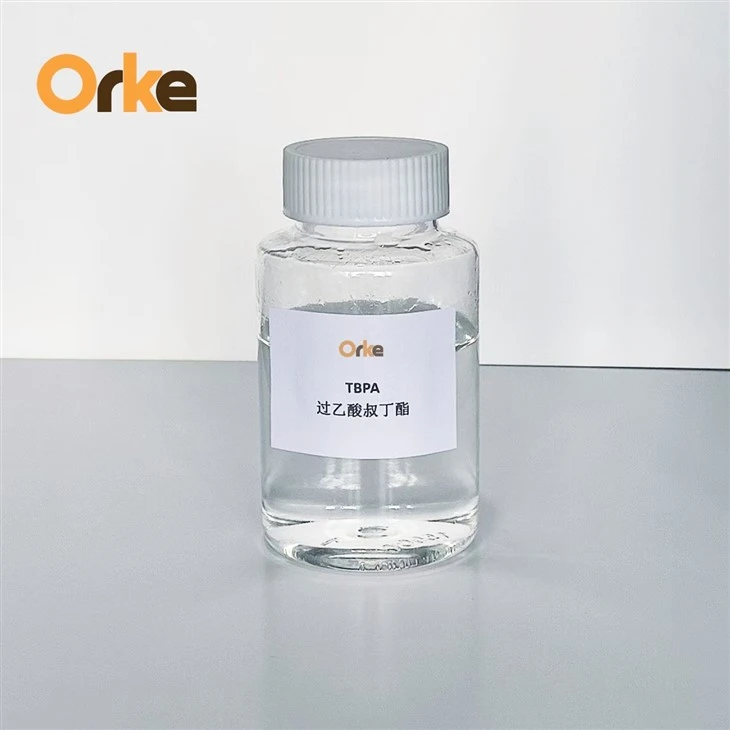
TBPA's reactive nature imposes strict temperature requirements. Commercial formulations of TBPA have a self-accelerating decomposition temperature (SADT) of approximately 70°C, determined by UN Test H.4, with a critical temperature (Tem) of 65°C and a recommended maximum storage temperature typically not exceeding 30°C. These constraints mean shipping TBPA requires temperature-controlled trucks, and storage facilities must have adequate ventilation, temperature monitoring, and pressure relief systems.
During summer months in hot climates such as Texas or the Middle East, timely delivery becomes more difficult. Shipments have been delayed due to refrigeration unit failures, requiring rerouting to cold storage facilities and significantly increasing logistical costs. Customers in tropical regions have reported that they cannot store TBPA for more than a week due to unreliable warehouse cooling, necessitating smaller, more frequent shipments and pushing up costs for both parties. For comparison, Tert-Amyl Peroxypivalate (TAPV) requires storage temperatures of -10°C or lower and has an SADT of 25°C-considerably stricter than TBPA. Similarly, Tert-Amyl Peroxyneodecanoate (TAPND) requires even more stringent cold-chain management. TBPA's storage requirements, while manageable, demand reliable cold-chain infrastructure.
Competition from Alternative Initiators
Newer initiators are emerging for specific use cases, intensifying competition. TBPA is well-suited for general polymerization, with a 10-hour half-life temperature of approximately 102°C (in benzene or odorless mineral oil). However, initiators such as Tert-Amyl Peroxyneodecanoate (TAPND) perform better for low-temperature polymerization, exhibiting a 10-hour half-life temperature of approximately 43–46°C, making it suitable for high-performance applications such as heat-sensitive adhesives and optical-grade PMMA. Similarly, TAPV has a 10-hour half-life temperature of 55°C, positioning it between TAPND and TBPA in reactivity. As customers shift toward these alternatives for better process-specific performance, TBPA's market share faces pressure. Suppliers must invest in R&D to refine TBPA formulations while balancing the need to support a top-selling product against the shift toward more specialized initiators.
For reference, the following table summarizes key thermal parameters of TBPA and related initiators:
| Initiator | CAS No. | 10-hr Half-Life Temperature (°C) | SADT (°C) | Max Storage Temp. (°C) |
|---|---|---|---|---|
| TBPA | 107-71-1 | ~102 | 70 | ≤30 |
| TAPV | 29240-17-3 | 55 | 25 | ≤-10 |
| TAPND | 13339-24-9 | ~43–46 | - | ≤10 |
Data sources: United Initiators TBPA-50-AL1 TDS; Lanzhou Auxiliary Chemical LQ-TBPA TDS; Baidu Baike TAPV entry. Half-life data measured in benzene or chlorobenzene; values may vary with solvent and concentration.
Conclusion
Operating in the TBPA market involves navigating a complex landscape-supply chain volatility, regulatory complexity, shifting customer demand, quality consistency issues, logistics challenges, and competition from alternative initiators. These challenges also drive continued investment in reliable, high-quality TBPA and transparent, adaptable supply partnerships. For manufacturers evaluating TBPA or other free-radical initiators, providing the following information will facilitate a more targeted technical discussion:
Application temperature range and polymer system (e.g., PVC suspension, acrylic solution, LDPE tubular)
Target half-life at the relevant process temperature
Current initiator system and any observed performance issues
Storage capabilities at the production site (temperature-controlled warehouse, cold chain availability)
Applicable regulatory market (EU, US, or other)
Required documentation (TDS, SDS, CoA, REACH registration status)
Our technical team is available to discuss specific application requirements and sourcing needs based on these parameters.
References
1,European Chemicals Agency. (2024). Guidance on the application of the CLP criteria, Part 2: Version 4.0. ECHA. https://echa.europa.eu/documents/10162/2324906/clp_part2_en.pdf
2,European Chemicals Agency. (2024). Substance information: tert-Butyl peroxyacetate (CAS 107-71-1). ECHA. https://echa.europa.eu
Lanzhou Auxiliary Chemical Co., Ltd. (2025). LQ-TBPA: Tert-butyl peroxyacetate technical data sheet. https://www.lzaux.com/organic-peroxides/lq-tbpa/
3,United Initiators. (2020). TBPA-50-AL1: tert-Butyl peroxyacetate safety data sheet (Version 2.0). https://www.united-initiators.com/files/TBPA-50-AL1/United_Initiators_TBPA-50-AL1_MSDS_CA_EN.pdf
4,U.S. Environmental Protection Agency. (2023, April 25). New Source Performance Standards for the Synthetic Organic Chemical Manufacturing Industry. Federal Register, *88*(79), 25080–25200. https://www.federalregister.gov