



Introduction
Phenolic resins are well-established thermosetting polymers used across a broad range of industrial applications. Their thermal, mechanical, chemical, and fire-performance characteristics depend on resin chemistry, formulation, cure state, grade, test conditions, and intended application.
Two widely recognized phenolic resin types are resole and novolac. Although both are derived from phenol and formaldehyde, their synthesis routes, curing behavior, and application profiles differ. The terms "phenolic resin" and "resole phenolic resin" should therefore not be treated as interchangeable.
This article provides an overview of major phenolic resin applications, with particular attention to areas where resole-type systems have documented roles. Other applications may rely on novolac-based or modified phenolic systems, making accurate resin identification important for procurement and engineering decisions.
Resole and Novolac Are Different Phenolic Resin Systems
Understanding the difference between resole and novolac resins is important when evaluating phenolic materials.
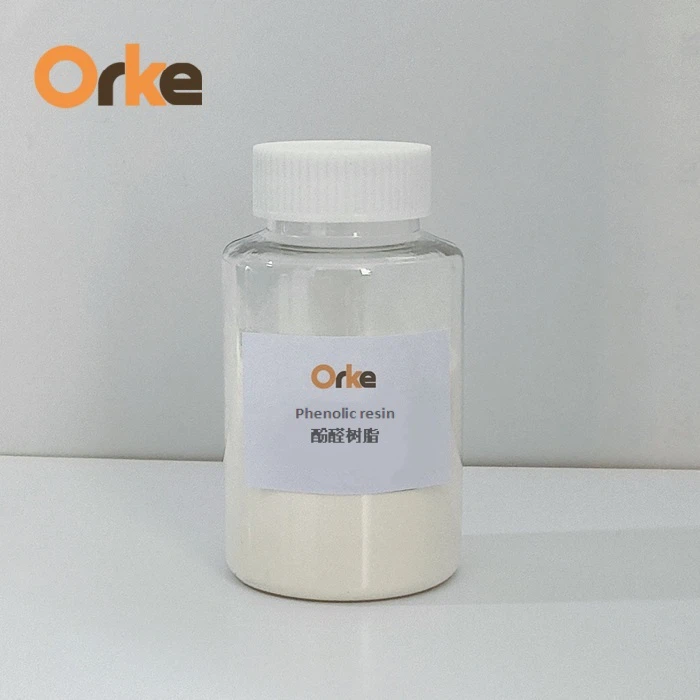
Resole resins are generally associated with alkaline synthesis conditions and contain reactive functionality that allows further crosslinking under appropriate cure conditions. They may be supplied in different commercial forms depending on the grade and are commonly used in certain wood-adhesive, composite, coating, and foam systems.
Novolac resins are generally associated with acidic synthesis conditions and normally require a separate crosslinking or cure system to form a thermoset network. They may be supplied in solid forms such as flakes or powders and are commonly used in friction materials, molding compounds, and certain foundry applications.
Many industrial applications described broadly as "phenolic resin applications" may involve novolac, resole, modified phenolic, or proprietary systems. Buyers should therefore confirm the exact resin chemistry through supplier documentation rather than infer it from the application name alone.
Friction Materials
Phenolic resins for friction materials are widely used as binder materials in friction-related systems such as brake pads and clutch facings.
Novolac-type phenolic resins are commonly used in this field, while certain resole-based or modified phenolic systems may also be used depending on the formulation and processing route. Friction performance, wear behavior, thermal performance, and other finished-material characteristics depend on the complete formulation rather than resin chemistry alone.
For procurement purposes, the resin grade should be evaluated according to relevant grade-specific performance requirements, processing compatibility, and application-specific qualification requirements. Buyers should also confirm whether the material is a novolac, resole, or modified phenolic system.
Composite Materials
Phenolic resins for composite materials are used as matrix materials in composite systems where thermal and fire-performance characteristics may be important.
Certain resole-type phenolic resin systems can be used as composite matrices and may be combined with reinforcing fibers such as glass, carbon, aramid, or other materials depending on the specific composite design.
Phenolic matrix systems are not universally resole-based. Novolac, blended, and modified phenolic systems may also be used. Resin selection should therefore consider grade-specific material properties, reinforcement compatibility, processing requirements, and application-specific qualification requirements.
In demanding applications such as aerospace or transportation, suitability must be demonstrated using the exact resin grade and applicable industry specifications rather than assumed from the general term "phenolic resin."
Electrical and Electronic Applications
Phenolic resins have an established history of use in certain electrical and electronic material systems, including molding compounds and laminates.
Electronic-grade phenolic materials are not uniformly resole-based. Novolac, resole, and modified phenolic systems may all be used depending on the required properties and product design.
The term "electronic grade" should therefore not be treated as synonymous with resole resin. Buyers should review relevant electrical, purity, moisture-related, and other grade-specific performance data and confirm the actual resin chemistry through supplier documentation.
Oil-Field Applications
Phenolic resins for oil fields have been used in certain specialized material systems, including applications involving resole-type or other modified phenolic formulations.
This is a specialized application area, and not all resole resins are suitable for oil-field service. Suitability depends on the exact resin grade, formulation, intended service environment, and application-specific qualification requirements.
Performance claims related to oil-field use should be supported by relevant technical documentation and testing. A phenolic resin should not be assumed to guarantee the performance or long-term integrity of the complete engineering system.
Adhesives and Coatings
Wood Adhesives
Resole phenolic resins have an established role in certain wood-adhesive systems, including applications involving engineered wood products.
Bonding and moisture-related performance depend on resin formulation, substrate characteristics, processing conditions, and qualification requirements. These properties should therefore be evaluated using grade-specific technical data rather than generalized assumptions about resole chemistry.
Protective Coatings
Certain phenolic resin grades are used in protective coating systems.
Depending on the formulation, these coatings may provide grade-specific chemical, thermal, corrosion-related, or wear-related performance. Such characteristics should be evaluated under conditions relevant to the intended application and should not be assumed solely from the term "phenolic resin."
Foundry Applications
Phenolic resin systems are used as binders in foundry applications.
Resole-type, novolac-based, and modified phenolic systems may be used depending on the process and formulation. Binder performance depends on resin grade, formulation, processing conditions, and application requirements.
Although phenolic binders can contribute to the integrity of foundry molds or cores, the quality of a finished casting depends on the complete manufacturing system and cannot be guaranteed by the resin alone.
Thermal and Fire-Performance Applications
Phenolic resins may exhibit favorable thermal behavior and relatively high char formation in certain formulations.
Phenolic-based materials are used in selected insulation and composite systems where thermal or fire performance is relevant. However, these characteristics are formulation-specific, grade-specific, and test-method-dependent.
Statements such as "prevents the spread of fire" or "guarantees fire resistance" should not be made on the basis of resin chemistry alone. Final fire performance should be verified using applicable standardized testing of the finished material or component.
What Buyers Should Verify
When evaluating phenolic resins for industrial applications, buyers should review technical and quality documentation for the exact grade under consideration.
Relevant information may include:
- Exact resin type and grade
- Product Specification
- Technical Data Sheet (TDS)
- Safety Data Sheet (SDS)
- Certificate of Analysis (CoA)
- Supplier-defined processing or cure guidance where applicable
- Supplier-defined handling and storage guidance, including shelf-life or retest information where applicable
- Relevant grade-specific performance data
- Application-specific qualification requirements
Buyers should not assume that a resin is suitable for a particular application based solely on its general product category. The exact grade should be evaluated against the technical requirements of the intended use.
Conclusion
Phenolic resins-including resole, novolac, and modified systems-are used across a wide range of industrial applications. Their suitability depends on resin chemistry, formulation, processing requirements, grade-specific characteristics, and intended use.
Resole phenolic resins have established roles in selected areas such as certain wood-adhesive and composite systems, while other applications may rely primarily on novolac or modified phenolic chemistries.
For any industrial application, the exact resin type and grade should be confirmed through supplier documentation and application-specific evaluation rather than inferred from a general application label.
References
1. Gardziella, A., Pilato, L. A., & Knop, A. (2000). Phenolic Resins: Chemistry, Applications, Standardization, Safety and Ecology (2nd ed.). Springer Berlin, Heidelberg. https://doi.org/10.1007/978-3-662-04101-7
2. Goodman, S. H. (Ed.). (1999). Handbook of Thermoset Plastics (2nd ed.). William Andrew.