



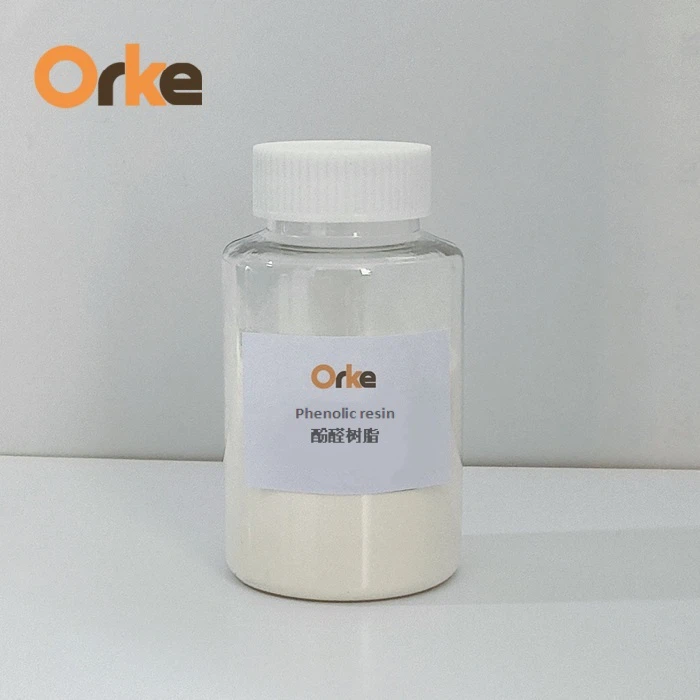
Electronic grade phenolic resin is a high-purity polymer material that plays a critical role in the manufacturing of modern electronic devices. Unlike traditional industrial phenolic resins used in friction materials or foundry applications, electronic grade phenolic resins are engineered with tightly controlled molecular weight distribution, extremely low ionic and metallic impurities, and excellent batch-to-batch consistency [1]. In this article, we will explore the key properties of electronic grade phenolic resin and its actual applications in the electronics industry.
Understanding Electronic Grade Phenolic Resin
Phenolic resins are thermosetting polymers produced through the condensation of phenol and formaldehyde. In the electronics industry, electronic grade phenolic resin has emerged as a specialized class of materials with purity and performance characteristics far exceeding those of conventional industrial grades [6][13].
A Chinese national-level group standard, T/NXZX 037-2025 "Electronic Grade Phenolic Resin," has been established to define the technical specifications for these materials [13]. Key distinguishing features of electronic grade phenolic resin, as typified by leading manufacturer specifications [1], include:
High purity: Residual phenol content below 200 ppm, with no formaldehyde residue [1]
Ultra-low metal impurities: Metal element content controlled at parts-per-billion (ppb) level; for example, recently developed high-ortho novolac resins have demonstrated zinc ion residuals below 200 ppb [14]
Low halogen content: Total halogen content controlled below 1 ppm [1]
High heat resistance: When used as a curing agent for epoxy resins, it imparts excellent thermal stability to epoxy composites, meeting the heat resistance requirements of lead-free soldering processes [2][7]
High electrical insulation: Provides excellent dielectric properties to epoxy composites
Excellent batch-to-batch consistency: Molecular weight distributions of different batches show high overlap [1]
These characteristics make electronic grade phenolic resin fundamentally different from industrial-grade phenolic resins used in friction materials, abrasives, or foundry applications.
Electronic Grade Phenolic Resin vs. Industrial Grade
|
Property |
Industrial Grade |
Electronic Grade |
|
Free phenol content |
Typically > 1% |
< 200 ppm [1] |
|
Metal impurities |
ppm level |
ppb level (e.g., Zn < 200 ppb [14]) |
|
Halogen content |
Not tightly controlled |
< 1 ppm [1] |
|
Molecular weight distribution |
Broad |
Narrow (PDI ≤ 2.0–3.0 for CCL grade; < 1.8 for photoresist grade) [3] |
|
Primary applications |
Friction materials, abrasives, foundry |
PCB substrates, semiconductors, photoresists [1][6] |
Key Applications in Electronics
Copper Clad Laminate (CCL) and PCB Substrates
Electronic grade phenolic resin is widely used as a curing agent and modifier in copper clad laminates (CCL), the foundational material for printed circuit boards [5][7]. When combined with epoxy resins, phenolic resins crosslink the epoxy network, providing [5][7]:
Enhanced heat resistance for lead-free soldering processes (elevating Tg from 130°C to well over 170°C) [3]
High electrical insulation properties
Dimensional stability during thermal cycling
The resulting materials are used in a range of PCB types, from standard multilayer boards to high-density interconnect (HDI) boards and IC substrates [5]. Major global suppliers of phenolic resin for PCB applications include Sumitomo Bakelite, Allnex, Chang Chun Group, Jinan Shengquan, and Shandong Laiwu Runda [5]. Commercial products such as Ventec's VT-447V(I) halogen-free laminate utilize a phenolic-cured system and demonstrate high Tg (190°C) and excellent thermal reliability [4].
It is important to note, however, that in high-performance applications such as tablet computers and smartphones, the PCB substrate materials are typically advanced FR-4 (epoxy resin with glass fiber reinforcement) or higher-performance materials such as polyimide or modified resins. Phenolic resin paper-based substrates (such as FR-1 and FR-2) are generally used in lower-cost consumer electronics rather than in high-reliability mobile devices.
Semiconductor Packaging and Molding Compounds
Electronic grade phenolic resins serve as curing agents and crosslinkers in semiconductor encapsulation molding compounds (EMC) [1][7]. In these applications, they help provide:
High thermal stability during device operation [2]
Low moisture absorption to prevent "popcorn effect" and package cracks during soldering [2]
Excellent electrical insulation
Compatibility with lead-free solder processes
Specialized grades such as aralkylphenol resins, biphenyl phenolic resins, and bisphenol A novolac resins are used in advanced IC packaging applications [6][9]. These specialty grades enable the reliable encapsulation of increasingly complex and miniaturized semiconductor devices [9]. Patents in this field have addressed the challenge of achieving high moisture resistance and solder resistance simultaneously without the use of halogens [9].
Photoresist Formulations
One of the most demanding applications of electronic grade phenolic resin is in photoresist formulations for semiconductor manufacturing. The resin serves as the film-forming matrix in photoresist systems, providing [7]:
The structural backbone that supports photoactive compounds
Precise modulation of solubility before and after exposure
Thermal stability during baking processes
Excellent adhesion to silicon wafers
The extremely low metal impurity content (typically single metal impurities < 50 ppb) is critical for preventing device performance degradation and ensuring reliable semiconductor yields [7]. More advanced photoresist grades may require even tighter control, with single metal impurities < 1 ppb for sub-7nm processes [14][7]. Electronic grade phenolic resin has enabled the localization of photoresist resin production for flat panel displays and chip manufacturing, breaking previous foreign monopolies [1].

Electronic Packaging and Insulation
Electronic grade phenolic resins are also used in [1][5]:
Electronic packaging materials for protecting sensitive components
PCB inks and solder resists for circuit board protection
Conductive silver pastes as a binder system
Potting and encapsulating compounds for component protection
It is important to emphasize that in all these applications, electronic grade phenolic resin functions as a formulation component-such as a curing agent, crosslinker, binder, or film-forming matrix-rather than as a standalone structural material. Its role is to modify or enable the performance of composite systems (e.g., epoxy-phenolic formulations, photoresist coatings, or encapsulants) rather than to serve as a primary mechanical or thermal component in device construction.
Manufacturing and Quality Considerations
The production of electronic grade phenolic resin requires significantly more stringent process control than industrial grades. Key manufacturing considerations include [1][8]:
Raw material purity: High-purity phenol and formaldehyde feedstocks
Reaction control: Precise control of molecular weight distribution and structure
Purification: Advanced purification processes to remove metal ions and ionic impurities, including multi-stage deionized water washing and vacuum volatilization [8][11]
Quality control: Batch-to-batch consistency verification
Contamination control: Manufacturing environments designed to prevent cross-contamination
Chinese patents have described production methods capable of yielding electronic-grade resins with low foreign matter content, low free phenol, and excellent electrical properties suitable for semiconductor encapsulation applications [8][1].
Regulatory Compliance
Electronic grade phenolic resin products are manufactured to comply with applicable environmental regulations [1]:
EU REACH: Registration, Evaluation, Authorization, and Restriction of Chemicals
RoHS: Restriction of Hazardous Substances in electrical and electronic equipment
The low halogen content (< 1 ppm) aligns with RoHS and halogen-free industry trends [1][3]. It should be noted that RoHS compliance is primarily demonstrated through the absence of restricted substances (lead, mercury, cadmium, hexavalent chromium, PBB, PBDE, and specified phthalates), while low free phenol content primarily reflects purity and process suitability.
Market Outlook
The global electronic grade phenolic resin market continues to grow, driven by increasing demand for high-performance electronic devices, expansion of 5G infrastructure, growing adoption of advanced packaging solutions, and rising demand from automotive electronics [3].
The Asia-Pacific region dominates the global market, with concentrated clusters of semiconductor and PCB producers across China, Japan, and South Korea driving demand for electronic grade phenolic resins in protective coatings, thermal management applications, and advanced polymer composites [3].
Conclusion
Electronic grade phenolic resin is a specialized material with distinct properties that set it apart from conventional industrial grades. Its high purity, ultra-low metal content, and excellent heat resistance make it indispensable in critical electronic applications such as PCB substrates, semiconductor packaging, and photoresist formulations [1][6][7].
However, it is important for specifiers and engineers to understand the appropriate application scope of this material. Electronic grade phenolic resin is primarily used as a curing agent, binder, and matrix modifier in electronic materials-not as a standalone structural material for device enclosures or as a primary heat dissipation component. When properly specified and formulated, it provides essential performance characteristics that enable modern electronic devices [5].
If you are developing electronic materials or seeking high-purity resin solutions for semiconductor, PCB, or photoresist applications, our technical team can help you evaluate the right electronic grade phenolic resin for your specific requirements. Please contact us to discuss your formulation, purity, and performance needs.
References
1, Shengquan Group. Electronic grade phenolic resin product overview. https://www.shengquan.com/product/15.html
2, European Patent EP0859374A2. (1998). Process for producing highly reactive modified phenolic resin, and molding material, material for electrical/electronic parts and semiconductor sealing material. https://patents.google.com/patent/EP0859374A2
3, Chinese Patent Application CN202211632249.5. (2024). Electronic grade high-ortho thermoplastic phenolic resin and preparation method thereof. Tongcheng New Materials Group. https://finance.jrj.com.cn/2024/06/21080641122770.shtml
4, Ventec International Group. VT-447V(I) Laminate/Prepreg datasheet. https://www2.ventec-group.com.cn/en/products/halogen-free/vt-447v-i/datasheet/
5, Global Phenolic Resin for PCB Market Report 2023. Market Publishers. https://marketpublishers.com/report/chemicals_petrochemicals/other-chemicals-products/global-phenolic-resin-4-pcb-market-2023-by-manufacturers-regions-type-n-application-forecast-to-2029.html
6,Kopf, P. W. (2002). Phenolic resins. In Encyclopedia of Polymer Science and Technology. John Wiley & Sons. https://doi.org/10.1002/0471440264.pst236
7, Alfa Chemistry. Electronic grade phenolic resin for photoresist. https://semiconductor.alfachemic.com/products/electronic-grade-phenolic-resin-for-photoresist.html
8, Chinese Patent CN102181026A. (2011). Production method for electronic-grade phenolic resin. https://patents.google.com/patent/CN102181026A
9, U.S. Patent Application US20130237639A1. (2013). Curable resin composition, cured product thereof, phenolic resin, epoxy resin, and semiconductor sealing material. Dainippon Ink & Chemicals.
10, Chinese Patent CN108359066A. (2018). Preparation method of high-ortho-position electronic grade phenolic resin with high hydroxyl content. Suzhou Xingye Materials Tech.
11, T/NXZX 037-2025. (2025). Electronic grade phenolic resin (Chinese group standard). https://www.ndls.org.cn/standard/detail/3ce94321ade02920a0bcf56d002e4d1c