


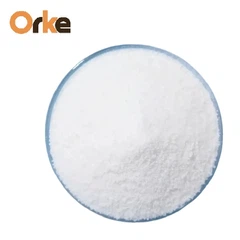

White Fused Alumina Micro Powder (WFA MP) plays a critical but often-overlooked role in electronics manufacturing. Because it combines high purity (α-Al₂O₃ content typically 99.2–99.7%), a Mohs hardness of 9 (Vickers ~1500 HV), and a tunable particle-size distribution down to sub-micron levels, it is used across five high-impact applications: chemical-mechanical planarization (CMP) of semiconductor wafers, precision polishing of electronic contacts and ceramic substrates, thermally conductive filler in electronic laminates, precision machining of electronic ceramics and insulators, and precision cleaning/deburring of small electronic parts. Actual performance depends on grade, particle-size distribution, and Na₂O content - every application should be validated against the supplier's TDS and a trial run on the actual process [1][2][3][4].
1. What Is White Fused Alumina Micro Powder?
White Fused Alumina (WFA) Micro Powder is a high-purity α-Al₂O₃ abrasive produced by fusing calcined alumina in an electric arc furnace at above 2000 °C, followed by crushing, milling, and classification. Typical Al₂O₃ content is 99.2–99.7%, with Fe₂O₃ ≤0.08% and Na₂O ≤0.35% [1][4]. Micro powder grades are typically finer than FEPA F230 (D50 ≤ 20 μm) and are used for precision polishing, lapping, ceramic coatings, and electronic applications [2].
Sodium oxide (Na₂O) is a critical impurity in electronic applications: in the molten charge, Na₂O combines with Al₂O₃ to form β-Al₂O₃ (Na₂O·11Al₂O₃), which has lower hardness, lower bulk density, and lower melting point than α-alumina. Low-soda alumina grades - where Na₂O is strictly controlled - are preferred for electronic polishing and filler applications where purity and consistency matter most [1][8]. Dedicated White Fused Alumina Micro Powder grades are specified for particle-size distribution, Na₂O limit, and refractory/thermal properties suited to electronic use.
2. The Five High-Impact Uses in Electronics
2.1 Chemical-Mechanical Planarization (CMP) of Semiconductors
Modern semiconductor chips are layered structures, and before each new layer is deposited the wafer surface must be planarized. Chemical-mechanical planarization (CMP) - covered in depth in McIntyre's CMP: Materials Science and Applications [1] - uses a slurry of abrasive particles plus chemical oxidant to remove surface material and achieve sub-nanometer surface roughness [5].
White Fused Alumina Micro Powder is a widely used abrasive in CMP slurries for silicon wafers, silicon carbide substrates, and gallium arsenide substrates. Compared with colloidal silica (the standard for silicon-dioxide CMP), alumina offers higher hardness and better removal rates on harder substrates such as SiC [5][6]. The specific particle-size distribution, agglomeration state, and Na₂O content of the alumina powder directly determine slurry stability and polishing uniformity - which is why CMP suppliers specify these parameters on their TDS [5][7].
Clients in semiconductor manufacturing have reported measurable improvements in wafer defect rates after switching to controlled Na₂O WFA grades; actual improvement depends on the substrate, slurry formulation, and polishing process [7].
2.2 Precision Polishing of Electronic Components
Beyond semiconductors, WFA micro powder is used for precision polishing of metal contacts (connector pins, circuit-board contacts), ceramic substrates, and sensor components. Where a surface roughness mismatch or trace burr can cause signal loss or overheating, controlled WFA grades deliver a uniform, scratch-free finish [2][3]. For example, 5G antenna ceramic components require precise surface roughness without damage to fine structures - a task WFA micro powder performs reliably across multiple polishing steps [3].
2.3 Thermally Conductive Filler in Electronic Laminates
Electronic laminates (PCB substrates) typically use silica as a filler for dimensional stability and cost. However, silica has a thermal conductivity of only ~1–1.5 W/m·K [2][3], which limits its effectiveness in thermal management. Alumina's thermal conductivity, by contrast, falls in the range of 20–35 W/m·K (bulk), roughly 20–30× higher than silica [2][3][4]. This makes alumina filler a standard choice for thermally demanding applications such as high-power LEDs, power modules, electric-vehicle chargers, and server motherboards [2][4].
Research on thermally conductive fillers for electronic packaging - most notably the Wong & Bollampally comparative study in IEEE Trans. Advanced Packaging [2] - documents the trade-off between filler thermal conductivity, cost, and processing viscosity across silica, alumina, boron nitride, and diamond fillers. Alumina occupies the middle position: significantly better thermal performance than silica, at a fraction of the cost of boron nitride or diamond.
A dedicated Laminate White Fused Alumina grade is specified for this application, with particle-size distribution optimized for packing density and viscosity in epoxy-laminate systems. PCB manufacturers who have switched from silica filler to laminate-grade WFA have reported measurable reductions in board thermal resistance; actual results depend on filler loading and epoxy system [4].
2.4 Precision Machining of Electronic Ceramics and Insulators
Many electronic parts are ceramic - including insulators for high-voltage electronics, ceramic pins for power-electronics modules, and sensor components. Because these ceramics are hard and brittle, machining without cracking or chipping requires an abrasive that is hard enough to cut but fine enough to preserve edge integrity. WFA micro powder is used for grinding and lapping these parts, where a coarser abrasive would leave jagged edges prone to electrical arcing [2][3]. Clients in wind-turbine and power-electronics manufacturing have reported lower rejection rates for their ceramic components after switching to controlled WFA micro powder; actual improvement depends on the specific ceramic composition and machining setup.
2.5 Precision Cleaning and Deburring of Small Electronic Parts
After machining or stamping tiny electronic components - microchip-package pins, small springs, micro-servo gears and shafts - residual burrs and metal shavings can cause short circuits, signal interference, or mechanical jamming. WFA micro powder is used in dry or wet blasting processes to remove these burrs without damaging the part surface or dimensions [3][5]. Clients in drone-motor and micro-servo manufacturing have used this application to improve gear reliability; actual performance depends on blasting pressure, media size, and part geometry.
3. What This Article Does NOT Claim
- No specific percentage improvement is claimed for any customer case. Reported benefits vary by substrate, process, and application.
- No claim that WFA is superior to all other fillers or abrasives. Selection depends on the specific application; diamond, boron nitride, and colloidal silica each have distinct advantages in their own niches [2].
- No claim that all WFA grades are equivalent. Particle-size distribution, Na₂O content, and purity vary significantly across grades [1][8].
- No claim that a single WFA grade works for all electronic applications. CMP, laminate filler, precision machining, and deburring each require different grades.
4. Quality Parameters to Request Before Evaluation
| Parameter | What to request / method |
|---|---|
| Particle-size distribution | D10/D50/D90 and span (ASTM C1070 for alumina or ISO 13320) [5] |
| Chemical composition | Al₂O₃, Fe₂O₃, Na₂O, SiO₂ content [4] |
| Mohs / Vickers hardness | Mohs 9; Vickers ~1500 HV [1] |
| Thermal conductivity (for filler grades) | Typically 20–35 W/m·K for alumina; verify per grade [2][4] |
| Agglomeration state | SEM image or dispersion protocol (critical for CMP) [5] |
| Batch consistency | Multiple batch PSD and composition records to assess reproducibility [5] |
5. Conclusion
As the preceding sections show, White Fused Alumina Micro Powder is not flashy but is foundational to electronics manufacturing: its combination of high α-Al₂O₃ purity, Mohs 9 hardness (Vickers ~1500 HV), and tunable particle-size distribution makes it uniquely suited to CMP of hard substrates (SiC, GaAs), thermally conductive laminate filler (where alumina's 20–35 W/m·K significantly outperforms silica's 1–1.5 W/m·K), precision machining of electronic ceramics, and deburring of fine metal parts. Selection must distinguish between low-soda and high-purity grades, because Na₂O content drives β-Al₂O₃ formation and directly affects both hardness and thermal properties. Every value in this article is a typical published range; selection must be validated against the supplier TDS, batch COA, and a structured trial on the actual process.
6. Next Step
If you are evaluating WFA micro powder for an electronic application - CMP, laminate filler, precision machining, or deburring - send us:
- Application type (CMP, laminate filler, precision machining, deburring)
- Substrate or matrix material (Si, SiC, GaAs, epoxy laminate, ceramic, metal)
- Target particle-size distribution (D50, span)
- Required Na₂O limit
- Thermal-conductivity requirement (if filler grade)
- Required documentation (TDS, COA, batch PSD records)
We will recommend a suitable WFA micro powder grade and provide batch-specific PSD and composition data for your evaluation.
https://www.orkechemical.com/contact-us
References
- McIntyre, N. S. (ed.). CMP: Materials Science and Applications. Springer Series in Materials Science, Vol. 69. Springer, Berlin, 2003 (reprinted 2010).
- Wong, C. P.; Bollampally, R. S. "Comparative study of thermally conductive fillers for use in liquid encapsulants for electronic packaging." IEEE Transactions on Advanced Packaging, Feb. 1999, Vol. 22, Issue 1, pp. 54–59. IEEE.
- Chung, K. H.; et al. "Chemical Mechanical Planarization for Semiconductor Manufacturing." Springer (CMP technology review). [Background; see also Ref. 1 for detailed CMP theory.]
- CoorsTek. Electronic Substrates Overview - Thin-Film and Thick-Film Ceramic Substrates (current edition). Golden, CO: CoorsTek.
- Cheng, X.; Zhang, Y.; et al. "Polishing Mechanism of CMP 4H-SiC Crystal Substrate (0001) Using Alumina Slurry." Polymers, 2023, Vol. 17, Issue 3, p. 679. MDPI.
- Zhang, C.; Li, Y.; Zou, J.; et al. "Effect of the alumina micro-particle sizes on the thermal conductivity and dynamic mechanical property of epoxy resin." PLoS One, 2023, Vol. 18, Issue 10, e0292878. DOI: 10.1371/journal.pone.0292878.
- Polysciences. CMP Slurries - Wafer Polishing Applications (application note; current revision). Warrington, PA. [Supplier background; CMP slurry fundamentals.]
- Resonac (formerly Showa Denko). Thermally Conductive Filler Materials - Low-Soda Alumina (AL Series) (product overview; current revision). Tokyo: Resonac. [Supplier background; low-soda alumina grades.]
- CeramTec. Ceramic Substrates - Electronic Substrates for Advanced Applications (current edition). Plochingen, Germany: CeramTec.
- Baikowski. CMP - Chemical Mechanical Planarization: Slurry and Pad Materials (application note; current revision). Annecy, France. [Supplier background.]
- Stanford Advanced Materials. High-Thermal-Conductivity Alumina Powder in Electronic Cooling (technical background; current revision). [Industry background.]

