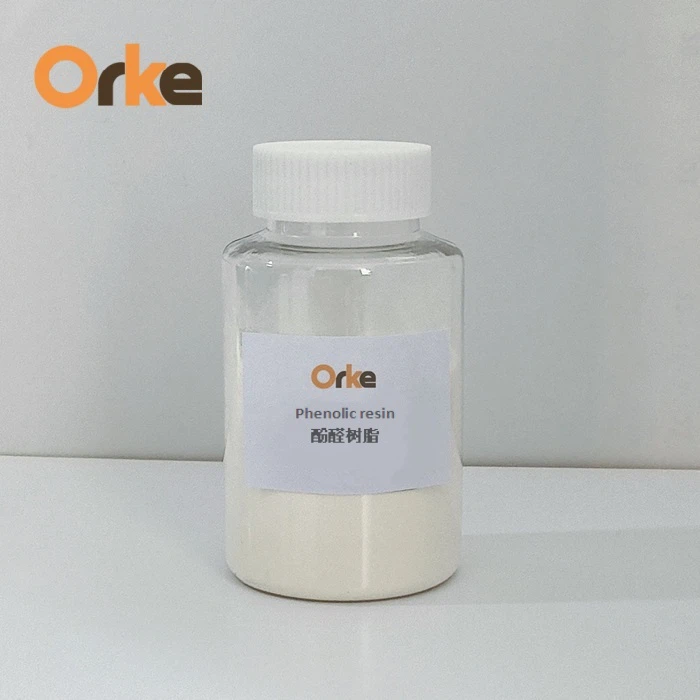

phenolic resin can be used as a binder in selected novelty firework applications, including certain slow-burning fountains, sparkler formulations, and specific slow-burn effects. It functions by holding fuel and oxidizer particles together while contributing to a controlled, sustained deflagration (rapid combustion at subsonic speed, distinct from detonation) [1][2][3]. However, it is not a universal binder for all novelty fireworks - dextrin, shellac, and nitrocellulose each occupy their own niches - and its use requires grade-specific validation for cure profile, burn rate, and compatibility with the pyrotechnic composition [1][3]. And critically: the resin itself is not an explosive, but the finished pyrotechnic composition it becomes part of is a regulated explosive material under ATF 27 CFR Part 555 and PHMSA/DOT UN classification frameworks [4][5][6].
1. What Is Phenolic Resin?
Phenol formaldehyde resin (PF), commonly called phenolic resin, is a thermosetting polymer produced by the reaction of phenol with formaldehyde [7]. Once cured, it forms a rigid, cross-linked network that does not melt or reflow on heating [7][8]. A dedicated Phenolic Resin For Fireworks grade is specified for particle size, cure profile, and residual monomer limits suited to pyrotechnic use [1][2].
Phenolic resins are available in two main forms:
- Resole: one-step resin that cures by heat alone [7][8].
- Novolac: two-step resin requiring a curing agent such as hexamethylenetetramine (HMTA); typically processed as powder or alcohol/acetone solution [7][8].
A note on pyrotechnic terminology: pyrotechnic compositions typically deflagrate (subsonic flame propagation, typically mm–m/s) rather than detonate (supersonic, km/s) [9][10]. This distinction matters because binder selection affects deflagration consistency - the relevant property for novelty fireworks is a controlled, sustained burn rate, not explosive output.
2. Typical Properties for Pyrotechnic Binders
| Property | Typical value | Method / reference |
|---|---|---|
| Thermal decomposition (main weight-loss interval, cured) | ~340–640 °C (grade- and atmosphere-dependent) | TGA [3][11][12] |
| Ignition temperature (dust cloud) | Grade-specific; confirm per supplier TDS | ASTM E1491 / IEC 80079-20-2 |
| Water absorption (24 h, cured and filled) | ~0.1–0.5% | ASTM D570 [3] |
| Glass transition temperature (cured system) | ~150–200 °C (grade-dependent) | DSC / TMA [3] |
| Novolac softening point (uncured) | ~80–110 °C | Ring & Ball [3][13] |
Note: these are typical ranges. Actual values depend on grade, cure schedule, atmosphere, and test conditions. Always confirm with supplier TDS.
3. Why Phenolic Resin Is Used in Novelty Fireworks
Novelty fireworks span several device categories, each with distinct binder requirements [2]:
- Fountains (gerbs): slow, sustained burn; require a binder that maintains particle integrity and controlled burn rate.
- Sparklers: dipped-wire compositions; traditional binders are dextrin or shellac, with nitrocellulose lacquers also used for fast-drying formulations [2][14].
- Snake-type novelties (black snake): typically use naphthol/pesticide or sugar/baking-soda systems; binder selection is less central than for fountains or sparklers [2].
3.1 Controlled Burn Rate
Novelty fireworks such as slow-burning fountains require a controlled, sustained burn rather than a rapid explosive event [2]. Phenolic resin decomposes at a higher temperature than most natural binders, releasing carbon and gases at a controlled rate that contributes to burn consistency [3][11]. Dextrin - the most common aqueous binder in fireworks - decomposes at roughly 175–260 °C, whereas cured phenolic undergoes its main decomposition stage over 340–640 °C [3][11][12].
3.2 Moisture Resistance
Dextrin absorbs moisture readily and loses bond strength in humid conditions - a mechanism documented in studies of water-induced thermal decomposition of pyrotechnic compositions [15]. Phenolic resin, once fully cured, has low water absorption (typically 0.1–0.5% per ASTM D570 for filled systems), making it suitable for storage in humid environments [3].
3.3 Binder and Fuel Function
Phenolic resin functions simultaneously as a structural binder and a high-heat-value organic fuel [3][16]. Chinese patent CN-110343022-A describes a sulfur-free, low-smoke firework composition using phenolic resin at 10% by weight as a binder for food-grade reducing powder and potassium perchlorate [16].
4. How Phenolic Resin Compares to Other Binders
| Binder | Moisture sensitivity | Burn-rate consistency | Thermal decomposition | Key limitation |
|---|---|---|---|---|
| Dextrin | High | Variable | ~175–260 °C | Humidity-sensitive; water-induced decomposition [3][11][15] |
| Shellac | Moderate | Variable | ~200–350 °C | Alcohol solvent; batch-to-batch variability [2][14] |
| Gum Arabic | Moderate | Variable | ~200 °C | High cost; supply-chain variance [3] |
| Sodium silicate | Low | Moderate | N/A (inorganic) | Brittle matrices prone to cracking [3] |
| Phenolic resin | Low (hydrophobic) | High | ~340–640 °C | Cure profile requires precision; combustible dust hazard in powder form [3][11] |
| Nitrocellulose (specialized) | Low | High | ~180–200 °C (onset) | Itself a regulated explosive (UN 0342 / 2555–2557 / 0340–0343) [6] |
5. What Phenolic Resin Is NOT in Novelty Fireworks
- Not an explosive itself. Cured phenolic resin is not classified as an explosive material. However, the finished pyrotechnic composition containing the resin is a regulated explosive material in most jurisdictions [4][5][6].
- Not a universal binder for all novelty fireworks. Different novelty types (fountain, sparkler, snake) may require different binder systems; phenolic is used where a controlled, sustained burn is required, not universally [2][3].
- Not suitable without grade-specific validation. Not all phenolic grades are compatible with pyrotechnic compositions. Residual formaldehyde, cure volatiles, and ionic contamination must be controlled [3][7].
- Not a substitute for nitrocellulose handling compliance. Where a formulation uses nitrocellulose as binder, that binder is itself a regulated explosive (UN 0342 for wetted NC, Division 1.3C) and requires specific licensing and storage compliance [6].
- Not a CPSC-chemical substitute. CPSC 16 CFR 1507.2 prohibits certain chemicals in consumer fireworks devices regardless of binder used - including arsenic compounds, boron, most chlorates, gallates, mercury salts, phosphorus, picrates, thiocyanates, and zirconium [17]. Binder choice does not change chemical-prohibited status.
6. Quality Parameters to Request Before Evaluation
| Parameter | Typical method | What it tells you |
|---|---|---|
| Thermal decomposition onset and main interval | TGA (state atmosphere and heating rate) | Decomposition profile relative to oxidizer and fuel [11][12] |
| Ignition temperature (powder grades) | ASTM E1491 / IEC 80079-20-2 | Dust-cloud hazard classification; storage safety |
| Residual formaldehyde | Supplier TDS / HPLC | Safety and regulatory compliance [7] |
| Cure profile (time–temperature) | DSC / supplier TDS | Process optimization [3] |
| Water absorption | ASTM D570 | Storage stability in humid conditions [3] |
| Particle size | Laser diffraction (novolac powder: ASTM C1070 or ISO 13320; resole liquid: N/A) | Mixing uniformity with pyrotechnic compositions |
| Softening point (novolac, uncured) | Ring & Ball (ASTM E28) | Processing window [13] |
7. Regulatory and Compliance Notes
Boundary first: phenolic resin, as sold, is not an explosive. The pyrotechnic composition it becomes part of is a regulated explosive material. The following frameworks apply to the manufacturer, not typically to the resin supplier:
- United States - manufacture and storage: ATF federal explosives licensing under 27 CFR Part 555 (Commerce in Explosives) covers manufacturing, importing, dealing, and storage of explosive materials, including pyrotechnic compositions; storage must comply with 27 CFR Part 555, Subpart K magazine requirements [4].
- United States - consumer fireworks safety: CPSC regulations under 16 CFR Part 1507 govern consumer fireworks devices; § 1507.2 lists prohibited chemicals regardless of binder system [17]. Industry standard APA Standard 87-1 (American Pyrotechnic Association) is incorporated by reference into 49 CFR since November 2021 [18].
- United States - transport: PHMSA/DOT classifications for fireworks include UN 0335 (Division 1.3G, display fireworks), UN 0336 (Division 1.4G, consumer fireworks), UN 0337 (Division 1.4S), and UN 0431 (articles pyrotechnic for professional purposes), per 49 CFR 172.101 [5]. Novelty fireworks typically fall under UN 0336 or UN 0337 depending on composition and device class.
- Nitrocellulose-specific: where nitrocellulose is used as binder (e.g., in some sparkler lacquers), that binder is a regulated explosive: UN 0342 (nitrocellulose, wetted with ≥25% alcohol, Division 1.3C); insufficiently phlegmatized NC falls under UN 0340/0341/0343; NC with water or alcohol at ≤12.6% nitrogen falls under UN 2555/2556/2557 [6].
- Residual formaldehyde: fully cured phenolic resin should contain minimal free formaldehyde. Confirm with supplier TDS and applicable safety standards [7].
- International: outside the U.S., classification typically follows the UN Model Regulations with national implementations (ADR in the EU, GB in China); manufacturers should verify against the specific jurisdiction.
- No universal "food contact" or "RoHS" claim applies. Compliance is grade-specific and application-specific.
8. Conclusion
As the preceding sections show, the answer to "Can phenolic resin be used in novelty fireworks?" is a qualified yes: it is a viable binder for slow-burning fountains and select sparkler formulations where controlled, sustained deflagration, low water absorption, and binder-plus-fuel function are valued. Its main decomposition window of ~340–640 °C gives it a distinct advantage over dextrin (~175–260 °C) for moisture resistance and burn-rate consistency, though it requires grade-specific validation for cure profile, residual formaldehyde, and ionic contamination. It is not a universal binder: dextrin, shellac, sodium silicate, and nitrocellulose each occupy their own niches, and nitrocellulose in particular is itself a regulated explosive requiring specific licensing. Critically, the resin itself is not an explosive, but the finished pyrotechnic composition it becomes part of is a regulated explosive material - manufacturers must operate under ATF 27 CFR Part 555 (including Subpart K storage), CPSC 16 CFR 1507 (including the § 1507.2 prohibited-chemicals list), APA Standard 87-1, and PHMSA/DOT UN 0335/0336/0337/0431 classification frameworks. Actual grade selection must be validated against supplier TDS and a structured trial on the actual device.
9. Next Step
If you are evaluating Phenolic Resin For Fireworks for a novelty firework application, send us:
- Novelty type (fountain, sparkler, snake, etc.)
- Current binder system
- Cure method and temperature
- Storage environment (humidity, temperature)
- Applicable regulatory framework (ATF, CPSC, PHMSA, or other)
- Required documentation (TDS, SDS, residual formaldehyde data)
We will recommend a suitable grade and provide a cure profile for your evaluation.
Request Phenolic Resin TDS and Cure Profile →
References
- Orke Chemical. How to Improve the Heat Resistance of Phenolic Resin in Fireworks? Technical blog (current revision). [Supplier background.]
- Orke Chemical. Can Phenolic Resin Be Used in Aerial Fireworks? Technical blog (current revision). [Supplier background.]
- Orke Chemical. Can Phenolic Resin Replace Other Binders in Fireworks? Technical blog (current revision). [Supplier background.]
- U.S. Bureau of Alcohol, Tobacco, Firearms and Explosives (ATF). 27 CFR Part 555 - Commerce in Explosives, including Subpart K storage requirements (current edition). Washington, DC.
- U.S. Department of Transportation / PHMSA. Fireworks - Explosives Approvals (UN 0335 Division 1.3G; UN 0336 Division 1.4G; UN 0337 Division 1.4S; UN 0431 Articles Pyrotechnic for Professional Purposes, per 49 CFR 172.101; APA Standard 87-1 incorporated by reference). Washington, DC.
- UNECE. Recommendations on the Transport of Dangerous Goods - Model Regulations (current edition). UN 0340/0341/0342/0343 (nitrocellulose, dry or insufficiently phlegmatized; wetted with ≥25% alcohol; plasticized); UN 2555/2556/2557 (nitrocellulose, phlegmatized). Geneva: UNECE.
- Knop, A.; Pilato, L. A. Phenolic Resins: Chemistry, Applications and Performance. Springer, Berlin, 1985. ISBN 3-540-15039-0 (reprinted 2013).
- Ratna, D. Handbook of Thermoset Resins. iSmithers Rapra Publishing, Shawbury, 2009.
- National Fire Protection Association (NFPA). "Explosions, Deflagrations, and Detonations." NFPA Technical Blog, March 27, 2023.
- Gexcon. "Detonation, Deflagration, and DDT." Knowledge article, August 2024.
- Kaczmarska, K.; et al. "Thermal Decomposition of Binder Based on Etherified Resins." Journal of Thermal Analysis and Calorimetry (cited 26+). Springer. [TGA of phenolic-type binders.]
- Toader, G.; et al. "New Solvent-Free Polyurea Binder for Plastic Pyrotechnic Compositions." Revista Materiale Plastice, 2017 (cited 14+). [Binder thermal stability comparison.]
- Taiwan Intellectual Property Office. Manufacturing Method for Phenolic Novolac Resin and Resin-Coated Sand (ring & ball softening point data for phenol novolac resins: 91–98 °C).
- ThoughtCo. "The Chemistry Behind Sparkler Fireworks." [Background on sparkler binder chemistry - dextrin, shellac, nitrocellulose.]
- Pakkirisamy, S. V.; et al. "Water Induced Thermal Decomposition of Pyrotechnic Compositions." Fire Safety Journal, 2014 (cited 18+). DOI: 10.1016/j.firesaf.2014.02.006.
- Chinese Patent CN-110343022-A. A Kind of Safe and Environment-Friendly Fireworks Medicine and Preparation Method Thereof. Inventor: Zhao Hong, 2019. [Phenolic resin at 10% by weight as binder for food-grade reducing powder and potassium perchlorate.]
- U.S. Consumer Product Safety Commission (CPSC). 16 CFR Part 1507 - Fireworks Devices, § 1507.2 Prohibited Chemicals (current edition). Bethesda, MD: CPSC.
- American Pyrotechnics Association (APA). APA Standard 87-1 - Standard for Construction and Approval for Transportation of Fireworks, Novelties, and Theatrical Pyrotechnics (2018 revision, A/B/C; incorporated by reference into 49 CFR November 2021). Chestertown, MD: APA.