


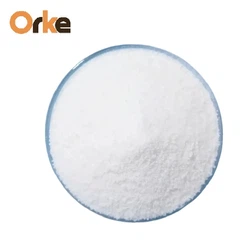

Submicron White Fused Alumina (WFA) micro powder is a precision-engineered abrasive and functional filler that has become indispensable across industries ranging from medical device manufacturing to semiconductor fabrication. Its unique combination of high Mohs hardness (9.0), sharp cutting edges, chemical inertness, and exceptional thermal stability enables manufacturers to achieve finishes and material properties that few other abrasives can match economically.
Most people assume coarse abrasives and bonded grinding wheels are WFA's only uses. However, the submicron grade-particles precisely classified below 1 micrometer-has become a quiet workhorse across precision finishing and high-tech manufacturing. This article breaks down its real-world applications, explains how high-purity submicron WFA micro powder is tailored for demanding industrial tasks, and highlights why it remains the preferred choice for cost-effective precision.
The Chemistry and Processing Behind Quality Micro Powder
White Fused Alumina is produced by melting high-purity Bayer alumina (99.5%+ Al₂O₃) in an electric arc furnace at temperatures exceeding 2,200°C. As the melt cools, it forms dense, hard α-Al₂O₃ (corundum) crystals. The resulting material exhibits a Knoop hardness of approximately 2,000–2,200 kg/mm² and a Mohs hardness of 9.0. Standard WFA grades typically maintain Fe₂O₃ below 0.05% and Na₂O below 0.35%.
To turn these massive fused blocks into submicron micro powder, the crude alumina undergoes multi-stage crushing, iron removal, fluid bed jet milling, and strict air classification. Achieving a tight particle size distribution (PSD) without oversized coarse grains or uncontrolled agglomeration is critical. In micro-lapping and polishing, even a single oversized grain can cause cataclysmic scratches on delicate substrates.
For demanding precision applications, low-soda grades with Na₂O content controlled below 0.1% are available, ensuring superior chemical stability and consistent performance in electronic ceramics and precision investment casting. The FEPA 42-2:2006 standard defines microgrit designations from F230 to F2000, providing a globally recognized framework for particle size classification.


Precision Surface Finishing: From Medical Implants to Aerospace Components
One of the largest applications for submicron WFA is precision mechanical polishing and lapping. WFA's hardness and brittle fracture behavior deliver a distinct advantage: unlike softer abrasives that dull quickly and generate excessive heat, submicron WFA particles fracture along cleavage planes during lapping, continuously exposing fresh, sharp cutting edges. This controlled friability makes WFA particularly effective for achieving high material removal rates (MRR) alongside fine surface finishes.
Medical Devices & Orthopedic Implants: Metallic orthopedic implants-such as titanium alloy bone plates, screws, and cobalt-chrome femoral stems-require defect-free, mirror-polished surfaces. Roughness and microscopic burrs can increase wear debris, leading to tissue inflammation or premature implant failure. Submicron WFA micro powders are widely used in polishing pastes and slurries to achieve sub-micron Ra finishes on these metallic alloys, combining bio-inertness with exceptional cutting efficiency.
Aerospace & Power Generation: Turbine blade airfoils used in jet engines and industrial gas turbines operate under severe thermal and mechanical stress. Before thermal spraying or during maintenance overhauls, these superalloy blades undergo precision liquid honing or slurry polishing using submicron WFA. Narrow-PSD WFA variants ensure consistent micro-deburring and uniform surface topography without embedding metallic contaminants into the substrate.
Advanced Ceramics and Composite Materials: Wear Resistance and Thermal Management
In ceramic manufacturing and polymer compounding, submicron WFA serves as an essential functional filler and structural reinforcement.
Wear-Resistant Ceramic Matrix Composites: When formulating advanced alumina ceramics, ceramic cutting tools, or spark plug insulators, submicron WFA is added to fine-grained formulations to enhance green density and uniform particle packing. Its high thermal stability and phase purity ensure consistent performance during high-temperature pressureless or hot-press sintering.
Thermal Interface Materials (TIMs) & Polymer Fillers: With the rapid growth of Electric Vehicle (EV) battery packs and high-power electronics, effective heat dissipation is paramount. While basic polymers are thermal insulators, compounding them with submicron WFA increases overall thermal conductivity while maintaining high electrical insulation and dielectric strength. Submicron WFA serves as a cost-effective, high-hardness functional filler for epoxy resins, silicone thermal pads, and encapsulated potting compounds.
Semiconductor and Microelectronics Manufacturing: Precision Lapping & Polishing
In microelectronics, submicron WFA plays a pivotal role in substrate lapping and Chemical-Mechanical Planarization (CMP) of hard-to-machine materials.
Substrate Wafer Lapping: Before photolithography, hard brittle substrates-such as sapphire wafers (used in LEDs and optical windows), Silicon Carbide (SiC), and single-crystal silicon ingots-must be flattened. Wire-slicing leaves surface damage and thickness variations. High-purity submicron WFA slurries are extensively utilized in planetary lapping machines to remove wire marks rapidly without introducing deep subsurface micro-cracks. Commercial alumina CMP slurries designed for sapphire substrates typically feature a D50 of approximately 0.3–0.6 µm, engineered to deliver high removal rates while minimizing surface irregularities.
Compound Semiconductor CMP: In polishing wide-bandgap semiconductors (SiC and GaN) and optical glass, submicron WFA slurry provides a balanced mechanism of high mechanical abrasion and slurry stability. Because submicron WFA undergoes strict chemical leaching, key metallic impurities like Fe₂O₃ and Na₂O are kept below ultra-low thresholds, preventing trace metal contamination on chip substrates.
Coatings and Surface Protection: Industrial Longevity
In protective surface coatings, submicron WFA provides extreme wear and scratch resistance without adding unnecessary weight or structural thickness.
Anti-Scratch Topcoats and Laminate Flooring: One of the most widespread commercial uses of submicron WFA is in wear-resistant overlays for laminate flooring and industrial polyurethane/epoxy floor coatings. Incorporating submicron WFA particles into melamine or resin topcoats dramatically increases Taber abrasion resistance. High-quality laminate floorings achieve wear resistance of 4,000–6,000 revolutions, corresponding to abrasion classes AC4 and AC5. Because the particles are submicron, they minimize light scattering compared to coarse grains, helping maintain the clarity and color fidelity of underlying decorative patterns.
Thermal Spray & Protective Barriers: Submicron WFA powders are utilized as feedstocks or matrix additives in thermal spraying (such as plasma spraying) to create ceramic wear barriers on pump impellers, valves, and shaft sleeves, shielding underlying steel components from corrosive slurry erosion and abrasive wear. Recent advances in suspension plasma spraying have enabled the deposition of finely structured alumina-based coatings with improved microstructural uniformity, further expanding the application space for WFA in protective surface engineering.
Why Submicron WFA Beats Other Abrasives
When choosing an abrasive or filler, manufacturers often weigh WFA against alternatives like Silicon Carbide (SiC), Diamond, and Cubic Boron Nitride (CBN). The following table summarizes the key trade-offs:
| Property | White Fused Alumina | Silicon Carbide | Diamond / CBN |
|---|---|---|---|
| Mohs Hardness | 9.0 | 9.5 | 10 (Diamond) / ~9.5 (CBN) |
| Relative Cost | Low–Medium | Medium | Very High |
| Fracture Behavior | Controlled friability; sharp edges | Brittle; sharp but generates deeper subsurface damage | Extremely hard; low wear rate |
| Chemical Contamination Risk | Low (non-magnetic, low Fe₂O₃) | Can leave Si residues | Minimal |
| Best Suited For | High-volume lapping, wear coatings, polymer fillers | Hard metals, non-ferrous materials | Ultra-precision finishing, superhard substrates |
WFA strikes an ideal balance. It offers exceptional hardness, high brightness, chemical neutrality, non-magnetic purity, and superior cost-performance for large-scale industrial manufacturing. Diamond and CBN, while harder, are significantly more expensive and economically unfeasible for high-volume lapping, heavy wear-coatings, or bulk polymer filling. SiC is slightly harder than WFA, but its friable crystalline structure often causes deeper subsurface scratches on medium-hard metals, and its dark color limits use in light-colored or clear coatings.
Submicron WFA Selection Guide by Application
| Application | Typical D50 (µm) | Recommended Grade | Key Purity Requirement | Typical Loading |
|---|---|---|---|---|
| Medical implant polishing | 0.3–0.8 | Low-soda WFA | Fe₂O₃ ≤ 0.05%, Na₂O ≤ 0.1% | 10–30 wt% in slurry |
| Sapphire / SiC wafer lapping | 0.3–0.6 | High-purity WFA | Fe₂O₃ ≤ 0.03%, Na₂O ≤ 0.1% | 5–20 wt% in slurry |
| Ceramic sintering additive | 0.3–1.0 | Standard WFA | Al₂O₃ ≥ 99.5% | 1–5 wt% |
| EV battery TIM filler | 0.5–2.0 | Surface-treated WFA | Al₂O₃ ≥ 99.5% | 40–70 wt% in polymer |
| Laminate flooring topcoat | 1–5 (coarser) | Standard WFA | Fe₂O₃ ≤ 0.05% | 5–15 wt% in resin |
| Thermal spray feedstock | 0.5–3.0 | Narrow PSD WFA | Al₂O₃ ≥ 99.5% | 100% feedstock or additive |
Note: These values are indicative and should be validated through application-specific trials. Optimal specifications depend on substrate material, target surface roughness, equipment parameters, and other process variables.
Looking Ahead: Growth Drivers for Submicron WFA
As global manufacturing shifts toward higher precision, EV electrification, and durable green infrastructure, demand for high-purity submicron WFA is expanding steadily. According to The Business Research Company's 2026 report, the global white fused alumina market was valued at approximately $2.39 billion in 2025 and is projected to reach $2.51 billion in 2026, registering a CAGR of 4.8%. The market is expected to grow further to $3.05 billion by 2030 at a CAGR of 5%, with high-value micro powders outpacing standard coarse grit growth.
Next-generation EV battery thermal management, wide-bandgap SiC power electronics, and high-durability industrial wear coatings will remain primary drivers. Delivering consistent particle morphology, chemical purity, and reliable grading batch after batch will distinguish leading suppliers in this evolving market.
Request a Sample or Technical Consultation
For engineers and procurement teams evaluating submicron WFA for a specific application, the following information will help us recommend the optimal grade:
Application description (e.g., sapphire wafer lapping, implant polishing, TIM filler)
Substrate material and target surface roughness (Ra or Rz)
Processing method (lapping, CMP, thermal spray, polymer compounding)
Current abrasive/filler and any performance gaps
Required purity level (Na₂O, Fe₂O₃, or other trace element limits)
To request a sample, obtain a technical datasheet, or discuss your specific requirements, please contact our technical team. Let's build something durable, precise, and high-performing together.
Disclaimer: The technical data and application descriptions presented in this article are based on laboratory testing, published research, and industry references. Actual performance may vary depending on specific operating conditions, substrate materials, and process parameters. We recommend conducting application-specific trials to validate performance for your particular use case.
References
Fauchais, P., Vardelle, M., Vardelle, A., & Goutier, S. (2015). What do we know, what are the current limitations of suspension plasma spraying? Journal of Thermal Spray Technology, *24*(7), 1120–1129. https://doi.org/10.1007/s11666-015-0286-3
FEPA (Federation of European Producers of Abrasives). (2006). FEPA Standard 42-2:2006 – Grains of fused aluminium oxide, silicon carbide and other abrasive materials for microgrits (F230 to F2000). FEPA.
Jain, V. K. (Ed.). (2016). Nanofinishing science and technology: Basic and advanced finishing and polishing processes. CRC Press.
Namba, Y., & Tsuwa, H. (1978). Mechanism and some applications of ultra-fine finishing. CIRP Annals – Manufacturing Technology, *27*(1), 511–516.
The Business Research Company. (2026). White fused alumina market report 2026 (Report ID: 6254707). Research and Markets. https://www.researchandmarkets.com/reports/6254707/white-fused-alumina-market-report