


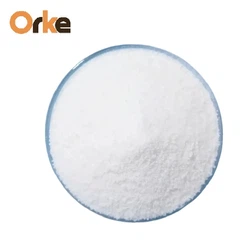

White Fused Alumina Micro Powder vs. Corundum Powder: What's the Difference and Which One Do You Need?
Short answer: No, they're not the same. If you've ever shopped for abrasive fillers, surface treatments, or precision polishing materials, you've probably stumbled on these two terms early on. As a supplier focused exclusively on high-grade white fused alumina (WFA) products, I get this question at least a dozen times a week-usually from fabricators, chemical formulators, or manufacturing engineers who don't want to mix up materials that could make or break their end result. The nuance goes way beyond a simple "yes/no" label. Let's break down the science, the manufacturing, and the practical use cases that set these two powders apart-especially for anyone selecting materials for precision industrial applications.
Raw Material Origins: Where the Confusion Starts
Corundum Powder: Natural, Generic, Less Consistent
Corundum, in its pure mineral form, is one of Earth's hardest naturally occurring minerals-with a Mohs hardness of 9, second only to diamond. For industrial use, "corundum powder" usually refers to either naturally mined corundum or a less refined fused aluminum oxide product that's often labeled generically as "alumina powder."
The key word here is generic: most commercial corundum powder on the market isn't tailored for precision work. It's made by crushing mined corundum ore, which can contain trace impurities like iron oxide, silica, or titanium that lower its consistency.
White Fused Alumina Micro Powder: Engineered for Precision
White fused alumina micro powder, by contrast, is a man-made material produced in electric arc furnaces by fusing high-purity alumina powder (usually 99.9% Al₂O₃ or higher) at temperatures over 2,000°C. That high-heat fusion process melts the alumina completely, then cools it slowly to form dense, uniformly structured crystals before grinding into micro-sized particles (typically 0.1 to 100 microns, though custom grades exist).
The result: consistent chemical composition, tight particle size distribution, and a near-perfect crystalline structure-traits that natural corundum powder can never match.
Head-to-Head Comparison
| Property | White Fused Alumina Micro Powder | Generic Corundum Powder |
|---|---|---|
| Origin | Synthetic (electric arc furnace) | Natural ore, crushed |
| Purity (Al₂O₃) | ≥99.9% | Variable, with trace impurities |
| Vickers hardness | ~2,200 HV | 1,800–2,000 HV |
| Particle shape | Engineered: sharp angular or slightly rounded | Irregular, jagged |
| Particle size distribution | Tightly controlled (e.g., 95% within a 5-micron range) | Wide, uncontrolled |
| Chemical stability | Inert across a wide pH range; stable up to 1,800°C | Less stable; impurities can react |
| Typical uses | Precision polishing, advanced fillers, medical/aerospace | Rough grinding, sandblasting, low-cost filler |
Hardness and Chemical Stability: The Metrics That Matter Most
When tested on Vickers hardness, white fused alumina micro powder clocks in at around 2,200 HV, while most generic corundum powder lands between 1,800 and 2,000 HV. That might not sound like a big difference-but for polishing delicate surfaces or cutting precision parts, it's the gap between a uniform finish and scratches that require rework.
The impurities in corundum powder also make it less chemically stable: over time, or when exposed to strong acids or high temperatures, trace minerals in corundum can break down or react with other materials, discoloring finishes or altering the performance of bonded abrasives. White fused alumina, with its ultra-high purity, is chemically inert across a wider pH range and at temperatures up to 1,800°C-which is why it's the go-to for high-stakes applications.
Particle Shape and Size Distribution: Where Practical Differences Show Up
Natural corundum powder, because it's made by crushing rock, has irregular, jagged particle shapes with a wide range of sizes. That makes it good for rough grinding, but bad for fine polishing or as a filler in epoxy resins, ceramics, or laminate materials-where consistent particle shape is key for uniform material flow and no gaps.
White fused alumina micro powder, by contrast, can be engineered to have sharp, uniform angular particles or even slightly rounded ones, depending on the cooling process and grinding method. The particle size distribution is also tightly controlled: when you buy WFA micro powder, you can request a grade where 95% of particles fall within a 5-micron range-impossible to achieve with crushed corundum powder.
Case Study: The Laminate Industry
This is especially true for applications like laminates-a space I know well, because we supply a range of products tailored for composite and laminate manufacturers.
For anyone working on laminate production, the right filler material prevents warping, improves scratch resistance, and enhances surface finish. Our Laminate White Fused Alumina line, for example, is a specially formulated grade of WFA micro powder with a narrow particle size distribution designed to disperse evenly in laminate resins-eliminating the streaks or uneven hardness that can come with generic corundum powder.
Clearing Up the Terminology: "Corundum Powder" Is Not a Catch-All
Another common mix-up happens when people use "corundum powder" as a catch-all term for all alumina-based powders-but that's a mistake. Even some lower-quality fused alumina products are mislabeled as corundum powder, which confuses buyers who expect the consistency of WFA. White fused alumina micro powder is a subset of fused alumina, but it's the highest purity and most finely milled grade, designed for precision applications.
Typical Use Cases Compared
Corundum powder works well for:
- * Rough grinding
- * Sandblasting large, low-precision metal parts
- * Low-cost filler for basic concrete additives
White fused alumina micro powder is used for:
- * Polishing silicon wafers
- * Finishing medical implants
- * Making high-grade ceramic parts
- * Filler in advanced composites where surface quality and consistency are non-negotiable
Busting the Myth: "Natural" Doesn't Mean "Better"
I hear this one all the time: that natural corundum is "better" because it's pure. But natural corundum almost never matches WFA's purity. Even the highest-grade mined corundum has trace minerals that affect its performance, and mining operations can't control particle size or shape the way a controlled factory environment can.
When you're working on a project where one bad batch can delay production or compromise product safety-like a medical device or aerospace component-consistency beats "natural" every time.
Practical Buying Advice:
Consider your long-term needs. If you're scaling production, WFA micro powder offers a longer shelf life, consistent performance, and easier integration into automated processes thanks to its uniform particle characteristics.
Conclusion: Choose the Right Powder for the Right Job
So, is white fused alumina micro powder the same as corundum powder? Absolutely not. They differ in origin, purity, hardness, particle shape, size distribution, chemical stability, and ideal applications. For rough grinding and budget filling, corundum powder may suffice. For precision polishing, advanced composites, medical, aerospace, or electronics work, white fused alumina micro powder is the only safe choice.
If you're still unsure which material is right for your project-or you want to learn more about our WFA micro powder or laminate-grade offerings-don't hesitate to reach out. Whether you're a small fabricator or a large manufacturing plant, we work with you to find the right grade for your specific needs. No one-size-fits-all solutions here. Contact our team to discuss your requirements, request a sample, or get a quote tailored to your application.
FAQ
Q1: Is white fused alumina the same as corundum?
No. Corundum is a naturally occurring mineral (Mohs hardness 9), while white fused alumina is a synthetic material made by fusing 99.9%+ pure alumina in electric arc furnaces. WFA offers far higher purity and consistency.
Q2: What is white fused alumina micro powder used for?
Precision applications including silicon wafer polishing, medical implant finishing, high-grade ceramic production, and as a filler in advanced composites and laminates where consistency is critical.
Q3: How hard is white fused alumina micro powder?
Approximately 2,200 HV on the Vickers scale (Mohs hardness ~9), compared with 1,800–2,000 HV for most generic corundum powders.
Q4: Can corundum powder replace WFA micro powder as a filler?
Not recommended for precision applications. Corundum's irregular particle shape and impurities can cause uneven dispersion, streaks, and higher rework rates in laminates, epoxy resins, and ceramics.
Q5: How can I verify the quality of white fused alumina micro powder?
Request a Certificate of Analysis (COA) showing Al₂O₃ purity (≥99.9%), particle size distribution, and hardness data-and always test a sample before bulk ordering.
References
- Handbook of Ceramic Abrasives and Grinding, 2nd Edition, Society of Manufacturing Engineers, 2018.
- "Characteristics of Fused Aluminum Oxide Powders for Precision Polishing," Journal of Manufacturing Science and Engineering, Vol. 142, No. 7, 2020.
- "Industrial Filler Materials for Polymer Composites: Performance and Selection Criteria," Composites Science and Technology, Vol. 191, 2020.
- "Corundum and Fused Alumina: A Comparative Analysis for Abrasive Applications," International Journal of Advanced Manufacturing Technology, Vol. 112, No. 9–10, 2021.

