


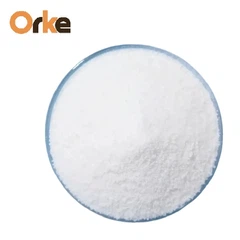

White Fused Alumina Micro Powder (WFA MP) is used as a functional filler and reinforcing phase in ceramic bodies, particularly in structural ceramics, electronic ceramics, ceramic membranes, and wear-resistant tiles [1][2][3]. It can reduce sintering shrinkage, improve dimensional stability, and increase mechanical strength when the grade and addition level are matched to the ceramic system [2][4][5]. However, it is not a universal additive: over-addition can increase brittleness, and low-fire decorative ceramics may not benefit [2]. Typical addition levels range from 5 to 20% by weight depending on the application [2][3].
1. What Is White Fused Alumina Micro Powder?
White Fused Alumina (WFA) is a high-purity α-Al2O3 material produced by fusing calcined alumina in an electric arc furnace at above 2,000 degrees C, followed by crushing, milling, and classification [6][7]. Micro powder grades typically have D50 values from sub-micron to approximately 20 μm, depending on the classification standard [8][9]. Mohs hardness is 9 (Vickers 2060), density is 3.95 g/cm3, and Al2O3 content is typically 99.2 to 99.7% for standard grades and up to 99.77% for high-end products [6][7][10]. A dedicated White Fused Alumina Micro Powder grade is available for ceramic applications requiring controlled particle size distribution and low impurity levels [1][2].
2. What WFA MP Does in Ceramic Bodies
2.1 Shrinkage Reduction and Dimensional Stability
WFA MP particles fill interstitial voids between larger ceramic particles, increasing green density and reducing the porosity that drives shrinkage during sintering [1][2]. In structural ceramic applications, addition of 5 to 15% WFA MP has been reported to suppress sintering shrinkage and improve dimensional consistency (supplier-documented) [2]. The low thermal expansion of α-Al2O3 also contributes to reduced warping and cracking during firing [4][11].
2.2 Mechanical Strength Enhancement
WFA MP acts as a reinforcing phase through dispersion strengthening and grain-boundary filling [2][12]. In ceramic membrane substrates, addition of 10 to 20% WFA powder (1 to 5 μm grade) has been reported to increase compressive strength by over 30% (supplier-documented) [3]. The high hardness of WFA (Mohs 9) also contributes to improved wear resistance in tiles and liners [5][12].
2.3 Sintering Behavior and the Role of Na2O
WFA MP is chemically stable and does not react with most ceramic matrices at typical firing temperatures [1][4]. Its melting point is approximately 2,040 degrees C (Washington Mills documented estimate), but softening begins below this, at approximately 1,750 degrees C [7]. WFA MP remains dimensionally stable well above typical ceramic firing temperatures, making it suitable for high-fire ceramics (stoneware, porcelain, technical ceramics) but less beneficial for low-fire (below 1,000 degrees C) decorative bodies where integration with the matrix may be incomplete [2][4].
The role of Na2O in ceramic systems: sodium oxide is a critical impurity in alumina ceramics because Na2O reacts with Al2O3 at high temperature (above approximately 1,400 degrees C) to form sodium beta-alumina (Na2O·11Al2O3). This phase reduces sintered density, mechanical strength, thermal shock resistance, and corrosion resistance, and is associated with increased dielectric loss in alumina ceramics [9][13]. For electronic and insulating ceramics, low-sodium grades (Na2O below 0.2%) are documented to improve sintering efficiency by approximately 18% [14]. Grade selection therefore hinges on the Na2O specification in addition to particle size.
3. Typical Addition Levels and Particle Sizes by Ceramic Application
| Application | Typical Addition Level | Typical Particle Size | Key Effect | Reference |
|---|---|---|---|---|
| Structural ceramics (ZrO2, Al2O3 based) | 5 to 15% | W0.5 to W20 | Shrinkage control; strength improvement | [2] |
| Ceramic membrane substrates | 10 to 20% | 1 to 5 μm | Compressive strength increase over 30% (supplier-documented); pore structure control | [3] |
| Wear-resistant tiles / liners | 5 to 20% | Fine powder (F400 to F1200) | Hardness and wear resistance | [5][12] |
| Electronic / insulating ceramics | Application-specific | 1 to 5 μm | Dimensional stability; insulation; Na2O control critical | [2][9][13] |
| Low-fire decorative ceramics | Not typically recommended | - | May not integrate well; can increase density | [2] |
Note: these are typical ranges from published application data. Optimal addition level and particle size must be determined experimentally for each ceramic body and firing schedule.
4. What This Article Does NOT Claim
- No universal "strength enhancer" at any loading. Over-addition (above approximately 20%) can increase brittleness and reduce fracture toughness [2].
- No substitute for careful particle size matching. Coarse WFA in a fine matrix creates weak points; excessively fine WFA can increase surface area and cause unpredictable shrinkage [4][15].
- No low-fire additive. WFA MP is most effective in high-fire ceramic systems where sintering temperatures promote integration [2][4].
- No equivalence with Laminate White Fused Alumina. Laminate grades are designed for laminate and wear-layer applications, not as a general ceramic body filler (supplier-documented).
- No claim of universal applicability across ceramic systems. Grade selection depends on matrix chemistry, firing temperature, and Na2O sensitivity of the end application [9][13][14].
- No claim that all WFA MP grades meet electronic or insulating ceramic requirements. Grade-specific COA and low-sodium specification data are required [1][2][14].
5. Quality Parameters to Request Before Evaluation
| Parameter | Typical Method | What It Tells You |
|---|---|---|
| Al2O3 content | XRF / ICP | Purity and inertness [6][7] |
| Fe2O3, Na2O, SiO2 | XRF / ICP | Impurity level; affects color, high-temperature performance, and dielectric loss; Na2O forms β-alumina at firing temperature [7][9][13] |
| Particle size distribution | Laser diffraction (ASTM C1070 / ISO 13320:2020) | Packing density and sintering behavior [8][16] |
| Mohs / Vickers hardness | Reference (Mohs 9; Vickers 2060) | Wear resistance contribution [6] |
| Loss on ignition (LOI) | Gravimetric | Residual volatiles |
| Batch-specific COA | Supplier COA | Confirms actual values for delivered batch |
6. Conclusion
As the preceding sections show, WFA MP serves as a functional filler and reinforcing phase in high-fire ceramic systems, delivering shrinkage reduction, dimensional stability, and mechanical strength enhancement across structural ceramics, ceramic membranes, wear-resistant tiles, and electronic ceramics [1][2][3][5]. Its boundaries are equally defined: over-addition above approximately 20% increases brittleness [2]; low-fire decorative bodies do not benefit from it [2][4]; particle size matching is mandatory because coarse WFA creates weak points and excessively fine WFA causes unpredictable shrinkage [4][15]. The critical chemical parameter is Na2O: at firing temperatures it forms sodium beta-alumina (Na2O·11Al2O3), which reduces density, strength, thermal shock resistance, and increases dielectric loss [9][13], making low-sodium grades (Na2O below 0.2%) the preferred selection for electronic and insulating ceramics [14]. Typical addition levels span 5 to 20% by weight depending on the ceramic system [2][3]. Every value in this article is a typical published range or supplier-documented figure; grade selection must be validated against supplier TDS, batch COA, and application-specific trial on the actual ceramic formulation.
7. Next Step
If you are evaluating White Fused Alumina Micro Powder for a ceramic application, send us:
- Ceramic type (structural, membrane, tile, electronic, insulating)
- Firing temperature and atmosphere
- Current shrinkage and strength targets
- Na2O sensitivity of the end application
- Target addition level and particle size range
- Required documentation (TDS, COA, particle size distribution)
We will recommend a suitable grade and provide batch-specific data for your evaluation. Note: addition level and particle size must be validated in your specific ceramic body.
Request WFA Micro Powder TDS and Ceramic Application Data →
References
- HAIXU Abrasives. White Fused Alumina 10000 Mesh for Ceramic Filler Applications. [Supplier background. WFA 10000 mesh optimizes ceramic green body density, reduces sintering shrinkage and deformation rate, reduces cracking and porosity.]
- Henan Sicheng Abrasives Technology. White Fused Alumina Micro Powder in Structural Ceramic Applications. [Supplier background. 5 to 15% WFA MP addition suppresses sintering shrinkage; 5 to 20% total addition range; over-addition increases brittleness.]
- HAIXU Abrasives. White Fused Alumina Powder for Ceramic Membrane Elements. [Supplier background. 10 to 20% WFA powder (1 to 5 μm) increases compressive strength by over 30%; supplier-documented figure.]
- HAIXU Abrasives. White Fused Alumina in the Ceramic Industry. [Supplier background. Low thermal expansion coefficient reduces green body shrinkage and deformation, lowering cracking reject rate.]
- HAIXU Abrasives. White Fused Alumina in Improving Ceramic Wear Resistance. [Supplier background. Adding WFA MP significantly improves hardness and compressive strength of finished ceramic products.]
- HPF Minerals. White Fused Alumina: Extreme Hardness. [Mohs hardness 9, Vickers 2060, density 3.95 g/cm3, chemical inert, transparency, very narrow particle size distribution.]
- Washington Mills. Fused Mineral Properties. [Fused alumina melting point estimated at 2,040 degrees C; softening begins below at approximately 1,750 degrees C.]
- Orke Chemical. What Is the Particle Size Distribution of White Fused Alumina Micro Powder? [PSD measured by ASTM C1070 (alumina-specific) or ISO 13320:2020 (general laser diffraction, 0.1 μm to 3 mm); D10, D50, D90 and span definition.]
- Jucos Refractory. What Are the Effects of Impurities on the Performance of Alumina? [Na2O reacts with Al2O3 above 1,400 degrees C to form Na2O·11Al2O3 (β-alumina), significantly increasing dielectric loss (tgδ) in alumina sintered ceramics; Fe2O3, SiO2, CaO, MgO also affect performance.]
- Washington Mills. Fused Alumina Products: DURALUM Series. [High chemical purity greater than 99% Al2O3 white fused alumina manufactured from Bayer processed alumina; DURALUM Special White documented at 99.77% by difference.]
- ScienceDirect. Fused Aluminas: An Overview. [Soda (Na2O) impurity level is critical since it leads to formation of sodium beta-alumina (Na2O·11Al2O3) on sintering, causing reduced density, strength, thermal shock, and corrosion resistance.]
- Washington Mills. Brown Fused Aluminum Oxide: Application Overview. [Fused alumina family used as raw material for refractories, ceramic shapes, wear tiles, and related applications; provides hardness and wear resistance context.]
- ScienceDirect. Fused Aluminas: An Overview (beta-alumina formation). [Soda content drives β-alumina formation on sintering; reduces density, strength, thermal shock resistance, and corrosion resistance.]
- Business Research Insights. White Fused Alumina Market Size, Share and Analysis 2035. [Market report. Low-sodium grades with Na2O content below 0.2% improve sintering efficiency in ceramic applications by approximately 18%.]
- HAIXU Abrasives. Why Is White Fused Alumina 360# Used for Multifunctional Ceramics? [Supplier background. Overly fine particles (800#/1000#) with high specific surface area can cause excessive and irregular sintering shrinkage.]
- ISO. ISO 13320:2020: Particle Size Analysis - Laser Diffraction Methods. Geneva: International Organization for Standardization. [Standard method for particle size distribution measurement; applicable range 0.1 μm to 3 mm.]

