


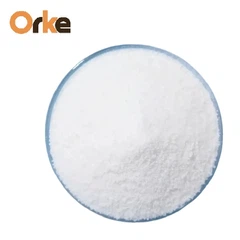

C9 Hydrocarbon Resin functions primarily as a modifier, adhesion promoter, and processing aid in paint and coating formulations [1][2]. It increases gloss, improves pigment dispersion, and enhances adhesion and hardness [1][2][3]. However, it is not a universal additive; its performance depends on the resin grade (softening point, hydrogenation level), binder system, and substrate. Standard C9 resin has a pale amber color and limited UV stability, making C9 Hydrogenated Petroleum Resin grades necessary for light-colored or exterior applications [2][4].
1. What Is C9 Hydrocarbon Resin?
C9 hydrocarbon resin is a thermoplastic resin derived from the C9 fraction of petroleum cracking, composed primarily of aromatic monomers such as styrene, methylstyrene, and indene [1][5]. It is used as a modifier and processing aid in adhesives, rubber, and coatings [1][5][6]. Hydrogenated C9 grades are available for applications requiring improved color and stability, and behave more like aliphatic resins as hydrogenation degree increases [2][4].
2. Typical Properties of C9 Hydrocarbon Resin
| Property | Typical Range | Test Method | Reference |
|---|---|---|---|
| Softening point | 90 to 120 degrees C (grade-dependent) | ASTM E28 | [1][5] |
| Acid value | 0.5 mg KOH/g maximum | ASTM D974 | [5] |
| Gardner color (standard grades) | 3 to 7 (pale amber) | ASTM D1544 | [2] |
| Gardner color (hydrogenated grades) | 1 or below (water-white) | ASTM D1544 | [4] |
| Molecular weight (Mn) | approximately 500 to 1,500 (grade-dependent) | GPC | [5] |
Note: these are typical ranges. Actual values depend on grade and manufacturer, and different suppliers report molecular weight as Mn or Mw on different scales. Always confirm with supplier TDS.
3. What C9 Resin Does in Paints
3.1 Gloss and Pigment Dispersion
C9 hydrocarbon resin reduces solution viscosity and improves pigment and substrate wet-out, promoting effective surface leveling during film formation [2][3]. This contributes to higher film gloss and more uniform color development [1][2].
3.2 Adhesion and Hardness
C9 resin is added to paints to increase the final finish, the adhesiveness of paint films, and hardness [1][2]. The aromatic structure of C9 resin contributes to compatibility with aromatic or polar binder systems, but the exact adhesion mechanism depends on the specific binder and substrate combination.
3.3 Durability and Chemical Resistance
C9 resin-based coatings are described as resistant to acid and alkaline environments [1][6]. It can increase the hardness and chemical resistance of alkyd coating systems [3].
4. Limitations and Boundaries
| Limitation | Reason | Alternative |
|---|---|---|
| Color (pale amber) | Standard C9 has inherent color; not suitable for bright white or clear coatings | Hydrogenated C9 [2][4] |
| UV stability | Standard C9 has limited UV resistance; may chalk or yellow in exterior exposure | Hydrogenated C9 or aliphatic C5 [4] |
| Water-based systems | C9 resin requires emulsification for waterborne compatibility; suppliers document emulsification processes using water and emulsifiers at elevated temperature | Emulsified C9 or water-dispersible grades [7] |
| Polar substrates | Compatibility may be insufficient without modification | C5/C9 Copolymer Hydrocarbon Resin or functionalized resins |
4.1 VOC and Regulatory Note
C9 hydrocarbon resin is used in both solventborne and waterborne coating systems. In solventborne applications, the coating formulation as a whole is subject to VOC regulation: China's Blue Sky framework prioritizes VOC control and mandates low- or zero-VOC coatings for designated urban road-marking and municipal applications [8], and comparable jurisdictions impose seasonal VOC content caps on traffic and architectural coatings (for example, Canada's 150 g/L ozone-season cap for traffic marking coatings) [9]. The resin itself is not the regulated VOC emission source, but formulators serving regulated markets should confirm the VOC classification of the complete formulation and request supplier VOC/solvent-content documentation for the resin grade. Hydrogenated C9 grades with improved color also serve the waterborne and color-critical segments where standard C9 cannot [2][4].
5. What This Article Does NOT Claim
- No universal "best" resin. C9 is not optimal for every paint application [1][2].
- No specific quantitative performance data (for example, "20 to 30% adhesion improvement"). Application-specific testing is required.
- No claim that standard C9 is suitable for all water-based systems without emulsification. Emulsifiers or modified grades are required [7].
- No claim that C9 resin is a standalone adhesion promoter. It functions as a modifier within the binder system.
- No claim of VOC compliance for any specific formulation. VOC classification is determined by the complete formulation and target-market regulation [8][9].
6. Quality Parameters to Request Before Evaluation
| Parameter | Typical Method | What It Tells You |
|---|---|---|
| Softening point | ASTM E28 | Processing and film properties [1] |
| Gardner color | ASTM D1544 | Color contribution to final coating [2] |
| Acid value | ASTM D974 | Residual acidity; compatibility indicator [5] |
| Hydrogenation degree | Supplier TDS | Color and UV stability [4] |
| Compatibility data | Application-specific | Confirms suitability with your binder system |
| VOC / solvent content documentation | Supplier statement | Supports formulation-level VOC classification for regulated markets [8][9] |
| Batch-specific COA | Supplier COA | Confirms actual values for delivered batch |
7. Conclusion
As the preceding sections show, C9 hydrocarbon resin earns its place in paints and coatings as a modifier rather than a primary binder: it reduces solution viscosity, improves pigment and substrate wet-out, raises gloss, and increases film hardness and adhesion, with documented use in alkyd systems for hardness and chemical resistance [1][2][3][6]. Commercial grades span 90 to 120 degrees C softening point, Gardner color 3 to 7 for standard pale-amber grades and 1 or below for hydrogenated water-white grades, and Mn approximately 500 to 1,500 depending on grade [1][2][4][5]. Its boundaries are equally clear: inherent color and limited UV stability restrict standard C9 from bright-white and exterior applications, where hydrogenated C9 or aliphatic C5 grades are required; waterborne use requires emulsification or water-dispersible grades; and polar-substrate adhesion may require C5/C9 copolymer or functionalized resins [2][4][7]. In regulated markets, VOC classification of the complete formulation, not the resin alone, determines compliance [8][9]. Every value in this article is a typical published range or supplier-documented figure; selection must be validated against supplier TDS, batch COA, and application-specific trial on the actual formulation.
8. Next Step
If you are evaluating C9 Hydrocarbon Resin for a paint or coating formulation, send us:
- Binder system (acrylic, alkyd, epoxy, etc.)
- Application (interior, exterior, industrial, water-based)
- Color and UV requirements
- Target softening point and acid value
- VOC regulatory context of your target market, if applicable
- Required documentation (TDS, COA, compatibility data, VOC statement)
We will recommend a suitable grade and provide batch-specific property data for your evaluation.
Request C9 Hydrocarbon Resin TDS and Sample →
References
- Henghe Industrial. C5 Hydrocarbon Resin / C9 Thermal Tackifying Resin: Product Overview. [Supplier background. Paints mainly use C9 hydrocarbon resin with high softening points; it can increase final finishes, adhesiveness of paint films, and hardness.]
- ChemicalBook. C9 Petroleum Resin: Product Overview. [Aggregator reference. Paint industry mainly uses high softening point C9 resin to increase gloss, improve adhesion, hardness, and acid/alkali resistance.]
- Teckrez. Teckrez CX-902: Surface Modifier. [Hydrocarbon resin based on C9 and DCPD feedstocks; used as alkyd coating modifier to increase hardness, gloss, and chemical resistance.]
- Eastman Chemical Company. Hydrocarbon Resins for Paints and Coatings: Technical Selection Guide (Picco, Regalrez, and related resin families). Kingsport, TN: Eastman. [Documents standard versus hydrogenated grade positioning for color-critical and exterior applications; standard grades show inherent color and limited UV stability while hydrogenated grades deliver water-white color.]
- Knowde. NEVCHEM 110: C9 Hydrocarbon Resin. Neville Chemical Company. [Thermoplastic low molecular weight C9 resin; tackifier and processing aid.]
- Orke Chemical. What Are the Gloss Properties of C9 Petroleum Resin in Coatings? Technical Blog. [Supplier background. C9 resin reduces solution viscosity, improves pigment/substrate wet-out, and promotes surface leveling; coatings described as resistant to acid and alkaline environments.]
- Supplier-documented emulsification process for high-softening-point hydrocarbon resins in waterborne systems. [High softening point resins are dispersed with water and emulsifiers at elevated temperature to form stable emulsions; process specifics vary by supplier.]
- ChemLinked. China to Update VOC Standards for Coatings: Three-year Action Plan on Defending Blue Sky. [Documents VOC control priorities and low- or zero-VOC coating mandates for designated applications in China.]
- Environment and Climate Change Canada. Traffic Marking Coating VOC Factsheet. [Documents seasonal VOC content cap of 150 g/L for traffic marking coatings during the May 1 to October 15 ozone season.]

