


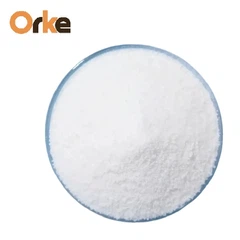

Phenolic resin functions as a binder and fuel component in pyrotechnic compositions, holding fuel and oxidizer particles together while contributing to the overall energy output of the burn [1][2]. It is not an explosive itself, but when combined with oxidizers and fuels, it becomes part of a regulated pyrotechnic composition [3][4]. Phenolic resin is used in selected pyrotechnic applications, including certain fireworks, igniter compositions, and delay formulations [1][2].
1. What Is Phenolic Resin?
Phenol formaldehyde resin (PF), commonly called phenolic resin, is a thermosetting polymer produced by the reaction of phenol with formaldehyde [1]. Once cured, it forms a rigid, cross-linked network that does not melt or reflow on heating [1][2]. A dedicated Phenolic Resin For Fireworks grade is specified for particle size, cure profile, and residual monomer limits suited to pyrotechnic use [2].
Phenolic resins are available in two main forms:
- Resole: One-step resin that cures by heat alone [1][2].
- Novolac: Two-step resin requiring a curing agent such as hexamethylenetetramine (HMTA) [1][2].
2. Typical Properties for Pyrotechnic Binders
| Property | Typical Value | Method/Reference |
|---|---|---|
| Thermal decomposition (main weight-loss interval) | ~400–700 °C in pyrotechnic formulations | TGA [2][5] |
| Ignition threshold | 530–580 °C | TGA [5] |
| Water absorption (24 h, cured and filled) | ~0.1–0.5% | ASTM D570 [2] |
| Glass transition temperature (cured system) | ~150–200 °C (grade-dependent) | DSC / TMA [2] |
| Novolac softening point (uncured) | ~80–110 °C | Ring & Ball [2] |
Note: These are typical ranges. Actual values depend on grade, cure schedule, and test conditions. Always confirm with supplier TDS.
3. Why Phenolic Resin Is Used in Fireworks
3.1 Thermal Stability
Cured phenolic resin retains structural integrity well above the temperatures at which many natural binders break down. Dextrin, the most common aqueous binder in fireworks, decomposes at roughly 175–260 °C, whereas cured phenolic does not undergo its main weight loss until well above that range [2][5]. This does not mean phenolic resin survives the 1,000 °C+ flame front; it means that during the brief interval between launch and burst, the binder retains sufficient integrity to hold the star composition together [2][3].
3.2 Moisture Resistance
Dextrin absorbs moisture readily and loses bond strength in humid conditions. Phenolic resin, once fully cured, has low water absorption (typically 0.1–0.5% per ASTM D570 for filled systems), making it suitable for storage in humid environments [2].
3.3 Binder and Fuel Function
Phenolic resin functions simultaneously as a structural binder and a high-heat-value organic fuel [2][9]. Comparative testing of Ba(NO₃)₂/Mg compositions demonstrates that phenolic resin-bound formulations achieve a peak burn temperature of 1,594.5 °C and a burn rate of 12.5 mm/s, compared to 1,432.6 °C and 9.0 mm/s for nitrocellulose-bound systems [9].
4. How Phenolic Resin Compares to Other Binders
| Binder | Moisture Sensitivity | Burn Rate Consistency | Thermal Decomposition | Key Limitation |
|---|---|---|---|---|
| Dextrin | High | Variable | ~175–260 °C | Humidity-sensitive; storage degradation [2][9] |
| Gum Arabic | Moderate | Variable | ~200 °C | High cost; supply-chain variance [9] |
| Sodium Silicate | Low | Moderate | N/A | Brittle matrices prone to cracking [9] |
| Phenolic Resin | Low (hydrophobic) | High | ~400–700 °C | Cure profile requires precision [2][9] |
5. What Phenolic Resin Is NOT in Fireworks
- Not an explosive itself. Cured phenolic resin is not classified as an explosive material. However, the finished pyrotechnic composition containing the resin is a regulated explosive material in most jurisdictions [3][4].
- Not a universal replacement for dextrin. Dextrin remains the most common binder in many fireworks applications; phenolic is used where moisture resistance or thermal stability is critical [2][9].
- Not suitable without grade-specific validation. Not all phenolic resin grades are compatible with pyrotechnic compositions. Residual formaldehyde, cure volatiles, and ionic contamination must be controlled [1][2].
6. Quality Parameters to Request Before Evaluation
| Parameter | Typical Method | What It Tells You |
|---|---|---|
| Thermal decomposition onset | TGA | Upper service temperature limit [5] |
| Residual formaldehyde | Supplier TDS / HPLC | Safety and regulatory compliance [1] |
| Cure profile (time–temperature) | DSC / supplier TDS | Process optimization [2] |
| Water absorption | ASTM D570 | Storage stability in humid conditions [2] |
| Particle size (if powder) | Sieve analysis / laser diffraction | Mixing uniformity with pyrotechnic compositions |
7. Regulatory and Compliance Notes
- Residual formaldehyde: Fully cured phenolic resin should contain minimal free formaldehyde. Confirm with supplier TDS and applicable safety standards [1].
- Storage and transport: Follow local regulations for pyrotechnic compositions and binders.
- No universal "food contact" or "RoHS" claim applies. Compliance is grade-specific and application-specific.
8. Next Step
If you are evaluating Phenolic Resin For Fireworks for a pyrotechnic application, send us:
- Application type (aerial shell, star composition, delay, igniter)
- Current binder system
- Cure method and temperature
- Storage environment (humidity, temperature)
- Required documentation (TDS, SDS, residual formaldehyde data)
We will recommend a suitable grade and provide a cure profile for your evaluation.
Request Phenolic Resin TDS and Cure Profile →
References
- Knop, A., & Pilato, L. A. Phenolic Resins: Chemistry, Applications and Performance. Springer, 1985 (reprinted 2013).
- Orke Chemical. Can Phenolic Resin Be Used in Aerial Fireworks? Technical Blog, 2026.
- Conkling, J. A., & Mocella, C. Chemistry of Pyrotechnics: Basic Principles and Theory, 3rd ed. CRC Press, 2019.
- United Nations. Recommendations on the Transport of Dangerous Goods, Model Regulations. UN Class 1: Explosives.
- Orke Chemical. Can Phenolic Resin Replace Other Binders in Fireworks? Technical Blog, 2026.
- Kosanke, K. L., Kosanke, B. J., & Sturman, B. T. Encyclopedic Dictionary of Pyrotechnics. Journal of Pyrotechnics, 2012.

