



Can phenolic resin be used in offshore oil fields? That's a question I often get asked as a supplier of Phenolic Resin For Oil Fields. In this article, I will discuss the technical feasibility and typical applications of phenolic resin in offshore oil field environments based on industry experience.
Let's start with what phenolic resin is. Phenolic resin is a type of synthetic polymer made by the reaction of phenol with formaldehyde. It's got some pretty cool properties like high heat resistance, good mechanical strength, and excellent chemical resistance. These features make it a popular choice in a bunch of industries. For example, you can check out Phenolic Resin For Friction Materials and
Phenolic Resin For Composite Materials if you're curious about its other applications.
Now, when it comes to offshore oil fields, the environment is super harsh. There's high pressure, extreme temperatures, and contact with all sorts of chemicals and corrosive substances. So, for any material to work in this setting, it's gotta be tough as nails.
One of the main areas where phenolic resin can come in handy in offshore oil fields is in the manufacturing of drilling equipment. The drill bits need to be able to withstand the high-pressure and high-temperature conditions deep down in the seabed. Phenolic resin is mainly used as a binder in friction materials, grinding tools, composite components, and certain downhole sealing or plugging materials. In drilling-related applications, phenolic resin is more commonly found in composite materials and auxiliary components rather than as a primary structural material for drill bits.
Another application is in the insulation of pipelines. Offshore oil pipelines are exposed to cold sea - water temperatures on the outside and hot oil flow on the inside. Phenolic resin is more commonly used as a binder or matrix material in insulation systems and composite materials rather than being used directly as a standalone insulation material. It helps to reduce heat loss from the oil flowing through the pipeline, which is crucial for maintaining the proper viscosity and flow rate of the oil. Additionally, its chemical resistance protects the pipeline from the corrosive effects of the seawater and any chemicals present in the oil.
Phenolic resin can also be used in the construction of platform structures. These platforms need to be strong and durable to withstand the harsh marine environment, including strong winds, waves, and corrosive seawater. Phenolic resin-based composites are mainly used in selected components, panels, grating systems, and corrosion-resistant parts rather than as major structural materials of offshore platforms. These materials can improve corrosion resistance and reduce weight in specific applications.
However, it's not all smooth sailing. There are some challenges when using phenolic resin in offshore oil fields. One of the biggies is the curing process. The curing of phenolic resin requires specific temperature and humidity conditions. In the offshore environment, it can be difficult to control these conditions precisely. If the curing process is not done correctly, the properties of the final product may be compromised.
Also, in case of any accidents or spills, the environmental impact of phenolic resin needs to be considered. Residual free formaldehyde and emissions generated during processing should be properly controlled to minimize environmental and occupational exposure risks. Appropriate measures need to be taken to ensure that during the production, use, and disposal of phenolic resin - based products in offshore oil fields, the environmental impact is minimized.
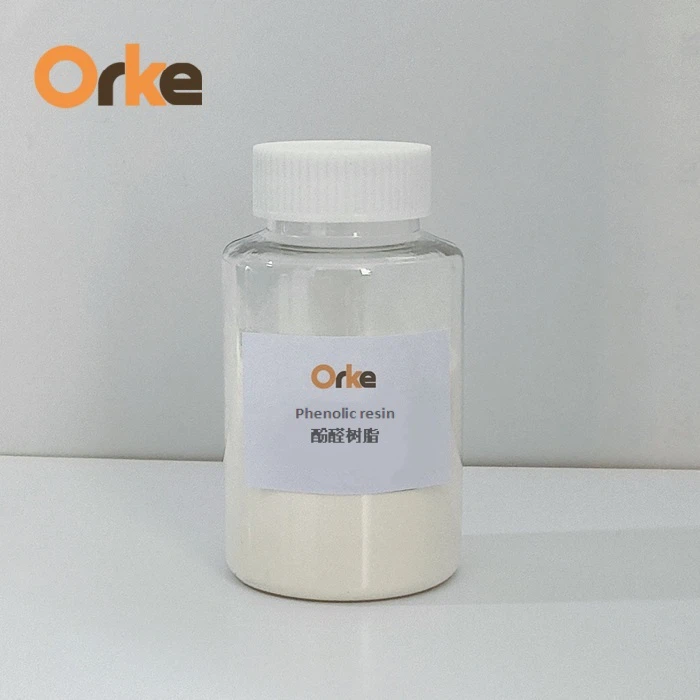

When it comes to choosing the right phenolic resin for offshore oil fields, quality is key. As a supplier, I make sure that the phenolic resin I offer meets the highest standards. I've done a lot of research and testing to ensure that our product can withstand the extreme conditions of offshore oil fields.
Although Electronic Grade Phenolic Resin serves different applications, our manufacturing experience and quality control capabilities ensure consistent product quality across various phenolic resin grades, including oil-field-related formulations. We use state - of - the - art manufacturing processes and strict quality control measures to make sure that every batch of resin we produce is up to par.
In conclusion, phenolic resin has great potential for use in offshore oil fields. Its heat - resistant, mechanically strong, and chemically resistant properties make it suitable for various applications such as drilling equipment, pipeline insulation, and platform construction. However, we need to be aware of the challenges like the curing process and environmental impact.
If you're in the offshore oil - field business and are looking for a reliable phenolic resin supplier, I'd love to talk to you. Whether you've got questions about the product, its applications, or want to discuss a potential purchase, just reach out. We can have a chat about how our phenolic resin can meet your specific needs and requirements.
References
[1] Knop, A., & Pilato, L. A. (1985). Phenolic resins: Chemistry, applications, standardization, safety and ecology. Springer-Verlag.
[2] Gardziella, A., Pilato, L. A., & Knop, A. (2000). Phenolic resins: Chemistry, applications, standardization, safety and ecology (2nd ed.). Springer. https://doi.org/10.1007/978-3-662-04101-7