
Abstract. China's road marking industry has long been organized around two material archetypes: thermoplastic paints based on C5 Hydrocarbon Resin and ambient-cured paints based on acrylic resins. This article argues that the distinction between them is not merely one of chemistry, but of binder role and curing mechanism. C5 petroleum resin functions as a thermoplastic framework former whose value lies in thick-film durability; acrylic resins serve as film-forming binders whose principal advantage is application flexibility. The conventional "two pillars" narrative, however, is being destabilized - not by a frontal assault from waterborne technology on thermoplastic durability, but by a regulatory squeeze on the solventborne variant of the acrylic route. The result is a reconfiguration rather than a replacement: thermoplastic C5 systems retain their grip on high-traffic durability economics, while the acrylic side migrates toward waterborne formulations in thin-film, environmentally sensitive applications.
1. Introduction: Beyond a Simple Material Comparison
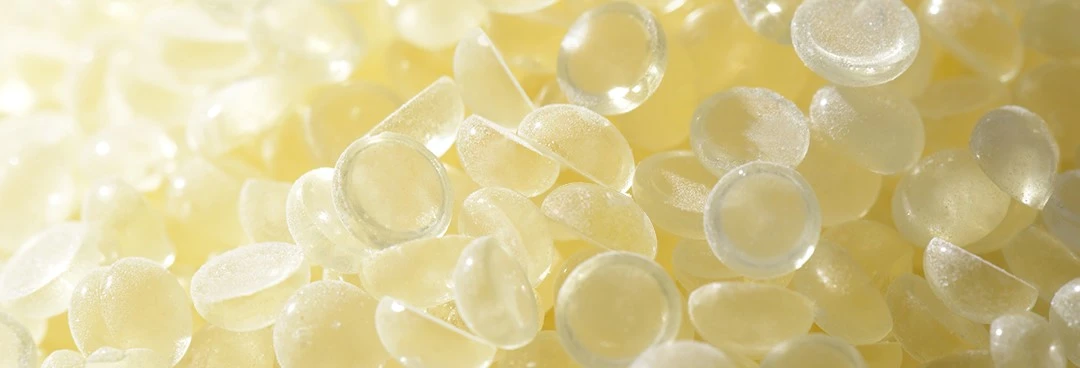
Discussions of road marking binders often treat C5 petroleum resin and acrylic resin as interchangeable options within a single decision framework. They are not. C5 petroleum resin is a low-molecular-weight aliphatic hydrocarbon resin with a softening point typically in the 95–105 °C range [1][2][3], valued for its light color, low odor, and compatibility with other formulation components. Acrylic resins, by contrast, are higher-molecular-weight copolymers whose acrylic backbone confers weatherability, clarity, adhesion, hardness, and elasticity [4][5]. The meaningful comparison is therefore not between two resins as such, but between two systems in which these resins play structurally different roles: C5 as the load-bearing continuous phase in a hot-applied thermoplastic, acrylic as the film-former in an ambient-cured coating.
2. C5 Petroleum Resin in Thermoplastic Markings: Durability Through Reversible Melting
Thermoplastic road marking operates by a physical phase-change mechanism. The formulation - C5 Hydrocarbon Resin, plasticizers, pigments, fillers, and glass beads - is heated to approximately 180–220 °C, applied as a melt, and solidifies upon cooling [6]. C5 petroleum resin is well suited to this role because it provides a compatible, thermally reversible matrix that wets pigments and beads effectively. Commercial C5 grades for hot-melt road marking - such as Ecopowerchem HC-52100, Innova Petroleum Resin C5-100, and Jinhete YH-1288S - are specified with Ring-and-Ball softening points of 95–105 °C, Gardner color max 5–6, and low acid values [1][2][3], and are documented to deliver fast drying, excellent glass-bead affinity, high early crush resistance, and superior UV/heat aging resistance, while improving brightness, adhesion, flow, and leveling in the applied film [6][7].
The performance consequence is a thick, durable marking. Thermoplastic markings typically achieve service lives in the range of three to five years, with properly formulated and well-applied systems reaching five to eight years under favorable conditions per TxDOT, while typical agency-documented service lives fall in the two-to-three-year range under standard traffic volumes [8][13]. This durability translates into a favorable whole-life cost profile: although initial material and equipment costs are high - requiring specialized melting kettles and screed or spray application machinery - the break-even point relative to thinner paints is reached within two to three years per PatSnap's maintenance-interval analysis [14]. For motorways, national highways, and urban arterials where lane-closure costs and frequent re-marking are prohibitive, this economics remains compelling.
3. Acrylic Resins in Ambient-Cured Markings: Flexibility and Its Structural Penalty
Acrylic-based markings follow a fundamentally different curing pathway: solvent or water evaporates at ambient temperature, leaving a thin acrylic film. Acrylic binders are selected for their adhesion to both asphalt and concrete, abrasion resistance, non-yellowing behavior under UV exposure, hardness, elasticity, and fast solvent release [4][5]. In solventborne formulations - represented by commercial products such as Sherwin-Williams Setfast - these properties are delivered through a simple, low-equipment application process: the paint can be sprayed or rolled without heating, making it accessible to small contractors and suitable for parking lots, residential areas, temporary diversions, and low-volume roads [15][16].
The structural penalty, however, is film thickness. Ambient-cured acrylic markings are thin films, typically on the order of a fraction of a millimeter, and their service life is correspondingly short - commonly around 6 to 12 months for solventborne systems per TxDOT and IJTTE, with three months typical on very high-traffic roadways [9][10][17]. High-build waterborne acrylic systems extend service life to approximately 18 to 24 months on moderate-AADT roads [18]. Retroreflective performance, dependent on glass beads embedded in or on the film, degrades rapidly as the thin binder layer wears. Thus the acrylic route trades durability for accessibility: it lowers the barrier to entry and accommodates dispersed, small-scale demand, but it cannot match the thick-film wear resistance of thermoplastic systems in high-stress environments.
4. The Regulatory Rupture: How Policy Reconfigures the Acrylic Route
The stability of the "two pillars" framework has been disrupted less by competition between the pillars than by environmental regulation acting selectively on one of them. Volatile organic compound emissions from solventborne acrylic markings have become the binding constraint. China's Three-year Action Plan on Defending Blue Sky, initiated in 2018, established VOCs as a control priority, and the 2025 update of China's VOC standards for coatings tightened the compliance envelope for solventborne paint manufacture [19][20]. Complementing this, China has issued a mandatory national standard for safety in coating operations that requires the use of low-VOC coating materials [21]. Outside China, Canada's traffic marking coating VOC factsheet caps VOC content at 150 g/L during the May 1 – October 15 ozone season, down from 450 g/L in other months [22][23]. Comparative research by Burghardt et al. has shown that nominal VOC content across different regulatory jurisdictions can produce radically different ozone-formation potentials - up to six-fold differences - underscoring that VOC regulation is the structuring force, not simply a compliance afterthought [24]. The compliance burden falls disproportionately on solventborne acrylic producers: continued operation under tightening VOC limits entails higher regulatory scrutiny, permitting risk, and potential production restrictions.
The market response is visible in share data. Industry analysis indicates that cold-applied waterborne acrylic traffic paints have largely replaced solventborne products in the thin-film segment [11], with high-build waterborne acrylic systems extending the durability envelope of the thin-film route to 18–24 months [18]. Business Research Insights reports that thermoplastic and water-based formulations together account for approximately 58% of product utilization, while solvent-based coatings hold roughly 22% of industrial road marking applications [25]. Mordor Intelligence's 2025 baseline places thermoplastic coatings at 38.11% of the traffic road marking coatings market [26]. These figures do not indicate that waterborne acrylic is displacing thermoplastic C5 systems; they indicate that waterborne acrylic is displacing solventborne acrylic within the ambient-cured segment.
5. What Is Not Being Replaced: The Persistence of the Thermoplastic Base
It is essential to distinguish the substitution within the thin-film segment from substitution of the thin-film segment. Thermoplastic markings retain a dominant position in high-durability applications. Mordor Intelligence's 2025 baseline places thermoplastic coatings at 38.11% of the market, with documented durability of 3–5 years offsetting higher upfront cost [26], and the road marking lines application segment accounts for 68.5% of traffic road marking coatings market revenue in 2025 per Future Market Insights [27]. The durability economics that favored thermoplastic over solventborne paint - the two-to-three-year break-even window [14] - remain intact and are not altered by the waterborne transition, because waterborne acrylic markings still operate in the thin-film durability regime. Waterborne systems improve the environmental profile of the thin-film route; they do not transform it into a thick-film route.
Moreover, the boundary between the two systems is not absolute. Commercial C5 suppliers document the use of C5/C9 Copolymer Hydrocarbon Resin as a grade designed for road marking paint and hot-melt pressure-sensitive adhesive applications [2][3][6], indicating that C5 chemistry can be extended across copolymer architectures without abandoning the thermoplastic framework. Similarly, hydrogenated hydrocarbon resins - including Hydrogenated DCPD Resin - occupy adjacent specialty roles in high-end marking and tape systems [7]. The practical implication is that the "two pillars" are better understood as two dominant formulation architectures with a zone of overlap, rather than as mutually exclusive material categories.
6. What This Article Does NOT Claim
- No claim that waterborne acrylic is replacing thermoplastic C5 systems. Substitution is occurring within the thin-film segment, not across segments [11][26].
- No claim that waterborne acrylic matches thermoplastic durability. Even high-build waterborne acrylic (18–24 months) does not reach thermoplastic's 3–5-year (or 5–8-year under favorable conditions) service life [8][13][18].
- No claim that a single break-even window applies universally. Break-even depends on traffic volume, climate, substrate, and marking thickness [14].
- No claim that VOC regulation alone drives all market shifts. MUTCD retroreflectivity mandates, infrastructure renewal cycles, and substrate-specific requirements also contribute [26].
- No claim that a specific C5-and-acrylic co-formulation patent exists. Verified data show C5/C9 copolymer grades for road marking, not a documented C5+acrylic hot-melt patent in the public literature [2][3][6].
- No claim that C5 chemistry is uniquely suited to road marking. MMA cold-plastic systems offer an alternative route that avoids both thermoplastic and solventborne VOC concerns [26].
7. Conclusion: A Reconfiguration, Not a Collapse
The evidence supports a qualified conclusion. The C5 Hydrocarbon Resin thermoplastic route and the acrylic ambient-cured route remain differentiated by curing mechanism, film thickness, durability, and equipment requirements. The durability advantage of thermoplastic systems in high-traffic scenarios - 3–5 years typical, up to 5–8 years under favorable conditions, with a 2–3-year break-even window - is robust and is not threatened by the waterborne transition [8][13][14][26]. What is changing is the composition of the thin-film segment: solventborne acrylic markings are being displaced by waterborne acrylic markings under VOC regulatory pressure from China's Blue Sky Action Plan, its 2025 VOC standard update, its low-VOC mandatory national standard, and Canada's seasonal 150 g/L cap [19][20][21][22], a shift that improves the environmental performance of the acrylic route without altering its fundamental durability limitations. The future of road marking materials is therefore not a story of one pillar replacing the other, but of internal reconfiguration within the acrylic pillar, alongside the continued structural dominance of the C5 thermoplastic pillar in the applications where its whole-life economics remain unmatched.
References
- Ecopowerchem. HC-52100 - C5 Tackifier Resin for Hot Melt Road Marking Paints (softening point 95–105 °C, light-colored, low-odor). [Supplier TDS.]
- Innova (Tianjin) Chemicals Co., Ltd. Petroleum Resin C5-100 - UL Prospector listing (softening point 95–105 °C; used in road marking paints and hot melt pressure-sensitive adhesives).
- Jinhete. C5 Petroleum Resin for Hot-Melt Road Marking Paint - YH-1288S (softening point 95–105 °C; Color Gardner max 6; good flow; road marking application). [Supplier TDS.]
- Synthesia Technology. Acrylic Resins for Road Marking Paints on Roads (abrasion and weather resistance, durability, hardness, elasticity, fast solvent release).
- Allnex. Solvent Borne and High Solid Resins for Road Marking Paints - Technical Pack (VIACRYL/SETAL styrene acrylic copolymers for 1K thin-layer solventborne systems).
- Ecopowerchem. Aliphatic C5 Petroleum Resin for Road and Thermoplastic Road Marking Coatings - Technical Blog (binder role for hot-melt road marking coatings, bead affinity, UV/heat aging resistance).
- Polykem International. C5 Hydrocarbon Resin in Hot Melt Adhesives and Road Marking Paints - Technical Article.
- Texas Department of Transportation (TxDOT). Pavement Marking Material Descriptions - Thermoplastic (usual service life 2–3 years; properly formulated and applied systems up to 5–8 years).
- Texas Department of Transportation (TxDOT). Pavement Marking Material Descriptions - Water-Based Paint Performance (typical service life 6–12 months; 3 months on very high ADT roads).
- Sherwin-Williams. Setfast Acrylic Solventborne Traffic Marking Paint - Product Data (shelf life 12 months).
- Global Formulation. Road Marking Paint: Formulation and Retroreflectivity (cold-applied waterborne acrylic traffic paints have largely replaced solventborne).
- Cojoasphalt. Best Crosswalk Paint (2026): Durability and Standards (high-build waterborne acrylic: 18–24 months on moderate AADT).
- Eastern Highway. Thermoplastic vs. Ordinary Paint: Which Road Marking Option Lasts Longer (thermoplastic 3–5 years; ordinary paint 6–12 months).
- PatSnap Eureka. Research on Maintenance Intervals Comparison Between Thermoplastic and Paint Markings (thermoplastic break-even point within 2–3 years).
- Sherwin-Williams. Setfast Solventborne Acrylic Traffic Marking Paint - Product Data.
- International Journal for Traffic and Transport Engineering (IJTTE). Application and Characteristics of Waterborne Road Marking Paint (solventborne expected service life 6–12 months on side-line markings).
- Texas Department of Transportation (TxDOT). Water-Based Paint Performance - Pavement Marking Material Descriptions (service-life context for thin-film markings).
- Cojoasphalt. Best Crosswalk Paint (2026) - high-build waterborne acrylic service-life envelope.
- ChemLinked. China to Update VOC Standards for Coatings by 2025 (Three-year Action Plan on Defending Blue Sky initiated 2018; VOC controls escalated).
- SGS. China Issues VOC Regulations to Combat Air Pollution (2020).
- Enviliance. China Issues Mandatory National Standard for Safety in Coating Operations (requires use of low-VOC coating materials).
- Environment and Climate Change Canada. Traffic Marking Coating VOC Factsheet (seasonal VOC cap of 150 g/L from May 1 to October 15; no exceptions).
- Resourceworks. Vanishing Lines and Fading Logic (Canadian VOC 150 g/L May–October, down from 450 g/L in other months).
- Burghardt, T. E.; et al. Emissions of Volatile Organic Compounds from Road Marking Paints (indexed at EPA HERO and ResearchGate; Ozone Formation Potential comparison across North American and European jurisdictions).
- Business Research Insights. Road Marking Paint Market (thermoplastic and water-based formulations combined ~58% of product utilization; solvent-based coatings ~22%).
- Mordor Intelligence. Traffic Road Marking Coatings Market (thermoplastic coatings 38.11% market share in 2025; March 2026 MUTCD retroreflectivity mandates; MMA cold-plastic alternative).
- Future Market Insights. Traffic Road Marking Coatings Market (road marking lines application segment 68.5% of market revenue in 2025).