


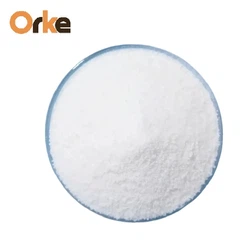

As a supplier of high-quality abrasive materials, one question I get asked constantly is: "Just how hard is White Fused Alumina Micro Powder?"
It's a great question. In the world of industrial manufacturing, hardness isn't just a number-it's the difference between a product that lasts and one that fails. Whether you are grinding steel or casting refractory bricks, understanding the hardness of your raw materials is crucial.
In this post, let's cut through the technical jargon and talk about the Mohs hardness of White Fused Alumina (WFA) Micro Powder and, more importantly, why that matters for your business.
The Short Answer: A Hardness of 9
Let's get straight to the point. White Fused Alumina Micro Powder typically has a Mohs hardness of approximately 9.
To put that in perspective, the Mohs scale runs from 1 (talc, which is so soft you can scratch it with your fingernail) to 10 (diamond, the undisputed king of hardness). A hardness of 9 puts White Fused Alumina in the elite club of the hardest industrial materials available.
What does this mean practically? It means that very few materials on Earth can scratch it. In fact, among natural minerals, only a diamond can scratch White Fused Alumina. This exceptional hardness is the foundation of its value in the market.
Why This Hardness Matters for Your Applications
For procurement officers and engineers, this specific rating translates into three major operational benefits:
1. Superior Abrasive Efficiency
In the abrasive industry, hardness equals cutting power. Because WFA Micro Powder sits at a Mohs 9, it acts as a potent cutting agent.
• The Result: It effectively grinds and polishes hard metals like stainless steel and aluminum without wearing down quickly.
• The Benefit: You get a longer-lasting grinding wheel or sandpaper, reducing downtime and replacement costs on your production line.
2. Unmatched Refractory Stability
In refractory applications, materials face extreme temperatures and constant mechanical stress.
• The Result: The high hardness contributes to incredible wear resistance and thermal stability.
• The Benefit: Refractory bricks and castables made with WFA Micro Powder withstand the brutal environments of steelmaking and glass manufacturing for longer periods, protecting your infrastructure.
3. Enhanced Coating Durability
Increasingly, we see this material used in the coating industry. When added to paints and varnishes (like automotive coatings), the micro powder acts as a hard filler.
• The Result: It creates a scratch-resistant surface.
• The Benefit: For your customers, this means a high-quality finish that stands up to daily wear and tear.
Factors That Influence Hardness: A Supplier's Insight
While the textbook answer is "Mohs 9," the reality can fluctuate based on production quality. As a supplier, I want to be transparent about what affects this number.
• Purity is King: The hardness comes from the crystal structure of the alumina. Impurities disrupt this structure, making the material softer. We use high-purity alumina to ensure that Mohs 9 rating is consistent in every batch.
• The Fusion Process: The temperature and duration of the electric arc fusion process determine the density of the crystals. A well-controlled process yields a denser, harder particle. If you are sourcing WFA, always verify that the manufacturer has strict quality controls over their fusion process.
White Fused Alumina Micro Powder vs. Other Forms
You might be wondering how Micro Powder compares to other forms, such as standard White Fused Alumina or specialized variants like Laminate White Fused Alumina.
• The Hardness: Fundamentally, they all share that same Mohs hardness of roughly 9 because they come from the same base material.
• The Difference: It's all about performance.
◦ Micro Powder: We recommend this for precision applications. Its particle size distribution allows for a finer finish and consistent packing density, making it perfect for high-end polishing or advanced ceramics.
◦ Laminate/Standard Grades: These might be chosen for different bonding properties or bulk applications where microscopic precision isn't the primary goal.
Is White Fused Alumina Micro Powder Right for You?
If you are in the abrasive, refractory, ceramic, or coating industries, the answer is likely a resounding "yes." Its combination of Mohs 9 hardness, chemical stability, and versatility makes it one of the smartest investments for high-performance manufacturing.
Interested in High-Quality White Fused Alumina Micro Powder?
We are committed to supplying materials that meet your exact specifications. If you have questions about particle size distributions, bulk pricing, or specific application needs, reach out to our team today. We are here to help you find the best solution for your project.

