


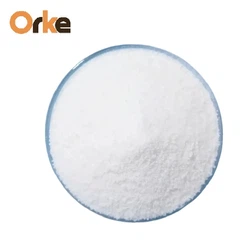

As a supplier of White Fused Alumina (WFA) Micro Powder, the most frequent technical inquiry we receive is: "What is its thermal expansion coefficient?"
It is an excellent question. The answer determines how a material will perform under pressure and extreme heat. Let's break it down clearly.
What is White Fused Alumina Micro Powder?
White Fused Alumina is a high-purity, electrically fused abrasive and refractory raw material. It is synthesized by melting high-purity alumina in an electric arc furnace. The result is a material renowned for its superior hardness, chemical inertness, and-crucially-its dimensional stability under extreme conditions.You can find more detials on our product website: white fused alumina micro powder.
Why Does the Thermal Expansion Coefficient (CTE) Matter?
In simple terms, the CTE measures how much a material expands when heated and contracts when cooled. For industrial applications, a stable CTE is critical to preventing failure.
In environments with drastic temperature swings-such as furnace linings, kiln furniture, precision grinding tools, or electronic substrates-the stable thermal expansion of WFA Micro Powder translates directly into:
·Reduced Thermal Stress: Minimizing internal tension during heating and cooling cycles.
·Prevention of Cracking & Spalling: Lowering the risk of surface flaking or structural failure.
·Superior Dimensional Stability: Maintaining the shape and tolerance of the final product over time.
The Science Behind the Numbers
The thermal expansion behavior is dictated by the material's crystal structure. WFA possesses a dense, stable α-Al₂O₃ (alpha-alumina) crystal lattice. This structure is characterized by incredibly strong atomic bonds (ionic-covalent) that restrict excessive atomic vibration when temperatures rise, naturally minimizing expansion.
The Technical Data
Typically, the mean thermal expansion coefficient of White Fused Alumina ranges from 7.0–9.0 × 10⁻⁶ /°C (measured from room temperature to 1000°C).
*Note: The exact value depends on the specific temperature range and batch purity. However, this value is not significantly influenced by particle size. CTE is an intrinsic crystalline property, meaning micro powder behaves the same as coarse grains in terms of expansion.*
Comparing with Laminate White Fused Alumina
Now, let's compare this with another product in our range: Laminate White Fused Alumina.
Laminate White Fused Alumina is an exceptional material, often used as a coarse aggregate or grain in refractory applications. But how does its thermal behavior compare to Micro Powder?
The Short Answer:
The thermal expansion coefficient is virtually identical.
The Science:
Both products share the exact same fundamental α-Al₂O₃ (alpha-alumina) crystal structure. The "laminate" formation-which refers to the dense, crystalline structure developed during the slower cooling and fusion process in the electric arc furnace-affects the macroscopic shape and density of the grains, but it does not alter the intrinsic crystal lattice.
Because thermal expansion is a function of that crystal lattice, the coefficient remains constant regardless of whether the material is processed into micro powder or larger laminate grains.
Key Differences: Form vs. Function
While the *thermal* expansion behavior is the same, the physical differences are significant for your application choice:
• Particle Size & Shape: Laminate grains are larger and dense, providing structural integrity and resistance to slag penetration in refractory linings. Micro Powder fills the voids between these grains.
• Thermal Impact: When used together, their matching CTEs ensure they expand and contract at the same rate. This synergy is critical for preventing internal stress within the refractory matrix during temperature cycling.
In summary, you do not need to worry about thermal mismatch when switching between or combining these grades. The differences lie in granulometry (particle size distribution) and application method, not in the physics of thermal expansion.
How This Benefits Your Industry
Different industries leverage this property in unique ways:
·Refractories & Kiln Linings:
The stable CTE improves thermal shock resistance. This extends the service life of linings in steel, cement, and glass furnaces by resisting the damage caused by rapid temperature changes.
·Abrasives (Grinding Wheels & Coated Abrasives):
Consistent thermal behavior helps the wheel maintain its form (profile retention) and cutting efficiency even under the high frictional heat generated during grinding.
·Electronics:
When used as a filler in encapsulants or substrates, WFA helps tailor the composite's CTE to match adjacent materials (like silicon or metals). This matching is vital to reduce delamination or solder-joint failure during thermal cycling.
·Advanced Ceramics:
Added to ceramic bodies, it adjusts the overall CTE of the composite, specifically improving resistance to rapid temperature fluctuations.
Do Different Grades Affect CTE?
No. All grades of White Fused Alumina share the same fundamental α-alumina crystal structure; therefore, their intrinsic thermal expansion coefficients are broadly comparable.
Variations between grades are primarily found in:
· Particle size distribution (PSD)
· Chemical purity (Na₂O content, etc.)
· Magnetic susceptibility
The inherent expansion behavior remains constant across grades.
Need a Grade Tailored to Your Process?
We understand that every application has unique thermal and mechanical demands. We offer a comprehensive range of grades designed to meet specific requirements regarding operating temperature, bonding systems, and filler loading.
We can also supply detailed technical datasheets and test reports to support your qualification process.
Let's Talk.
If you are sourcing White Fused Alumina Micro Powder-or want to verify which grade fits your furnace lining, grinding wheel, or ceramic formulation-we are here to help.
We are ready to discuss your needs, share technical insights, and find the right solution for your business.

