


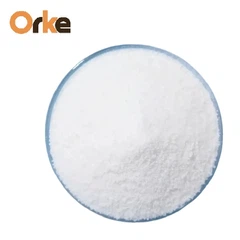

Alumina (aluminum oxide, Al2O3) has an established history of use in cosmetic formulations. Depending on its physical properties and formulation, it may function as an abrasive, absorbent, anticaking agent, bulking agent, or opacifying agent. These functions make alumina relevant to the development of selected makeup, personal-care, and exfoliating products [1,2].
White Fused Alumina (WFA) is a particular form of alumina produced through a high-temperature fusion process. It is widely used as an industrial abrasive because of its high hardness and crystalline structure. However, the fact that alumina is used in cosmetics does not automatically mean that every industrial WFA powder is suitable for cosmetic applications.
Its suitability depends on more than chemical purity or nominal particle size. Particle morphology, impurity profile, crystalline phase, surface characteristics, exposure route, formulation, and intended conditions of use must all be considered.
This article examines the potential role of WFA micropowder in cosmetics from a supplier's perspective, focusing on the available safety evidence, regulatory considerations, material characteristics, and the quality documentation that cosmetic manufacturers should request before approving a raw material.
1. Understanding White Fused Alumina: From Industrial Abrasive to Cosmetic Raw Material
1.1 What Is White Fused Alumina?
White Fused Alumina is a high-purity fused aluminum oxide material. It is typically manufactured by melting alumina in an electric arc furnace, followed by controlled cooling, crushing, grinding, and particle classification.
Its principal crystalline phase is generally alpha-alumina (α-Al2O3), also known as corundum. Due to its high hardness and wear resistance, conventional WFA is commonly used in grinding media, abrasive tools, polishing materials, and refractory applications.
Conventional industrial WFA is generally engineered for abrasive performance, not specifically for skin-contact applications. Crushing and mechanical processing may produce angular particles with relatively sharp edges. The actual particle shape and surface characteristics depend on the manufacturing and classification processes.
Fine grinding and classification can produce WFA micropowders with controlled particle-size distributions. However, reducing particle size alone does not change the fundamental hardness of alpha-alumina or establish that the resulting powder has a mild exfoliation profile.
1.2 Alumina and WFA Are Related, but They Are Not Interchangeable Product Descriptions
In cosmetic ingredient nomenclature, the INCI name commonly used for aluminum oxide is Alumina, with CAS No. 1344-28-1. Alumina can occur in different crystalline and physical forms, including alpha-crystalline alumina.
WFA is a specific industrial material form of alumina. Its production history, impurity profile, morphology, and particle-size characteristics may differ from those of alumina grades specifically developed for cosmetic formulations.
The Cosmetic Ingredient Review (CIR) has evaluated Alumina as used in cosmetics. Its assessment covers the ingredient's reported cosmetic functions and available safety information. However, the CIR assessment should not be interpreted as a product-specific certification for every commercial WFA grade or every industrial alumina powder.
For this reason, cosmetic manufacturers should evaluate a WFA product using its actual technical specifications and supporting safety information rather than relying on the chemical name alone.
2. Regulatory and Safety Evidence: What Do CIR and SCCS Actually Say?
2.1 CIR: Alumina Has an Established Cosmetic Ingredient Safety Assessment
In its final report released on January 10, 2014, the Cosmetic Ingredient Review Expert Panel assessed the safety of Alumina and Aluminum Hydroxide as used in cosmetics. The corresponding scientific paper was subsequently published in the International Journal of Toxicology in 2016 [1,2].
The CIR assessment identified the following cosmetic functions for Alumina:
- Abrasive: Used to provide controlled mechanical abrasion in selected formulations.
- Absorbent: Used to absorb certain formulation components or surface substances.
- Anticaking agent: Used to help reduce the formation of lumps in powder formulations.
- Bulking agent: Used to increase the volume of a formulation.
- Opacifying agent: Used to modify the optical appearance of a product.
The CIR Expert Panel concluded that Alumina and Aluminum Hydroxide were safe under the practices of use and concentrations described in the assessment [1,2].
The report also documented the use of Alumina in both leave-on and rinse-off cosmetic products. These reported use data provide useful context, but they should not be interpreted as universal recommended concentrations or as an approval of every alumina-containing raw material.
The distinction is important: CIR evaluated Alumina as used in cosmetic formulations, not the complete range of industrial WFA powders available from abrasive manufacturers. A specific WFA product still requires assessment of its composition, impurities, particle characteristics, and intended exposure conditions.
2.2 Inhalation Exposure: Cosmetic Use and Industrial Powder Handling Are Different Scenarios
The CIR report also considered incidental inhalation exposure from cosmetic powders and fragrance preparations. Under the use conditions and exposure assumptions evaluated by the Panel, it noted that approximately 95% to 99% of droplets or particles would not be respirable in appreciable amounts. The Panel considered the actual breathing-zone exposure and use concentrations when reaching its conclusion [1].
This finding should not be generalized to all WFA powders or industrial handling operations. It does not establish that fine WFA powder cannot become airborne or that inhalation exposure is negligible during manufacturing, milling, sieving, blending, filling, or packaging.
Powder handling may create airborne dust, and the exposure profile depends on the particle-size distribution, operating environment, ventilation, handling method, and dust-control measures.
Cosmetic manufacturers and raw-material suppliers should therefore distinguish between:
- Consumer exposure: Exposure during the intended use of the finished cosmetic product.
- Occupational exposure: Exposure during powder production, transfer, weighing, blending, and packaging.
- Spray or aerosol exposure: Exposure to particles or droplets generated when a finished formulation is sprayed.
Each scenario may require a different exposure assessment and different control measures.
2.3 EU SCCS: The More Recent Aluminium Safety Opinion
The European Scientific Committee on Consumer Safety (SCCS) has published several opinions on the safety of aluminium compounds in cosmetic products. The more recent relevant opinion is Opinion on the Safety of Aluminium in Cosmetic Products – Submission IV, SCCS/1662/23, adopted on March 27, 2024, and published on April 4, 2024 [3].
The SCCS concluded that the relevant aluminium compounds are safe when used:
- In non-sprayable product categories, at the maximum levels specified in the relevant tables of the opinion.
- In sprayable products, at the specified maximum levels for the total formulation, provided that particles or droplets smaller than 10 μm do not exceed 20% of the total aerosolized particles or droplets.
The opinion also states that it does not apply to nano forms of aluminium, for which a separate specific safety assessment would be required [3].
These conclusions are conditional on the product categories, use levels, and exposure conditions evaluated by the SCCS. They should not be interpreted as unrestricted approval of every industrial WFA powder or every possible cosmetic application.
A particularly important technical distinction concerns the spray condition. The SCCS requirement relating to particles or droplets smaller than 10 μm refers to the aerosolized particles or droplets from sprayable cosmetic products. It is not a general D10, D50, or D90 specification for bulk WFA powder measured by laser diffraction.
Therefore, a supplier's raw-powder particle-size report cannot, by itself, demonstrate compliance with the aerosol conditions in the SCCS opinion.
2.4 EU Cosmetic Regulation: Ingredient Listing Is Not the Same as Product Approval
Regulation (EC) No 1223/2009 establishes the main regulatory framework for cosmetic products placed on the European Union market. It requires cosmetic products to be safe under normal or reasonably foreseeable conditions of use and requires a product-specific safety assessment before market placement [4].
Article 10 requires the responsible person to ensure that a cosmetic product has undergone a safety assessment and that a Cosmetic Product Safety Report (CPSR) has been prepared in accordance with Annex I.
The European Commission's CosIng database provides information on cosmetic ingredients, including INCI names, CAS numbers, and relevant regulatory references. However, the Commission explicitly states that the presence of an ingredient in CosIng does not mean that it is approved or authorized for unrestricted use in cosmetics. CosIng is an informative database without independent legal effect [5].
For an alumina-based ingredient, cosmetic manufacturers should therefore evaluate the actual material identity, impurity profile, particle characteristics, exposure conditions, and intended formulation as part of the product safety assessment.
2.5 United States: GRAS Status and Cosmetic Ingredient Safety Are Different Issues
The claim that FDA has classified Alumina as GRAS for cosmetic use is not accurate. GRAS status relates to a substance's use in food under the applicable food-safety framework. It should not be used as evidence of cosmetic approval.
The CIR report distinguishes Alumina from Aluminum Hydroxide. It describes Alumina as having an established indirect food-additive use history, while Aluminum Hydroxide has a separate GRAS-related history for direct food use [1].
In the United States, FDA generally does not require premarket approval for cosmetic products or their ingredients, except for applicable color additives. However, companies and individuals marketing cosmetics remain legally responsible for the safety of their products and ingredients under labeled or customary conditions of use [6].
For cosmetic procurement, the relevant question is not whether an alumina powder is "FDA approved," but whether the actual ingredient and finished formulation can be adequately supported as safe and compliant for the intended use.
3. Particle Size, Skin Exposure, and Abrasiveness
3.1 Particle Size Alone Does Not Establish Skin Safety
Particle size is an important specification for cosmetic powders, but it should not be treated as a standalone safety indicator.
The stratum corneum is the outermost layer of the skin and plays an important role in barrier protection. However, its thickness should not be treated as a simple particle-size filter. Comparing particle diameter directly with stratum corneum thickness does not prove that a particle cannot enter or be deposited within skin structures.
Research on microparticle penetration has shown that particle behavior depends on particle size and formulation. Lademann et al. (2004) reported that microparticles with a diameter greater than approximately 1 μm barely penetrate into intact human skin and remain largely on the skin surface. However, particles with a diameter below approximately 1.5 μm can penetrate efficiently into hair follicles to depths greater than 2 mm, while penetration into the lipid layers of the stratum corneum remains limited [7].
These findings are general microparticle research and are not specific to WFA. They do not establish that a particular alumina grade will penetrate skin, nor do they prove that every particle remains exclusively on the surface. For a specific WFA grade, the relevance of the follicular route depends on the fraction of particles below approximately 1.5 μm, which should be evaluated against the intended formulation and use conditions.
The skin-contact behavior of a specific WFA grade should be assessed in the context of its particle-size distribution, shape, surface characteristics, formulation, application method, and intended frequency of use.
For this reason, a nominal particle-size range such as 1–10 μm may be considered as a product-development target for a particular formulation, but it is not a universal cosmetic safety threshold.
3.2 Abrasiveness Depends on Particle Size and Morphology
Alumina is a hard crystalline material and is widely used as an industrial abrasive. Its mechanical behavior differs significantly from that of softer cosmetic minerals such as talc.
The abrasiveness of an alumina powder depends on multiple variables:
- Particle size distribution: The median particle size and the coarse-particle tail can influence mechanical contact during use.
- Particle morphology: Angular particles, sharp edges, surface defects, and aspect ratio may affect friction and abrasion.
- Particle concentration: The amount of abrasive incorporated into the formulation affects the intensity of mechanical contact.
- Formulation structure: The vehicle, viscosity, dispersion state, and particle distribution influence how the particles interact with the skin.
- Application conditions: Pressure, rubbing duration, frequency, and the condition of the skin also matter.
A fine particle-size specification does not automatically mean that a powder is mild, non-irritating, or suitable for sensitive skin. Similarly, there is no universal particle-size cutoff that guarantees a scratch-free or irritation-free cosmetic product.
Claims such as "gentle exfoliation," "suitable for sensitive skin," or "non-abrasive" should only be made when supported by appropriate formulation-level evidence.
3.3 Professional Microdermabrasion Is Different from Daily Cosmetic Use
Aluminum oxide crystals are used in certain professional microdermabrasion systems. These devices combine abrasive particle delivery with controlled operating conditions, often including vacuum suction.
Research by Gill et al. (2009) examined aluminum oxide particles used in microdermabrasion. The study reported that most of the abrasive crystals had irregular shapes and sharp edges, with the largest dimension of the majority of particles falling approximately between 100 and 300 μm. The research also showed that tissue removal depended on equipment operation and the number of treatment passes [8].
Professional microdermabrasion should not be used as direct evidence that a particular WFA grade is suitable for everyday cosmetic scrubs or facial cleansers. Medical or professional procedures involve different particle sizes, equipment, treatment conditions, and exposure profiles.
A cosmetic product containing alumina requires its own assessment of particle morphology, abrasiveness, frequency of use, skin compatibility, and intended consumer population.
4. Potential Formulation Functions of Alumina
From a formulation perspective, Alumina may provide several useful functions. However, the exact performance depends on the material grade and the formulation in which it is used.
4.1 Abrasive Function
Alumina can be used as an abrasive in selected cosmetic products. Its suitability for exfoliating products depends on the controlled balance between particle size, morphology, concentration, and the desired level of mechanical exfoliation.
For an exfoliating formulation, the objective should be to establish a reproducible and application-appropriate abrasion profile, not simply to specify the smallest possible particle size.
4.2 Absorbency and Powder Performance
The CIR assessment identifies Alumina as an absorbent and anticaking agent in cosmetic formulations [1,2]. These functions may be relevant to selected powder-based products.
However, absorbency and oil-control performance depend on factors such as specific surface area, particle morphology, surface chemistry, and formulation composition.
Buyers should request oil-absorption or relevant formulation test data before making specific claims about sebum control, matte finish, or long-lasting oil management.
4.3 Opacifying and Optical Effects
Alumina is also identified as an opacifying agent in the CIR assessment [1,2]. Specialized alumina grades may be engineered to provide optical effects through controlled particle morphology and light scattering.
For products marketed with a soft-focus or light-diffusion effect, relevant performance parameters may include particle aspect ratio, surface characteristics, optical transmission, diffuse scattering, and the interaction of the particles with other pigments and fillers.
Soft-focus performance should not be assumed from the chemical composition of Al2O3 alone. It is a grade-specific property that requires optical and formulation testing.
4.4 Anticaking and Bulking Functions
Depending on the powder system, alumina may contribute to anticaking or bulking functions. Its effectiveness depends on the powder's surface area, particle-size distribution, moisture behavior, and interactions with other ingredients.
It should not be described as a universal thickening agent or as inherently superior to talc, mica, silica, or other cosmetic powders for adhesion or flow.
Comparative claims about adhesion, slip, soft focus, or oil absorption should be supported by direct testing against appropriate reference materials under the same formulation and test conditions.
5. Conventional WFA, Cosmetic-Purpose Alumina, and Laminate WFA
5.1 Why Industrial WFA Specifications Are Not Sufficient for Cosmetic Procurement
Industrial WFA specifications commonly emphasize alumina content, hardness, grit classification, particle-size distribution, and abrasive performance.
Cosmetic manufacturers may require additional controls because the material will be incorporated into products intended for consumer skin contact or other specific exposure routes.
A high Al2O3 content does not, by itself, establish cosmetic suitability. For example, a specification of 99% or 99.9% Al2O3 may be useful as a supplier-defined quality target, but neither value is a universal regulatory definition of cosmetic-grade WFA.
Cosmetic-purpose material specifications should be developed around the intended application and supported by information on impurities, morphology, particle-size distribution, and product safety.
5.2 Understanding Laminate White Fused Alumina
Some suppliers use application-oriented product names such as "Laminate White Fused Alumina" to distinguish a specialized WFA grade from conventional abrasive micropowder.
Unless defined by a recognized standard or supported by a specific technical specification, "Laminate White Fused Alumina" should be treated as a supplier-specific commercial grade rather than a universally standardized cosmetic ingredient category.
If a supplier claims that a Laminate WFA product has platelet-like or lamellar particle morphology, this feature should be demonstrated by representative scanning electron microscopy (SEM) images and quantitative morphology data.
Purpose-engineered platelet alumina products are commercially available. For example, the manufacturer brochure for Alusion® describes a high-purity platelet alumina grade developed for cosmetic applications, including soft-focus effects, slip, transparency, and adhesion [11].
This example demonstrates that particle morphology can be an important product-development direction. However, the technical claims for one manufacturer's proprietary platelet alumina cannot be transferred automatically to another supplier's Laminate WFA product.
A platelet-like shape also does not automatically mean that a material has rounded edges, lower abrasiveness, or proven suitability for sensitive skin. These characteristics require separate verification.
5.3 What Evidence Should Support a Laminate WFA Product Claim?
| Claim or Product Feature | Recommended Supporting Evidence |
|---|---|
| Platelet-like morphology | Representative SEM images and quantitative aspect-ratio analysis. |
| Controlled particle size | D10, D50, D90, D99, and a complete particle-size distribution report. |
| Reduced edge sharpness | High-magnification SEM images and comparative morphology analysis. |
| Soft-focus effect | Optical testing, diffuse-light scattering measurements, and comparative formulation results. |
| Improved adhesion or slip | Controlled comparative tests against relevant cosmetic fillers under identical formulation conditions. |
| Lower abrasiveness | Appropriate comparative abrasion or skin-compatibility testing using the finished formulation. |
| Suitability for sensitive-skin products | Finished-formulation safety assessment and relevant irritation or compatibility evidence. |
For Laminate WFA, morphology and application performance should be treated as measurable product characteristics rather than assumed benefits based on the product name.
6. Environmental and Regulatory Considerations: The Microbead-Free Market
6.1 The U.S. Microbead-Free Waters Act of 2015
The U.S. Microbead-Free Waters Act of 2015 amended the Federal Food, Drug, and Cosmetic Act to prohibit the manufacture and distribution of rinse-off cosmetics containing intentionally added plastic microbeads [9].
The law established separate implementation dates:
| Product Category | Manufacturing Prohibition | Interstate Commerce Prohibition |
|---|---|---|
| Rinse-off cosmetics | July 1, 2017 | July 1, 2018 |
| Rinse-off products that are both cosmetics and nonprescription drugs | July 1, 2018 | July 1, 2019 |
The law addresses solid plastic particles used for exfoliating or cleansing purposes in the specified rinse-off products. Pure inorganic alumina particles are not plastic microbeads under this definition.
This means that an uncoated inorganic WFA particle is not prohibited by the U.S. Microbead-Free Waters Act simply because it is used as a solid particulate abrasive. However, the law does not establish that the material is automatically safe or compliant for every cosmetic application.
6.2 The EU Restriction on Synthetic Polymer Microparticles
The European Union has introduced a separate restriction on synthetic polymer microparticles through Commission Regulation (EU) 2023/2055, which amends Annex XVII of the REACH Regulation [12].
The restriction applies to defined synthetic polymer microparticles that meet the relevant composition and particle-size criteria. Pure inorganic alumina is not itself a synthetic polymer and therefore does not fall within that definition solely because it is a fine particulate material.
However, the composition of surface-treated or coated particles should be checked. Under the legal definition, a solid polymer contained in a particle or forming a continuous surface coating may be relevant where the specified conditions are met.
Suppliers should therefore identify any polymeric surface treatment or coating rather than assuming that a mineral core automatically places the entire treated particle outside the scope of the restriction.
6.3 Mineral Origin Does Not Automatically Mean Environmental Superiority
Inorganic alumina may be considered as a potential mineral alternative to plastic exfoliating particles in certain formulations. Nevertheless, its environmental performance should not be described as universally superior without supporting evidence.
A complete environmental comparison may need to consider raw-material sourcing, high-temperature manufacturing energy, particle release, wastewater behavior, disposal, and the environmental characteristics of the finished formulation.
Being outside a specific plastic-microbead restriction is a regulatory distinction, not proof of overall environmental sustainability.
7. A Practical Quality Checklist for Cosmetic WFA Procurement
For cosmetic brands and formulation developers, evaluating a supplier requires more than checking the nominal Al2O3 content or particle-size grade.
The following checklist can help buyers assess whether a WFA powder is sufficiently characterized for further cosmetic formulation and safety evaluation.
| Quality Dimension | Information to Request | Why It Matters |
|---|---|---|
| Material identity | INCI name, CAS number, chemical composition, crystalline phase, and product description. | Confirms the identity and intended material category. |
| Alumina purity | Al2O3 content and analytical method. | Establishes the main chemical composition. |
| Major impurities | Fe2O3, SiO2, Na2O, CaO, and other relevant components. | Helps identify potential effects on color, stability, and formulation quality. |
| Trace elements | Pb, As, Cd, Hg, Cr, Ni, and other elements identified through a risk-based specification. | Supports contaminant assessment for the intended market and exposure conditions. |
| Crystalline phase | X-ray diffraction (XRD) data identifying alpha-alumina and any other relevant phases. | Confirms material structure and supports product differentiation. |
| Particle-size distribution | D10, D50, D90, D99, distribution basis, and the full distribution curve where available. | Helps control particle-size consistency and the coarse-particle tail. |
| Particle morphology | SEM images, aspect-ratio information, and edge characteristics. | Supports evaluation of abrasion, dispersion, slip, and optical behavior. |
| Surface properties | Specific surface area, oil absorption, surface treatment, and relevant residual-treatment information. | Helps assess powder behavior and formulation compatibility. |
| Moisture and other properties | Moisture, loss on drying, pH where applicable, and relevant extractable substances. | Supports quality control and formulation stability. |
| Batch consistency | Batch-specific COA, batch identification, historical test results, and agreed acceptance tolerances. | Helps ensure consistency across repeat orders. |
| Safety and regulatory support | SDS, relevant chemical test reports, product declarations, and information needed for the finished-product safety assessment. | Supports the cosmetic manufacturer's regulatory and safety documentation. |
7.1 Particle-Size Measurement: Why ISO 13320 Matters
ISO 13320:2020 specifies guidance for particle-size analysis using laser diffraction. It covers a broad measurement range of approximately 0.1 μm to 3 mm, subject to the instrument and measurement conditions [10].
Laser diffraction is useful for comparing particle-size distributions and monitoring batch consistency. However, the method uses an optical model based on equivalent spherical particles. For non-spherical particles, the reported distribution may differ from results obtained through other physical measurement methods, such as sieving or sedimentation [10].
For WFA powders with angular or platelet-like particles, laser diffraction should ideally be supported by complementary particle-morphology analysis.
Buyers should request:
- D10, D50, D90, and D99 values.
- The measurement basis, such as volume-based distribution.
- The dispersion medium and dispersion procedure.
- Relevant instrument settings and test conditions.
- A representative PSD curve and batch identification.
- SEM images or image-analysis data where particle morphology is important.
A D50 value alone cannot describe the entire distribution. In particular, the coarse-particle tail may be relevant to formulation consistency and abrasive performance.
7.2 What Does a "Cosmetic-Grade" Specification Need to Include?
There is no single universal Al2O3 purity percentage or 1–10 μm particle-size range that automatically defines all cosmetic-grade WFA products across international markets.
A supplier may establish an Al2O3 purity target of 99%, 99.5%, or 99.9%, depending on its manufacturing capability and the requirements of the intended application. However, the purity target must be supported by a complete impurity specification and appropriate analytical results.
Similarly, a 1–10 μm particle-size target may be suitable for evaluation in a particular formulation, but it should not be represented as an established safety threshold.
For powder products that may become airborne or for sprayable formulations, the exposure route and aerosol characteristics require separate consideration. The bulk powder's laser-diffraction PSD should not be used as a substitute for an aerosol exposure assessment.
8. A Supplier's Perspective: From Raw-Material Specifications to Application Validation
For cosmetic manufacturers, the most useful supplier is not simply one that offers a high-purity alumina powder. It is one that can provide traceable material specifications, reliable batch data, and technical information relevant to the intended formulation.
For a WFA product intended for cosmetic development, suppliers should be prepared to provide:
- Product-specific TDS: Chemical composition, particle-size distribution, crystalline phase, and relevant physical properties.
- Batch-specific COA: Actual analytical results and batch traceability.
- Impurity information: Major oxide impurities and relevant trace-element analysis.
- Morphology evidence: SEM images and quantitative data for products marketed with special particle shapes.
- Safety documentation: SDS and other information required by the customer's safety assessor.
- Application samples: Representative material for compatibility, dispersion, appearance, and performance testing.
The cosmetic manufacturer or responsible person must still assess the finished formulation under the applicable regulatory framework. A supplier's TDS, COA, SDS, or raw-material declaration does not replace the finished-product safety assessment.
9. Conclusion: Cosmetic Suitability Must Be Demonstrated by Product-Specific Evidence
Alumina has established cosmetic applications and has been evaluated by organizations such as CIR and SCCS. Its recognized functions include abrasion, absorption, anticaking, bulking, and opacification. These properties provide a scientific basis for considering selected alumina grades in cosmetic product development.
White Fused Alumina, however, is a particular form of high-hardness crystalline alumina commonly produced for industrial abrasive applications. Its suitability for cosmetic use cannot be established solely by its chemical name, purity percentage, or nominal particle size.
The key evaluation factors are chemical purity, trace contaminants, crystalline phase, particle-size distribution, particle morphology, exposure route, formulation compatibility, and finished-product safety.
For specialized products such as Laminate White Fused Alumina, claims about platelet morphology, soft-focus performance, reduced abrasiveness, or improved cosmetic feel should be supported by SEM analysis, optical testing, comparative formulation data, and appropriate safety evaluation.
If you are evaluating WFA micropowder for makeup, powder formulations, rinse-off exfoliating products, or other personal-care applications, begin with the material specification and intended use conditions. Request the TDS, batch COA, particle-size report, impurity analysis, and representative samples before proceeding to formulation testing.
Our approach is to support cosmetic raw-material evaluation through measurable specifications, transparent quality documentation, and application-specific testing-not through a blanket claim that every high-purity WFA powder is suitable for every cosmetic product.
For technical discussions or sample evaluation, please share your target application, desired particle-size range, appearance requirements, and intended regulatory market. These details help establish a more relevant product specification and evaluation plan.
References
- Cosmetic Ingredient Review (CIR). (2014). Safety Assessment of Alumina and Aluminum Hydroxide as Used in Cosmetics. Final Report, released January 10, 2014. CIR Final Report.
- Becker, L. C., Boyer, I., Bergfeld, W. F., Belsito, D. V., Hill, R. A., Klaassen, C. D., Liebler, D. C., Marks, J. G., Shank, R. C., Slaga, T. J., Snyder, P. W., & Andersen, F. A. (2016). Safety assessment of alumina and aluminum hydroxide as used in cosmetics. International Journal of Toxicology, 35(3 Suppl), 16S–33S. DOI: 10.1177/1091581816677948.
- Scientific Committee on Consumer Safety (SCCS). (2024). Opinion on the Safety of Aluminium in Cosmetic Products – Submission IV. SCCS/1662/23. Final opinion adopted March 27, 2024; published April 4, 2024. European Commission. Official SCCS Opinion.
- European Parliament and Council. (2009). Regulation (EC) No 1223/2009 on Cosmetic Products. Official Journal of the European Union. EUR-Lex - Regulation (EC) No 1223/2009.
- European Commission. Cosmetic Ingredient Database (CosIng). Official information database for cosmetic substances and ingredients. European Commission - CosIng.
- U.S. Food and Drug Administration (FDA). Does the FDA Approve Cosmetics Before They Go on the Market? FDA Industry Guidance. FDA - Cosmetics Premarket Approval.
- Lademann, J., Schaefer, H., Otberg, N., Teichmann, A., Blume-Peytavi, U., & Sterry, W. (2004). Penetration of microparticles into human skin. Der Hautarzt, 55(12), 1117–1119. DOI: 10.1007/s00105-004-0841-1.
- Gill, H. S., Andrews, S. N., Sakthivel, S. K., Fedanov, A., Williams, I. R., Garber, D. A., Priddy, F. H., Yellin, S., Feinberg, M. B., Staprans, S. I., & Prausnitz, M. R. (2009). Selective removal of stratum corneum by microdermabrasion to increase skin permeability. European Journal of Pharmaceutical Sciences, 38(2), 95–103. DOI: 10.1016/j.ejps.2009.06.004.
- U.S. Food and Drug Administration (FDA). (2018). The Microbead-Free Waters Act: Frequently Asked Questions. FDA - Microbead-Free Waters Act FAQs. See also: United States Congress. (2015). Microbead-Free Waters Act of 2015. Public Law 114-114. U.S. Government Publishing Office.
- International Organization for Standardization (ISO). (2020). ISO 13320:2020 - Particle Size Analysis: Laser Diffraction Methods. ISO, Geneva. ISO 13320:2020.
- Ergin, N., & Suvaci, E. (2025). Advanced metal oxide powders for cosmetic science. Open Ceramics, 23, 100832. DOI: 10.1016/j.oceram.2025.100832.
- Antaria / LEHVOSS Personal Care. (2022). Alusion®: High-Purity Alumina Platelets for Cosmetic Applications. Manufacturer Technical Brochure. Alusion® Product Brochure. Note: This is manufacturer-specific product information and should not be treated as independent evidence for other alumina grades.
- European Commission. (2023). Commission Regulation (EU) 2023/2055 Amending Annex XVII to Regulation (EC) No 1907/2006 as Regards Synthetic Polymer Microparticles. Official Journal of the European Union. EUR-Lex - Regulation (EU) 2023/2055.
Regulatory and technical note: This article provides general technical information for raw-material evaluation. It does not constitute a product safety assessment, regulatory approval, or legal advice. Cosmetic manufacturers and responsible persons must assess the specific ingredient grade and finished formulation under the current requirements of each target market. Supplier product claims should be supported by current technical specifications and appropriate test data.

