


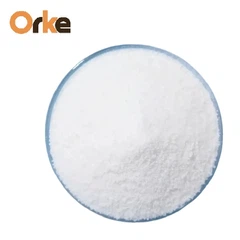

The core tension in precision grinding is controlling surface integrity, dimensional consistency, and machining cost simultaneously at the micron-scale material-removal level. On the question "is white fused alumina (WFA) micro powder suitable?", the answer must rest on a more rigorous premise: under the conditions of workpiece-material compatibility and controlled particle-size classification, WFA micro powder can meet the roughness and cost requirements of a substantial share of precision grinding scenarios - but it is not universally superior to brown fused alumina (BFA) or superabrasives. The key to selection is acknowledging its performance boundaries.
1. Three Hard Requirements Precision Grinding Places on Abrasives
Precision grinding typically targets surface roughness below Ra 0.2–0.4 µm, micron-level dimensional tolerance, and controllable thermal damage. This requires the abrasive to simultaneously provide: ① a concentrated particle-size distribution, preventing coarse particles from creating deep scratches; ② moderate brittleness and fracture behavior, so that grains fragment to expose fresh cutting edges before glazing; and ③ sufficient thermal stability to limit workpiece thermal damage. WFA micro powder has a defined performance profile on each dimension - but each comes with conditions of applicability.
2. The Real Advantages of WFA Micro Powder - and Their Conditions
2.1 Particle-size classification is the entry ticket, not the abrasive type itself
The particle-size distribution of WFA micro powder significantly affects polishing and grinding outcomes: a unimodal, narrow distribution favors uniform surfaces, while bimodal or overly broad distributions degrade surface consistency. The proposition "WFA suits precision grinding" therefore depends first on whether the supplier possesses rigorous secondary classification capability, not on the abrasive family alone.
2.2 Friability and self-sharpening are what distinguish WFA from BFA
WFA is more brittle and fractures more readily than BFA: under load, grains cleave to expose new cutting edges, whereas BFA - tougher and more impact-resistant - dulls without shedding promptly. In grinding of AISI 52100 bearing steel, fused-alumina grains were shown to fracture once grinding force exceeded a critical value, entering a self-sharpening state that sustains the shearing removal mechanism [2]. Related work on rail-grinding stones likewise confirms that the abrasive wear regime is a primary determinant of grinding performance across applications [1]. This mechanism has practical value in preventing wheel loading and excessive dressing.
2.3 Thermal behavior: "low heat generation" and "high thermal conductivity" are different concepts
Commercial literature often describes WFA as "low-heat." From general ceramic microstructure principles, the abundant microcrystalline interfaces in sol-gel alumina (SG) may scatter heat conduction, so WFA's thermal diffusivity may be comparatively favorable; however, the quantitative magnitude of this difference and its actual role in heat partitioning at the grinding zone must be assessed under specific grinding conditions - WFA's thermal behavior should not be reduced to a blanket "low-" or "high-conductivity" label. WFA's advantage in the grinding zone derives more from the lower frictional heat generated by its fracture behavior, together with reasonably good heat dissipation, than from any absolute "low conductivity."
2.4 The marginal effect of purity must not be ignored
Elevated sodium content in white fused alumina forms β-alumina, reducing crystallinity and cutting ability and making grains prone to pulverization [7]. For contamination-sensitive applications such as semiconductors and medical devices, high-purity WFA (Al₂O₃ ≥ 99%, total impurities at low levels) has practical significance - at a procurement-cost premium that must be matched to workpiece value.
3. WFA vs. BFA, SG, and CBN: There Is No One-Directional "Better"
3.1 Versus brown fused alumina (BFA)
Reducing the WFA-vs-BFA comparison to a simple "upgrade" is inconsistent with part of the experimental evidence. In creep-feed deep grinding of K444 nickel-base superalloy, BFA wheels produced surface roughness of Ra 0.206–0.455 µm - lower than WFA wheels - together with smaller grinding forces [3]. This indicates that BFA may deliver lower roughness than WFA in certain high-temperature-alloy grinding tasks, plausibly due to grain-toughness/workpiece-material matching. WFA's advantages lie in brittle-fracture self-sharpening, cutting-edge sharpness, and controllable purity - not in achieving lower Ra on every material.
3.2 Versus sol-gel alumina (SG)
SG suppresses wear-flat generation and growth through its microcrystalline structure and generally outperforms WFA in wear resistance; WFA's fracture self-sharpening is likewise pronounced, so the "self-sharpening" comparison between the two depends on the specific wear mechanism [2][4]. WFA's competitiveness lies in its significantly lower cost than SG, not in across-the-board performance superiority.
3.3 Versus CBN and diamond
WFA's positioning here is the clearest: CBN suits precision grinding of ferrous metals - hardened steels, bearing steels, high-speed steels - but not non-ferrous metals or soft steels [2][5]. CBN's per-piece grinding cost is typically substantially higher than WFA's, with the exact multiple depending on workpiece material, batch size, and dressing strategy; CBN wheels can cost tens of times more than fused-alumina wheels, and their economics are realized only in volume production with very low dressing-frequency requirements [5]. [Industry selection data - grade B/C evidence; cost multiples must be calculated case by case.] For aluminum, copper, soft steel, and medium-batch precision parts, WFA micro powder offers a pragmatic mid-point on the cost–performance curve.
4. Practical Implications for Sourcing Decisions
WFA micro powder selection should follow a three-dimensional judgment - workpiece material, batch size, surface requirement - rather than equating "white fused alumina" with a universal answer for precision grinding.
Scenarios where WFA micro powder is the preferred choice: medium-batch precision grinding or pre-finish grinding of ferrous metals (stainless steel, alloy steel, high-speed steel); surface roughness targets in the Ra 0.1–0.4 µm range; cost-sensitive programs that cannot justify the procurement and equipment-adaptation costs of CBN/SG.
Scenarios requiring careful evaluation: difficult-to-machine materials such as nickel-base superalloys, where BFA may yield lower roughness [3]; ultra-precision optical or semiconductor-grade surfaces (Ra < 0.05 µm), which may require finer classified micro powders or sol-gel abrasives; extremely hard carbides or ceramics, where CBN/diamond hardness is irreplaceable [2][5].
For purchasers, the actionable conclusion is: demand the particle-size distribution curve (not just D50), sodium-content data, and grinding-validation samples on your target workpiece material - this reflects the actual suitability of WFA micro powder far better than asking "is it suitable for precision grinding?"
5. WFA Precision-Grinding Selection Verification Checklist
| Verification item | Recommended requirement | Rationale |
|---|---|---|
| Particle-size distribution | Unimodal narrow-distribution curve with D10/D50/D90 and span - not D50 alone | Coarse particles are the primary source of deep scratches |
| Sodium content | Batch COA with explicit Na₂O or total-sodium limit | Excess sodium forms β-alumina, degrading cutting ability [7] |
| Purity | Al₂O₃ content and total impurity level | Contamination-sensitive applications require high-purity grades |
| Target-material validation | Grinding validation samples or test reports on the target workpiece material | WFA/BFA response differs by material [2][3] |
| Surface and tolerance measurement | Ra, dimensional tolerance, and thermal-damage inspection results | Must be evaluated within the complete grinding system, not on abrasive metrics alone |
6. What This Article Does NOT Claim
- It does not claim that WFA outperforms BFA on all workpiece materials; the K444 nickel-base superalloy comparison shows BFA may achieve lower Ra [3].
- It does not claim that any "CBN cost multiple" is a universally applicable precise ratio; CBN economics depend on workpiece material, batch size, and dressing strategy, and must be calculated per specific conditions.
- It does not claim that WFA can replace CBN or SG in ultra-precision, difficult-to-machine, or extreme-hardness scenarios.
- It does not provide specific grinding parameters (wheel surface speed, depth of cut, feed rates) or bond-system formulation recommendations; the surface-roughness ranges cited are typical results reported in the referenced literature under their specific test conditions, not process commitments by this site, and must not be extrapolated into general performance promises.
Conclusion
White fused alumina micro powder is not the "default option" for precision grinding, but an option with a well-defined cost–performance advantage under matching conditions. Its value lies not in surpassing the absolute performance of CBN or SG, but in delivering predictable surface quality and self-sharpening behavior for medium-batch precision grinding of ferrous metals at a controllable procurement cost. Selecting the right particle-size grade and purity specification - while acknowledging its limitations against difficult-to-machine materials - is the precondition for realizing WFA micro powder's commercial value. If you need particle-size matching evaluation for a specific workpiece material and roughness target, share your workpiece grade and hardness, batch size, target Ra, and grinder type to receive a customized selection recommendation.
References
- Probing the effect of abrasive wear on the grinding performance of rail grinding stones. Journal of Manufacturing Processes, 2021, 64, 493–507. https://doi.org/10.1016/j.jmapro.2021.02.014 [Cited as general evidence that abrasive wear regime governs grinding performance.]
- Time dependent behavior of alumina grains manufactured by two different routes while grinding of AISI 52100 steels. Archives of Civil and Mechanical Engineering, 2017, 17(2), 393–403. https://www.sciencedirect.com/science/article/pii/S1644966516301467
- Liu, S., Li, M., Ding, W., Xu, J. (2021). Study on creep-feed deep grinding of K444 nickel-base superalloy with corundum wheels. Diamond & Abrasives Engineering, 41(4), 72–81 (in Chinese with English abstract). [BFA wheels achieved Ra 0.206–0.455 µm, lower than WFA wheels, with smaller grinding forces.]
- Godino Fernández, L. (2019). Experimental and numerical analysis of wear flat generation and growth in alumina grinding wheels: influence of crystalline structure (Doctoral thesis). University of the Basque Country (UPV/EHU). https://add.ehu.eus/handle/2454/29999
- White fused alumina grinding wheel performance / abrasive selection data. Industry selection literature compilation. [Commercial technical material - grade B/C evidence, not peer-reviewed: CBN wheels can cost tens of times more than fused-alumina wheels; unsuitable for non-ferrous metals; per-piece cost multiples must be calculated per specific conditions.]
- Effect of particle-size distribution of white fused alumina micro powder on polishing performance. Zhengzhou Xinli Wear-Resistant Materials Co., Ltd. technical material. [Commercial technical material - grade B/C evidence, not peer-reviewed.]
- Study on the grinding performance of low-sodium fused alumina. Superhard Material Engineering, 2021(3), 22–27 (in Chinese with English abstract). [Sodium impurities form β-alumina, reducing crystallinity and cutting ability.]

