


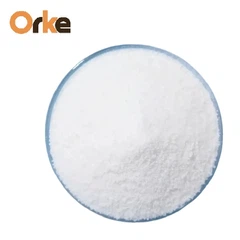

"Can your White Fused Alumina micro powder be reused?" This is the question buyers ask most often - and the one most deserving of a careful answer. The conclusion should be stated up front: sometimes yes, but only under specific conditions; there is no infinite cycling, and "reusability" must not be treated as an inherent property of the material. Whether reuse is feasible depends on the application scenario, the degree of particle wear, the contamination level, and whether the user has the classification and recovery capability to recycle the powder.
The "reuse" discussed in this article refers to closed-loop recycling within the same process. Downcycling (e.g., using spent powder as filler or as feedstock for lower-specification applications) is a different circular pathway, whose quality standards, compliance requirements, and acceptance criteria differ from same-process reuse - the two must not be conflated.
1. Three Variables That Determine Reusability
White fused alumina is produced by melting high-purity alumina in an electric arc furnace, with Al₂O₃ content ≥99%, Mohs hardness 9, and angular particle morphology. Its cutting ability derives primarily from the angular shape of the particles; two irreversible changes occur during reuse: first, micro-fracturing and edge rounding of particles after repeated impact; second, accumulation of fines and ingress of foreign contaminants into the powder. Together, these alter the particle size distribution and surface treatment results.
Vaz et al., in a 2021 study published in the International Journal of Abrasive Technology, specifically examined the reuse of alumina as a grit-blasting abrasive. They found that the accumulation of fine and worn particles in reused powder significantly reduces the surface roughness of grit-blasted steel, but did not weaken coating bond strength under their test conditions [1]. This means: whether reuse is viable depends on the acceptance criterion - if the release criterion is surface roughness (Ra/Rz), reused powder carries significantly elevated risk (because roughness drops); if the acceptance criterion is coating bond strength, reused powder may still be acceptable under such test conditions (because bond strength was not weakened) [1]. The answer cannot be generalized.
2. Grit Blasting: The Most Realistic Reuse Scenario, with Clear Boundaries
General surface treatment - removing rust, mill scale, and old coatings from steel structures - is the scenario where white fused alumina micro powder reuse is most commonly discussed. Closed-cabinet blast systems and systems with classification-recovery loops can return qualified particle fractions to the cycle.
Evidence level: industry empirical values (C-level, Ref 9). Industry sources give the following empirical cycle counts: 24-mesh and 36-mesh primary-grade powder can be used 8+ cycles; secondary grade, 6+ cycles; tertiary grade, 4+ cycles; finer grits typically fall in the 4–6 cycle range or lower. This "4–8 cycle" range is a supplier/industry empirical value, not a standard guarantee value; actual cycle counts are affected by blast pressure, nozzle type, substrate hardness, and recovery efficiency, and must be determined by on-site testing. White fused alumina typically achieves fewer cycles than brown fused alumina, because white fused alumina has higher purity, lacks solid-solution toughening elements in its lattice, and exhibits a hard-but-brittle character with medium-to-low reuse durability and a tendency to generate ultrafine dust; brown fused alumina, toughened by TiO₂ solid solution, has higher fracture toughness and is better suited to repeated in-system cycling [10].
Standard boundary (A-level sources): ISO 11126-7:2018 specifies requirements for fused aluminium oxide blast-cleaning abrasives - particle size range, apparent density, Mohs hardness, moisture, water-extractable conductivity, and water-soluble chlorides - but explicitly states that its requirements apply only to abrasives supplied in "new" condition, and do not apply to abrasives during or after use [4]. This means reused abrasive cannot directly adopt the new-abrasive specification as its acceptance basis. Particle size distribution, if needed, may be measured per ASTM C1277, but that standard likewise addresses test methods for abrasive products - it is not a pass/fail criterion for reused abrasive [5]. Release of reused powder must be established by the user, based on the acceptance criteria of the target process.
The boundary is precision and compliance. If blasting is used for aerospace components, precision parts, or processes with explicit surface-roughness acceptance requirements, worn particles will alter the surface profile, and reused powder must not enter the process. Contamination is equally critical: blasting waste has been identified as a significant solid waste stream in industries such as ship repair, and its environmental risk depends on the nature of the coatings removed [2]. If the substrate carries hazardous coatings, spent abrasive may become controlled waste - reuse is then not only a performance question, but a compliance question.
3. Refractories and Bonded Abrasives: Distinguishing "Post-Use" from "Pre-Use"
White fused alumina micro powder serves as a fine filler in refractory castables, improving packing density and high-temperature performance. Once the castable is installed and sintered, the micro powder is locked into the ceramic matrix and cannot be economically extracted. Recycling research on spent refractories targets metal recovery or downcycling - not restoration of the fine powder as filler for the same refractory process [3]. Therefore, white fused alumina micro powder in post-use refractories is not a reuse candidate.
The genuinely valuable reuse happens "pre-use": uncontaminated, moisture-free residual powder. As long as it is stored in dry, sealed containers, unopened or partially used white fused alumina micro powder can be returned to new batches at controlled ratios. For sampling and controlled re-introduction of unused or partially used powder, ISO 11127-1:2020 provides a sampling method that can anchor an internal classification procedure [7]. This is an inventory-management and housekeeping matter rather than a materials-science breakthrough - but it is often the most readily achievable cost recovery on the procurement side.
4. Polishing, Lapping, and Semiconductors: Budget for Single Use
Polishing and lapping place the highest demands on particle sharpness and particle size distribution. Although white fused alumina particles micro-fracture along grain boundaries under lapping stress to generate fresh cutting edges, the abrasive still gradually dulls after mixing with the carrier, and the carrier loads workpiece debris; separation requires dedicated filtration or centrifugation equipment, and even after separation, reused powder rarely matches the consistency of fresh powder. For optical components, semiconductor wafers, and high-specification metal finishing, reuse is not advisable. The procurement strategy should focus on just-in-time ordering and minimizing on-site waste - not on recovery and reuse.
5. Four Questions Buyers Should Ask
1. What is your acceptance criterion? If roughness (Ra/Rz), gloss, or particle size distribution is the release criterion, reused powder must be measured against that criterion - historical data from fresh powder cannot be carried over [1].
2. Do you have a recovery-classification system? Without the means to remove fines and contaminants, spent powder is not feedstock - it is waste carrying disposal costs.
3. What is the contamination profile? When hazardous coatings are removed, reuse may create compliance risk. Beyond coating chemistry, attention should also be paid to the respirable dust particle size distribution of spent powder and to occupational exposure limits (for reference: OSHA Respirable Crystalline Silica PEL of 50 μg/m³ (8-hour TWA), with an Action Level of 25 μg/m³ [8]); dust control in blasting operations should be incorporated into the site risk assessment.
4. What is the realistic cycle count for this process step? Reference ranges cannot substitute for on-site testing.
6. Minimum On-Site Reuse Verification Protocol
Before deciding whether to reuse, at minimum the following three comparisons should be completed:
| Test Item | Method | Comparison Content |
|---|---|---|
| Particle size distribution | ASTM C1277 or mutually agreed laser diffraction method | D50 and span (D90−D10)/D50 of reused powder vs. fresh powder |
| Target process performance | Executed per the actual process step | Substrate roughness after blasting (Ra/Rz) - if this is the release criterion, reused powder must be measured directly; fresh-powder historical data cannot be carried over [1]; if coatings are involved, bond strength per ASTM C633-24 [6] |
| Contamination elements | EDS or XRF | Whether coating metal elements, chlorides, etc. in reused powder exceed process-allowed limits |
7. What This Article Does NOT Claim
- No claim that white fused alumina micro powder can be reused under all operating conditions.
- No claim that "4–8 cycles" is a universally applicable guarantee value; the range is an industry empirical reference (C-level, Ref 9), not a standard specification.
- No claim that reused powder performs equivalently to fresh powder. Release of reused powder must be based on measured acceptance criteria of the target process (Ra/Rz or ASTM C633 bond strength [6]), and historical data from fresh powder cannot be carried over [1].
- No provision of specific recovery system design, safe operating procedures, or compliance determinations; such matters must be determined by the user in light of local regulations and site conditions.
8. Conclusion and What We Can Offer
Conclusion: the reusability of white fused alumina micro powder is not an inherent property of the material, but a process decision determined jointly by the type of acceptance criterion (roughness vs. bond strength [1]), recovery-classification capability, contamination profile, and compliance risk. The most reliable way to judge whether reuse is economical is to run comparative testing under your actual process conditions. We can assist in evaluating whether your recovery system can produce usable fractions, comparing reused powder against fresh powder in your process, and designing blending schemes that balance cost against quality risk. If your application is precision blasting, polishing, or semiconductor processing, we can also help optimize grit selection and ordering plans to reduce waste at the source.
To request an evaluation, please provide the following four inputs: (1) application scenario; (2) acceptance criteria (Ra/Rz, bond strength, gloss, etc.); (3) current recovery method; (4) monthly consumption. We will provide targeted recommendations together with a reused-vs.-fresh-powder comparative test protocol.
References
- Vaz, R.F.; Pukasiewicz, A.G.M.; Sucharski, G.B.; Siqueira, I.B.A.F.; Odake, S.M.Z.; Paredes, R.S.C. "The reuse of alumina for grit blasting preparation of steel surface for thermal spraying." International Journal of Abrasive Technology, 2021, 10(4): 235–252. DOI: 10.1504/IJAT.2021.120261. [A-level] [Reused alumina significantly reduces surface roughness after grit blasting; coating bond strength not weakened under test conditions.]
- Qi, C.; Weinell, C.E.; Dam-Johansen, K.; Wu, H. "A review of blasting waste generation and management in the ship repair industry." Journal of Environmental Management, 2021, 300: 113714. DOI: 10.1016/j.jenvman.2021.113714. [A-level] [Blasting waste as a significant solid waste stream in ship repair; environmental risk depends on the nature of removed coatings.]
- Hou, W.; Li, H.; Li, M.; Cheng, B. "Recycling of spent refractory materials to produce Al–Si master alloys via the aluminum reduction cell." Journal of Cleaner Production, 2021, 289: 125162. DOI: 10.1016/j.jclepro.2021.125162. [A-level] [Spent refractory recycling targets metal recovery or downcycling, not restoration of fine alumina filler for the same refractory process.]
- ISO 11126-7:2018. Preparation of steel substrates before application of paints and related products - Specifications for non-metallic blast-cleaning abrasives - Part 7: Fused aluminium oxide. ISO. [A-level] [Scope: requirements apply to abrasives supplied in "new" condition only; do not apply to abrasives during or after use.]
- ASTM C1277. Standard Test Method for Determining Particle Size Distribution of Fused Aluminum Oxide Abrasives. ASTM International. [A-level] [Applicable to virgin abrasive products; not a pass/fail criterion for reused abrasive.]
- ASTM C633-24. Standard Test Method for Adhesion or Cohesion Strength of Thermal Spray Coatings. ASTM International. [A-level] [Standard method for coating bond strength determination when reuse acceptability is judged by bond strength.]
- ISO 11127-1:2020. Preparation of steel substrates before application of paints and related products - Test methods for non-metallic blast-cleaning abrasives - Part 1: Sampling. ISO. [A-level] [Sampling method for virgin abrasives; operational reference for controlled re-introduction of unused/partially-used powder into new batches.]
- OSHA. Respirable Crystalline Silica Standard, 29 CFR 1910.1053. [A-level] [PEL: 50 μg/m³ (8-hour TWA); Action Level: 25 μg/m³. Occupational exposure reference for airborne dust in abrasive blasting operations.]
- Henan Sicheng Grinding Technology Co., Ltd. Precautions for the Reuse of White Fused Alumina Micro Powder. Technical blog, 2026. [C-level - supplier/industry empirical value, not a standard guarantee] [Industry empirical reference for reuse cycle counts: 24/36-mesh primary grade ≥8 cycles, secondary ≥6, tertiary ≥4; finer grits typically 4–6 or lower.]
- Brown Fused Alumina vs. White Fused Alumina: Physical Properties and Blasting Process Boundaries. Supplier technical blog. [C-level - supplier comparison material] [White fused alumina: ≥99% Al₂O₃, no solid-solution toughening elements, brittle, medium-to-low reuse durability; brown fused alumina: TiO₂ solid-solution toughening, higher fracture toughness, suitable for repeated in-system cycling.]

