


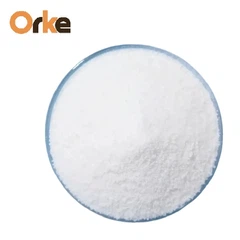

"Is inhaling white fused alumina micro powder harmful?" This is a recurring question in procurement decisions, yet the answer is often pushed toward two extremes: one end treats it as an inert material and neglects protection, while the other conflates it with the serious health risks of silica dust. Based on current occupational health regulations and toxicological evidence, the more accurate conclusion is: the main component of white fused alumina micro powder, alpha-alumina (α-Al₂O₃), has not been classified as a carcinogen; the essence of its inhalation risk is physical exposure to respirable fine particulates, not chemical toxicity; and this risk can be fully constrained through engineering controls and exposure management.
1. Chemical Identity: Aluminum Oxide Itself Is Not a Carcinogen - It Must Be Distinguished from "Aluminum Production" Exposure
The main component of white fused alumina micro powder is alpha-alumina (Al₂O₃). IARC classifies "aluminum production" as Group 1, with the evidence linked to co-exposures present in aluminum smelting environments - such as polycyclic aromatic hydrocarbons - rather than to aluminum oxide itself; IARC's evaluation of aluminum oxide is Group 3 (inadequate evidence of carcinogenicity in humans) [1]. ACGIH's TLV documentation likewise notes that aluminum oxide acts as an "inert" material when inhaled, producing no significant organic pathology or toxic effects under controlled exposure conditions [5]. This chemical positioning is the prerequisite for understanding all subsequent risk discussions: the control logic for white fused alumina micro powder is fundamentally different from that for silica dust, and the two must not be conflated.
2. The Real Risk Variable: Respirable Particle Size, Not "Toxicity"
The key control variable for inhalation risk is particle size. "Respirable particles" capable of penetrating to the alveoli are measured in occupational hygiene by aerodynamic diameter, typically with a 4 μm 50% cut point; common specifications of white fused alumina micro powder can be as fine as the micron range, and some products do contain a respirable fraction capable of reaching the alveoli. ACGIH sets a substance-specific TLV for aluminum metal and insoluble aluminum compounds of 1 mg/m³ (respirable particulate matter, A4 - Not Classifiable as a Human Carcinogen) [3], and a generic category TLV for Particulates Not Otherwise Specified (PNOS) of 3 mg/m³ (respirable) [4]; the latter is set precisely on the basis of this physical exposure characteristic. Procurement specifications and ventilation design should reference the more protective substance-specific value (1 mg/m³) as the design benchmark. It must be made clear that these limits address the category of "poorly soluble particulates" as a physical exposure - not chemical toxicity unique to aluminum oxide. Any poorly soluble fine particulate that reaches the alveoli in respirable size ranges can provoke nonspecific pulmonary inflammatory responses at high concentrations.
3. Accurate Interpretation of Regulatory Limits: OSHA's 15 mg/m³ Is "Total Dust" - Respirable Fraction Is Separately Set at 5 mg/m³
A common error in procurement documents is citing only OSHA's 15 mg/m³. OSHA Table Z-3 sets a dual standard for aluminum oxide dust: total dust PEL of 15 mg/m³ and respirable fraction PEL of 5 mg/m³ (both as 8-hour TWAs) [2]. The ACGIH substance-specific TLV for aluminum oxide (1 mg/m³ respirable [3]) is more protective than the OSHA respirable PEL, and the PNOS category TLV (3 mg/m³ [4]) is also stricter than OSHA's respirable 5 mg/m³. This means that an SDS or compliance statement citing only "compliant with OSHA 15 mg/m³" is insufficient to cover the compliance judgment for the respirable fraction. Buyers should require suppliers to clearly state whether the cited limit refers to "total dust" or "respirable dust," and prioritize obtaining exposure assessment data based on the respirable fraction.
4. Clarifying the Pneumoconiosis Controversy: Aluminum Oxide Itself Lacks Evidence of Human Disease - Confusion Stems Mainly from Associated Silica
CDC/NIOSH health hazard evaluation reports state (as cited): "there are no clinical studies implicating aluminum oxide as a cause of pneumoconiosis in man" [7]; ATSDR's Toxicological Profile for Aluminum covers the OSHA limits and the pneumoconiosis discussion, and is consistent with the direction of this conclusion [6]. It is precisely for this reason that federal standards set aluminum oxide limits under the "inert or nuisance dust" category. The rapidly progressive pulmonary fibrosis historically known as "Shaver's disease" was reported among electric furnace operators in corundum abrasive manufacturing - workers who were simultaneously exposed to both aluminum oxide and silica fumes, and the relative contributions of the two have never been fully disentangled. In sharp contrast, OSHA's PEL for respirable crystalline silica is 0.05 mg/m³ (50 μg/m³, 8-hour TWA; established under the 2016 silica rule, 29 CFR 1910.1053 / 1926.1153) [9] - one hundred times stricter than the respirable limit for aluminum oxide. Conflating white fused alumina micro powder with quartz dust creates unnecessary fear on the one hand, and may mask the silica risk that genuinely requires priority control on the other.
5. The Actual Weight of Human Evidence: The 2020 Western Australia Alumina Refinery Longitudinal Cohort
In a prospective cohort study covering three alumina refineries in Western Australia - 416 participants followed through 2008 - researchers found no association between alumina dust exposure and complaints of cough, wheeze, or rhinitis; however, lung function analysis indicated a "suggestive" dose-response trend in absolute FEV₁ decline (p for trend = 0.06), and an effect on lung function above high-exposure thresholds could not be excluded [8]. The practical implication of this evidence: at controlled industrial exposure levels, alumina dust does not produce a measurable respiratory symptom burden, but subclinical changes in lung function cannot be completely ruled out. This precisely supports an exposure control strategy centered on the respirable fraction, rather than treating white fused alumina micro powder as "completely harmless."
6. Control Points with Direct Commercial Value for Buyers
First, prefer coarser particle sizes within the range permitted by your specifications. The lower the respirable fraction, the lower the ventilation and protection costs, and the greater the compliance margin. Second, use the respirable fraction - not total dust - as the design basis for ventilation. The selection of baghouse dust collection or enclosed exhaust systems should reference the ACGIH substance-specific TLV of 1 mg/m³ [3] or the OSHA respirable PEL of 5 mg/m³ [2] - not the 15 mg/m³ total dust limit. Third, request product-specific SDS documents and verify which dust fraction the cited limit corresponds to. White fused alumina micro powders of different purity, particle size distribution, and surface treatment may exhibit different dust behavior; generic SDS documents are insufficient to support compliance decisions. Fourth, block secondary exposure. Work clothing should not be laundered together with household clothing - fine particles can be retained in fabric fibers and re-suspended in the home environment.
Conclusion and What We Can Offer
Conclusion: the inhalation risk of white fused alumina micro powder is not a binary "toxic/non-toxic" question, but a question of how respirable fine particulates are managed - at what concentrations, under what particle size distribution, and with what level of engineering control. In chemical positioning, α-alumina is IARC Group 3, and must be distinguished from "aluminum production" (Group 1, driven by co-exposures such as polycyclic aromatic hydrocarbons) [1]; in the limits framework, the substance-specific ACGIH TLV (1 mg/m³) is more protective than the PNOS category TLV (3 mg/m³) and should serve as the specification benchmark [3][4]; in clinical evidence, the Del Monaco 2020 cohort found no respiratory symptom burden, but subclinical lung function changes cannot be completely ruled out [8]. For buyers, the most rational approach is not to search for "zero risk" wording, but to require suppliers to provide particle size distribution data, product-specific SDS documents, and exposure control rationale based on the respirable fraction (preferably benchmarked to 1 mg/m³).
If your application has specific requirements for dust control, particle size selection, or compliance documentation, please provide the following four inputs: (1) target particle size specification; (2) existing ventilation and protection conditions; (3) the compliance limit you reference (total dust / respirable fraction); (4) application scenario and monthly consumption. We will provide particle size selection recommendations, product-specific SDS documents, and respirable-fraction exposure assessment support accordingly.
References
- IARC. IARC Monographs Supplement 7: Aluminium oxide - Group 3 (not classifiable as to carcinogenicity to humans), 1987 (as of last evaluation). [A-level] [Aluminium production is classified separately as Group 1, with the evidence attributable to co-exposures (e.g., polycyclic aromatic hydrocarbons) in smelting environments, not to aluminium oxide itself.]
- OSHA. 29 CFR 1910.1000, Table Z-3: Aluminum (as alumina) - Total dust PEL 15 mg/m³; Respirable fraction PEL 5 mg/m³ (8-hour TWA). [A-level] [Verified via ATSDR Toxicological Profile for Aluminum.]
- ACGIH. TLVs and BEIs: Aluminum Metal and Insoluble Compounds - TLV-TWA 1 mg/m³ (Respirable Particulate Matter), A4 (Not Classifiable as a Human Carcinogen); Documentation, 2008. [A-level] [Substance-specific TLV; more protective than the generic PNOS TLV and should be used as the specification benchmark.]
- ACGIH. TLVs and BEIs: Particulates Not Otherwise Specified (PNOS) - TLV-TWA 3 mg/m³ (respirable), 10 mg/m³ (inhalable). [A-level] [Category TLV; applies to poorly soluble particles not otherwise specified - not specific to aluminium oxide.]
- ACGIH. Documentation of the Threshold Limit Values, Sixth Edition: Aluminum metal and insoluble compounds act as "inert" materials when inhaled under reasonable exposure control. [A-level]
- ATSDR. Toxicological Profile for Aluminum. U.S. Department of Health and Human Services, Public Health Service, Agency for Toxic Substances and Disease Registry. [A-level] [Covers OSHA PELs, pneumoconiosis discussion, and Shaver's disease context.]
- CDC/NIOSH. Health Hazard Evaluation Report 72-43 - "There are no clinical studies implicating aluminum oxide as a cause of pneumoconiosis in man" (as cited; see also Ref 6 for A-level parallel anchor). [B-level - quotation pending verification against original document]
- Del Monaco, A.; Gwini, S.M.; Kelly, S.; et al. "Respiratory outcomes among refinery workers exposed to inspirable alumina dust: A longitudinal study in Western Australia." American Journal of Industrial Medicine, 2020, 63(12): 1116–1123. DOI: 10.1002/ajim.23182. [A-level] [416 participants followed through 2008; no association with cough, wheeze, or rhinitis; "suggestive" dose-response trend in absolute FEV₁ decline (p for trend = 0.06). Year confirmed as 2020 per journal record.]
- OSHA. Occupational Exposure to Respirable Crystalline Silica, 29 CFR 1910.1053 / 1926.1153, Final Rule, May 2016. [A-level] [Respirable crystalline silica PEL 0.05 mg/m³ (50 μg/m³, 8-hour TWA); Action Level 0.025 mg/m³. Note: this PEL derives from the 2016 silica rule, not from Table Z-3.]
- NIOSH. Pocket Guide to Chemical Hazards: Aluminum (as aluminum oxide) - REL 5 mg/m³ (respirable fraction), 10 mg/m³ (total dust). [A-level] [Reference limit for the respirable fraction.]

