



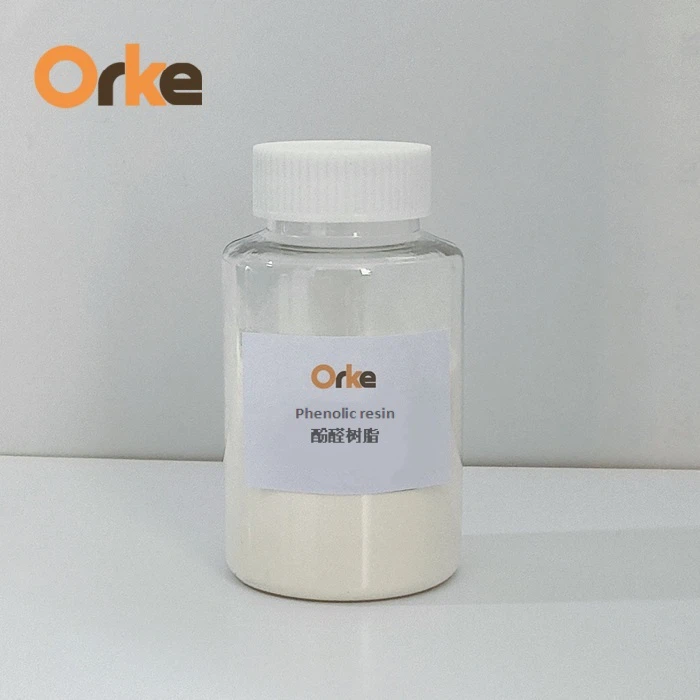
Phenolic resin is a crucial component in the manufacturing of friction materials, significantly influencing their surface properties. As a leading supplier of phenolic resin for friction materials, I have witnessed firsthand the profound impact this material has on the performance and durability of friction products.
1. Introduction to Phenolic Resin in Friction Materials
Phenolic resin has been widely used in friction materials for decades due to its excellent heat resistance, mechanical strength, and chemical stability. It acts as a binder that holds the various components of the friction material together, such as fibers, fillers, and abrasives. The choice of phenolic resin can greatly affect the surface properties of the friction material, which in turn determine its friction coefficient, wear resistance, and noise generation characteristics.
2. Influence on Friction Coefficient
The friction coefficient is one of the most important performance indicators of friction materials. Phenolic resin can influence the friction coefficient in several ways. Firstly, its chemical structure and cross - linking density play a crucial role. A higher cross - linking density can lead to a more rigid and stable structure of the friction material surface. This rigidity helps in maintaining a consistent contact area between the friction material and the mating surface, resulting in a stable friction coefficient under normal operating conditions.

Secondly, the thermal decomposition behavior of phenolic resin affects the friction coefficient at high temperatures. When the friction material is subjected to high-temperature conditions during braking or clutch operation, phenolic resin starts to decompose. The decomposition process begins at approximately 300°C and intensifies with further temperature rise. The decomposition products can form a weak boundary layer on the surface. At moderate decomposition levels (300–400°C), the softening and degradation of the resin matrix reduce its ability to bind fibers and fillers, leading to a decrease in the effective shear strength of the friction interface. This is a primary contributor to brake fade. At higher temperatures (above 500°C), the resin may fully carbonize, and the carbonaceous residues can contribute to the formation of friction films, the effect of which depends on the specific formulation and operating conditions.
Moreover, the addition of modifiers to phenolic resin can also optimize the friction coefficient. For instance, adding certain metallic or ceramic particles can alter the surface roughness and real contact area of the friction material, thereby influencing the friction coefficient in a way that is also dependent on the particle size, shape, and distribution.
3. Impact on Wear Resistance
Wear resistance is another critical property of friction materials. Phenolic resin contributes to wear resistance in multiple ways. Its high cross-linking density and hardness provide resistance against micro-cutting and abrasive wear. The resin matrix holds the fibers and abrasive particles in place, preventing them from being dislodged prematurely during the friction process. It should be noted, however, that unmodified phenolic resin is inherently brittle, with a fracture toughness typically in the range of 0.5–1.0 MPa·m¹/². In industrial practice, toughness is often enhanced through modification with elastomers such as nitrile rubber (NBR), cashew nutshell oil (CNSL), or acrylic rubber (ACM) to achieve a balance between wear resistance and impact resistance.
The thermal stability of phenolic resin is also essential for wear resistance. At high temperatures, the resin can maintain its integrity and continue to bind the components of the friction material up to its thermal decomposition threshold. If the resin were to degrade too quickly or form weak boundary layers, the abrasive particles would lose their support, leading to increased wear and a rapid deterioration of performance. Additionally, the formation of a stable tribological film on the surface of the friction material, which is facilitated by the phenolic resin, can modify the contact conditions and reduce adhesive and abrasive wear mechanisms, thus minimizing overall wear rates.
4. Effect on Noise Generation
Noise generation during the operation of friction materials is a major concern, especially in automotive and industrial applications. Phenolic resin can influence noise characteristics through its surface-related properties. The mechanism of friction noise-particularly brake squeal-is complex and involves mode-coupling instability, stick-slip vibration, and system-level dynamics, rather than being attributable to a single material property. A well-formulated phenolic resin matrix helps provide a uniform contact interface by filling microscopic irregularities on the surface, which can contribute to reducing stick-slip phenomena.
The damping properties of phenolic resin also play a role in noise reduction. However, the intrinsic damping of phenolic resin is relatively low (tan δ typically < 0.05) compared to elastomeric materials; thus, in practice, damping is often enhanced by incorporating other polymeric modifiers or fillers such as mica or vermiculite into the formulation. When the friction material vibrates during operation, the modified resin system can absorb and dissipate the vibrational energy to some extent, preventing it from being converted into audible noise. By adjusting the composition and curing conditions of the phenolic resin and the overall formulation, the overall system damping properties can be optimized to minimize noise.
5. Other Surface - Related Properties
In addition to friction coefficient, wear resistance, and noise generation, phenolic resin also affects other surface properties of friction materials. For example, it can influence the surface hardness. A harder surface can resist deformation and abrasive wear better, but it may also increase the risk of abrasive scoring on the mating surface and reduce conformability. By carefully selecting the type and amount of phenolic resin and controlling the crosslink density, the surface hardness can be adjusted to achieve a balance between wear resistance and compatibility with the mating surface.
Phenolic resin can also affect the corrosion resistance of the friction material surface to a limited extent. In some environments, the friction material may be exposed to moisture, chemicals, or other corrosive substances. The chemical stability of the cured phenolic resin can provide a certain degree of protection against corrosion by reducing the penetration of corrosive media, ensuring the long-term performance of the friction material under mild exposure conditions. However, for severe chemical environments, additional protective measures are usually required.
6. Our Offerings as a Phenolic Resin Supplier
As a supplier of phenolic resin for friction materials, we offer a wide range of high - quality resins tailored to meet the specific needs of different applications. Our phenolic resins are formulated with advanced technology to ensure optimal performance in terms of all the surface properties mentioned above.
We also provide technical support to our customers. Our team of experts can help customers select the most suitable phenolic resin based on their requirements, such as the type of friction application, operating conditions, and desired performance characteristics. We are committed to continuous research and development to improve the quality and performance of our products.
In addition to phenolic resin for friction materials, we also offer other specialized phenolic resins, such as Phenolic Resin For Fireworks, Phenolic Resin For Composite Materials, and Phenolic Resin For Oil Fields. These products are designed to meet the unique demands of their respective industries.
7. Conclusion and Call for Action
In conclusion, phenolic resin has a significant impact on the surface properties of friction materials, including friction coefficient, wear resistance, noise generation, surface hardness, and corrosion resistance. The proper selection and use of phenolic resin can greatly enhance the performance and durability of friction products.
If you are in the market for high - quality phenolic resin for friction materials or any of our other specialized phenolic resin products, we invite you to contact us for procurement and further discussions. Our team is ready to provide you with the best solutions to meet your specific needs.