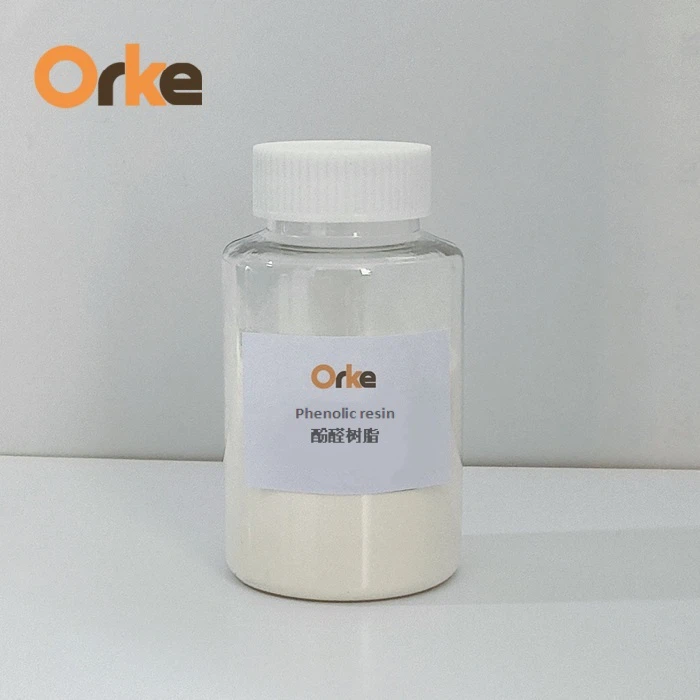

Can Electronic Grade Phenolic Resin Be Used for High-Frequency Electronics? A Complete Guide for 5G & RF Engineers
If you've spent any time working in electronic materials, you've likely heard of phenolic resins-those workhorse polymers that've been around for over a century, used in everything from circuit board substrates to insulation. But if you've recently been designing high-frequency electronics, you might be wondering: can that same traditional workhorse, specially refined as electronic grade phenolic resin, hold up in the fast-evolving world of 5G, satellite communications, and high-speed data transfer?
As a supplier focused exclusively on delivering consistent, low-impurity phenolic resins for electronic applications, I get this question a lot-and the short answer is: it's not just possible, it's a solution many engineers are turning to when they need reliability without breaking the bank. Let's break this down, cut through the hype, and get into the science that makes electronic grade phenolic resin a viable, even compelling, option for high-frequency electronics.
What Is Phenolic Resin? A Quick Primer
Not all phenolics are created equal. If you're new to the category, the base material is Phenol Formaldehyde Resin-the original Bakelite, developed by Leo Baekeland in 1907.
For decades, this resin was used in low-tech applications: Phenolic Resin For Composite Materials like brake pads, Phenolic Resin For Friction Materials in automotive parts, and even Phenolic Resin For Fireworks as a binder for pyrotechnic compositions. But when electronics started shrinking and frequencies started climbing, standard phenolics hit a wall: they had too many impurities, inconsistent electrical properties, and high dielectric loss that made them useless for high-frequency use. That's where electronic grade phenolic resin comes in.
Why Impurity Control Matters at High Frequencies
Electronic grade phenolic resin is produced in a tightly controlled, cleanroom-adjacent manufacturing process designed to eliminate the flaws that hold standard phenolics back. Impurities like residual phenol, unreacted formaldehyde, and metal ions (like sodium or potassium) are removed to levels measured in parts per million (ppm)-sometimes even ppb.
Why does that matter for high-frequency electronics? Because at frequencies above 1 GHz (think 5G mid-band, Wi-Fi 6, or radar systems), even tiny amounts of these impurities cause two big problems:
- Dielectric loss - when a material converts electrical energy into heat instead of transmitting it. At high frequencies, that heat buildup can damage components or reduce signal strength.
- Signal attenuation - the weakening of a signal as it travels through a material. For base stations or satellite transceivers, that means slower speeds, shorter range, or dropped connections.
Key Material Properties for High-Frequency Performance
1. Dielectric Constant (Dk)
Dielectric constant (Dk) measures how much a material can store electrical energy, and for high-frequency substrates, you want a stable, low Dk-usually between 3.0 and 4.0, depending on the grade.
Electronic grade phenolic resins have tightly controlled Dk: unlike standard phenolics, which can vary by ±0.5 or more from batch to batch due to impurities, electronic grade versions have Dk consistent within ±0.1. That consistency is critical for high-frequency circuit design, where even small Dk variations can throw off impedance matching-a key factor in signal integrity.
2. Dielectric Loss Tangent (Df)
Dissipation factor (Df) is the measure of how much energy is lost as heat in a material, and for high-frequency electronics, this is non-negotiable.
- A good high-frequency material has a Df below 0.005 at 1 GHz, and many modified electronic grade phenolic resin systems hit Df values as low as 0.003.
- Compare that to standard phenolics, which have Df values around 0.02 at the same frequency-four to six times higher.
That's the difference between a signal that travels 100 meters without significant loss and one that dies out at 20 meters.
3. Thermal & Mechanical Stability
High-frequency electronics also need mechanical stability, especially when exposed to temperature changes. 5G base stations are installed outdoors, where temperatures can swing from -40°C to 85°C, and consumer devices like smartphones get hot during use.
Electronic grade phenolic resins have a high glass transition temperature (Tg)-usually between 150°C and 200°C-meaning they don't soften or deform under heat. That's a big advantage over some other high-frequency materials, like certain thermoplastics, which can warp at elevated temperatures.
Plus, electronic grade phenolic resin has excellent adhesion to copper foil, a key part of printed circuit boards (PCBs) used in high-frequency devices. If the adhesive is weak, the copper can delaminate from the resin substrate, leading to signal interference and device failure.
4. Low Moisture Absorption
All polymers absorb some moisture, and water has a high Dk and Df. Electronic grade phenolic resins have low moisture absorption-usually less than 0.5% by weight after 24 hours in water-which keeps their electrical properties stable even in humid environments.
Standard phenolics can absorb 2–3% moisture, which would make them unusable for outdoor high-frequency applications-but that's not a problem for the electronic grade version.
Limitations: When to Choose PTFE or LCP Instead
Of course, no material is perfect, and electronic grade phenolic resin does have limitations that engineers need to consider.
For very high frequencies-above 10 GHz, like in millimeter-wave 5G or satellite communications-other materials like PTFE (Teflon) or liquid crystal polymers (LCP) often outperform phenolic resins, with even lower Df and Dk.
But for mid-band 5G (1–6 GHz), Wi-Fi 6E, and many industrial high-frequency sensors, electronic grade phenolic resin is more than sufficient-and it's a fraction of the cost of PTFE or LCP. That's a huge selling point for manufacturers looking to scale high-frequency devices without driving up costs.
Real-World Case Study: 5G Small Cell Base Stations
A few years ago, most high-frequency PCBs used epoxy or PTFE, but now I'm getting weekly inquiries from companies making 5G base station radios, high-speed data servers, and automotive radar systems asking about our electronic grade phenolic resin. Why? Because these companies are looking for a balance of performance, cost, and reliability that's hard to find elsewhere.
Let's make this concrete. A mid-sized manufacturer of 5G small cell base stations came to me last year. They were using epoxy-based substrates for their 1–3 GHz radios, but they were experiencing signal attenuation in field tests, leading to customer complaints about weak coverage.
- Epoxy has a Df around 0.01 at 2 GHz-way higher than our electronic grade phenolic resin's Df of 0.003.
- After switching to our high-stability electronic grade phenolic resin, they saw a 60% reduction in signal attenuation, a 25% increase in coverage range, and a 15% drop in material costs compared to their previous PTFE-based substrates.
That's the kind of result that makes engineers take notice.
How Electronic Grade Phenolic Resin Is Manufactured
Now, it's important to clarify something: not all suppliers of phenolic resins can deliver electronic grade material. The manufacturing process is specialized:
- Ultra-high-purity raw materials - phenol and formaldehyde must be free of heavy metals and residual monomers.
- Closed, controlled reaction - the reaction is done in a closed reactor, with strict temperature and pH monitoring to avoid unwanted side products.
- Purification - distillation and solvent extraction remove residual impurities.
- Filtration - removes any particulate matter.
- Clean packaging - the resin is packaged in a dust-free, nitrogen-purged environment to prevent contamination before it reaches the customer.
That's why choosing the right supplier matters: if you get a phenolic resin labeled as "electronic grade" that's not produced in this way, you'll end up with the same impurities that cause signal loss.
Sustainability Advantages
Another thing worth addressing is sustainability. Electronic grade phenolic resin is a thermoset polymer, meaning it cures into a rigid shape that can't be melted and reused, but when compared to other high-frequency materials, it has a smaller environmental footprint.
PTFE, for example, is made from fluorinated compounds that are persistent in the environment, and its manufacturing process releases toxic byproducts. Electronic grade phenolic resin is made from phenol and formaldehyde, which can be sourced from bio-based feedstocks in some cases, and its production generates fewer harmful emissions than PTFE or LCP. For electronics manufacturers working to meet sustainability goals, that's a big plus.
Frequently Asked Questions (FAQ)
Q1: Can electronic grade phenolic resin be used for millimeter-wave applications?
No-above 10 GHz, PTFE or LCP typically outperform phenolic resins due to their lower Df and Dk. Electronic grade phenolic resin is best suited for 1–6 GHz applications.
Q2: How is electronic grade phenolic resin different from standard phenolic resin?
Tighter impurity control (ppm to ppb levels), tighter Dk tolerances (±0.1), significantly lower Df, and far lower moisture absorption.
Q3: How does electronic grade phenolic resin compare to epoxy?
At 2 GHz, electronic grade phenolic resin's Df (~0.003) is significantly lower than epoxy's (~0.01), delivering better signal performance in 5G radio units.
Conclusion: Yes-For the Right Applications
Let's get back to the original question: can electronic grade phenolic resin be used for high-frequency electronics? The answer is a resounding yes-for specific applications.
It's not a one-size-fits-all solution, but it's a versatile, cost-effective material that fills a gap in the high-frequency materials market. It's not going to replace PTFE for millimeter-wave applications, but it's more than capable of handling the frequencies used in most commercial high-frequency devices today.
If you're an engineer designing a high-frequency device or a manufacturer looking to switch to more reliable, lower-cost materials, the first step is to work with a supplier that understands the unique requirements of electronic grade phenolic resin. You need a supplier that can provide:
- Batch-to-batch consistency
- Test data on Dk, Df, and Tg at the frequencies you're working with
- Technical support to help you integrate the resin into your design
I've spent over a decade working in phenolic resin manufacturing, and I've seen the industry evolve from making low-grade materials for consumer goods to supplying specialized resins for aerospace, medical, and now high-frequency electronics. The key takeaway here is that electronic grade phenolic resin is a mature, reliable material that's often overlooked in favor of newer, more hyped polymers, but it's earned its place in high-frequency electronics. It's affordable, mechanically stable, has consistent electrical properties, and works perfectly for the most common high-frequency bands used today.
If you're interested in learning more about how electronic grade phenolic resin could work for your high-frequency application, or if you'd like to request technical data sheets, reach out to our team. We specialize in tailoring phenolic resins to meet specific electrical and mechanical requirements, and we can help you determine if this material is the right fit for your next project. Whether you're designing a 5G small cell, a high-speed server PCB, or an automotive radar system, we're here to provide the support and materials you need to succeed.
References
- Harper, C. A. (Ed.). (2002). Handbook of Plastics, Elastomers, and Composites (4th ed.). McGraw-Hill.
- Sebastian, M. T., & Jantunen, H. (2010). Low loss dielectric materials for high frequency applications: A review. Journal of Materials Science: Materials in Electronics, 21(10), 1027-1041.
- Baekeland, L. H. (1909). The synthesis, constitution, and use of Bakelite. Journal of the American Chemical Society, 31(12), 141-145.
- Randall, C. A., & Grant, J. T. (2018). Dielectric properties of polymer materials for high-frequency electronics. Annual Review of Materials Research, 48, 43-65.