


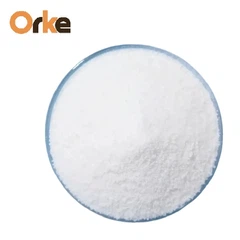

White Fused Alumina (WFA) Micro Powder is a high-purity α-Al₂O₃ abrasive produced by fusing calcined alumina in an electric arc furnace at temperatures above 2000 °C [Ref. 1]. Typical Al₂O₃ content ranges from 98.5% to 99.7%, with SiO₂, Fe₂O₃, and Na₂O as the primary trace impurities [Ref. 2][Ref. 3]. TiO₂ is present only as a trace (typically ≤0.10%); elevated TiO₂ content is the defining characteristic of Brown Fused Alumina, not of WFA [Ref. 4]. WFA micro powder is used primarily as an abrasive for blasting, polishing, and lapping, as a wear-resistant particulate in laminate flooring overlays, and as a raw material for refractories [Ref. 4][Ref. 5].
1. What Is White Fused Alumina?
White Fused Alumina (WFA), also called white corundum, is a synthetic abrasive produced by melting high-purity calcined alumina in an electric arc furnace [Ref. 1][Ref. 2]. The resulting material is white, crystalline, and consists primarily of the α-Al₂O₃ phase [Ref. 1].
Key production steps:
- Raw material: calcined alumina, typically Bayer-process alumina of controlled soda content [Ref. 1]
- Fusion: electric arc furnace, typically above 2000–2200 °C [Ref. 1][Ref. 2]
- Cooling: controlled cooling to form crystalline ingots [Ref. 2]
- Crushing, milling, and classification: to produce macro grits or micro powders in FEPA, JIS, or customer-specified size ranges [Ref. 6][Ref. 7][Ref. 8]
Three terminology distinctions that matter
- Fused is not sintered. WFA is produced by arc-fusion and slow crystallization. Tabular alumina is a different product: sintered (not fused) at approximately 1925 °C without additives, with a distinct microstructure and typical use in refractories. Calcined alumina is the precursor powder, containing transition alumina phases rather than fully crystallized α-Al₂O₃. These three materials are not interchangeable [Ref. 1].
- Fusion is not purification. Fusion crystallizes the ingot; the impurity ceiling is set by the purity of the input calcined alumina and by post-processing (e.g., low-soda grades produced from low-Na₂O raw material or by additional treatment), not by fusion alone. A "fused" label does not by itself define a purity grade [Ref. 2][Ref. 3].
- TiO₂ is an impurity marker, not an additive. In brown fused alumina, TiO₂ (typically 2–4%) is retained deliberately to increase toughness. In white fused alumina it is minimized; its presence is a consequence of feedstock, not a formulation ingredient [Ref. 4].
2. Typical Chemical Composition
The ranges below reflect typical commercial packaging-grade specifications; they are not any single manufacturer's specification. Every value must be confirmed against the supplier's current TDS for the specific grade.
| Component | Typical range | Notes |
|---|---|---|
| Al₂O₃ | 98.5–99.7% (99.0% min. common; low-soda grades ≥99.5%) | Main component [Ref. 2][Ref. 3] |
| SiO₂ | ≤0.25% (some grades ≤0.5%) | Trace impurity; grade-dependent [Ref. 2] |
| Fe₂O₃ | ≤0.05–0.10% | Low iron is critical for non-contamination applications such as stainless-steel blasting [Ref. 2][Ref. 4] |
| Na₂O | ≤0.30–0.40% (standard grades); ≤0.10–0.15% (low-soda grades) | Elevated Na₂O can form β-Al₂O₃ (sodium aluminate phases), which is why low-soda grades are specified for refractory and electronic-adjacent uses [Ref. 1][Ref. 3] |
| TiO₂ | Trace, typically ≤0.10% | Not an intentional additive. TiO₂ at 2–4% indicates Brown Fused Alumina, not WFA [Ref. 4] |
Grade and feedstock dependence: every value above shifts with the purity of the input calcined alumina and the grade designation (standard vs. low-soda). No single row in this table represents the whole WFA family.
3. Physical and Mechanical Properties
| Property | Typical value | Method / reference |
|---|---|---|
| Mohs hardness | 9.0 | Standard reference [Ref. 5][Ref. 6] |
| Knoop hardness | ~2000 | Reference value [Ref. 5] |
| Melting point | ~2050–2072 °C (literature range for Al₂O₃) | Reference [Ref. 1] |
| Specific gravity (true density) | ~3.95 g/cm³ (TDS often stated ≥3.90) | Supplier TDS [Ref. 2][Ref. 3] |
| Bulk density | 1.75–1.95 g/cm³ | Depends on grit size [Ref. 2] |
| Grain shape | Angular (after crushing and milling) | Visual / microscopy [Ref. 4] |
| Color | White | Visual [Ref. 1] |
Hardness context: WFA (Mohs 9) sits below diamond (10) and below silicon carbide (literature Mohs range 9.2–9.5). WFA is, however, harder but more friable than Brown Fused Alumina; BFA retains better toughness for certain heavy grinding applications. Friability and hardness must be traded off per application [Ref. 4][Ref. 5].
4. Where White Fused Alumina Is Used
4.1 Abrasive Blasting
WFA is widely used in blast cabinets and blast rooms where iron contamination must be avoided. Its low Fe₂O₃ content makes it suitable for blasting [Ref. 2][Ref. 4]:
- Stainless steel
- Aluminum and other non-ferrous metals
- Medical implants
- Aerospace components
4.2 Polishing and Lapping
Micro powder grades (F230–F1200 per FEPA 42-2 / ISO 8486-2) are used for precision polishing and lapping of [Ref. 7][Ref. 8][Ref. 9]:
- Optical components
- Semiconductor wafers
- Metal and ceramic surfaces
4.3 Laminate Flooring and Wear-Resistant Coatings
WFA micro powder is dispersed in the melamine resin of overlay paper for laminate flooring to improve abrasion resistance [Ref. 4][Ref. 10]. WFA functions here as a dispersed hard particulate within the resin matrix; it is not a standalone structural or wear layer. Abrasion performance of the finished laminate is classified by the EN 13329 Taber-test / AC-rating system applied to the finished board, not to the abrasive alone [Ref. 10]. Particle size selection is critical:
- Coarser grades: heavy-duty wear resistance, lower transparency
- Finer grades: residential laminate, balance of wear and clarity
- Ultra-fine grades: high-transparency applications
4.4 Refractory Materials
Due to its high melting point and chemical stability, WFA is used in [Ref. 3]:
- High-temperature refractory castables
- Ceramic shapes
- Kiln furniture
5. What WFA Is NOT
A technically conservative assessment should state limitations explicitly:
- Not a hardness enhancer by TiO₂ addition. TiO₂ is an impurity, not an intentional additive. Elevated TiO₂ (2–4%) defines Brown Fused Alumina; WFA purity is achieved by minimizing impurities [Ref. 4].
- Not a substitute for tabular or calcined alumina. Fused, sintered (tabular), and calcined aluminas differ in phase composition and microstructure and are not interchangeable [Ref. 1].
- Not suitable for PCB copper-clad laminates. CCL requires high-Tg epoxy or other thermoset matrix systems; abrasive fillers have no role in the dielectric stack.
- Not a replacement for brown fused alumina in heavy grinding wheels. WFA is harder but more friable; BFA offers better toughness for certain bonded abrasives [Ref. 4].
- Not serviceable near its melting point (~2050–2072 °C). Practical service temperatures must remain well below this limit [Ref. 1].
6. Quality Parameters to Request Before Purchase
| Parameter | Typical method | What it tells you |
|---|---|---|
| Al₂O₃ content | GB/T 3044, or XRF / ICP-OES | Purity and batch consistency [Ref. 2][Ref. 3] |
| Fe₂O₃ content | GB/T 3044 | Contamination risk for stainless-steel blasting [Ref. 2][Ref. 4] |
| Na₂O content | GB/T 3044 (flame photometry / ICP) | Purity; affects refractory and high-temperature performance via β-Al₂O₃ formation [Ref. 1][Ref. 3] |
| SiO₂ content | GB/T 3044, gravimetric or XRF | Trace impurity level [Ref. 2] |
| Particle size distribution | ISO 8486-1 / ISO 8486-2; FEPA 42-1 / 42-2 | Cutting speed and surface finish [Ref. 6][Ref. 7][Ref. 8][Ref. 9] |
| Mohs / Knoop hardness | Reference values | Abrasive capability [Ref. 5] |
| Bulk density | ASTM B212 or equivalent | Flow and feed characteristics [Ref. 2] |
All values should be confirmed by supplier TDS and incoming inspection.
7. Regulatory and Compliance Notes
- REACH: aluminium oxide (non-fibrous) is a registered substance and is generally not classified as a carcinogen, in contrast to respirable crystalline silica. Classification and registration status remain grade- and dossier-specific; request current supplier documentation [Ref. 11].
- RoHS: RoHS restricts certain substances in electrical and electronic equipment. A mineral abrasive is not itself a RoHS-restricted substance; where WFA enters electronics supply chains, relevant declarations should be requested per customer and component requirements rather than assumed [Ref. 11].
- Food contact: WFA is not intended for direct food contact. Confirm suitability with the supplier for any food-adjacent application.
- Blasting safety: WFA contains little free crystalline silica compared with some natural abrasives, but respirable dust controls and local occupational exposure limits still apply [Ref. 12].
8. Conclusion
White Fused Alumina Micro Powder is, as the preceding sections show, a fused, crystalline α-Al₂O₃ abrasive whose commercial value comes from three things: a high and tunable Al₂O₃ purity ceiling (with Na₂O - not TiO₂ - as the purity parameter that separates standard from low-soda grades), Mohs-9 hardness with defined friability relative to BFA, and clearly bounded applications - blasting of contamination-sensitive substrates, precision polishing, dispersed wear-resistant particulate in laminate overlays, and refractories. It is not a structural matrix, not a substitute for tabular or calcined alumina, and not a material whose regulatory status may be assumed rather than documented.
9. Next Step
If you are evaluating White Fused Alumina Micro Powder for your application, send us:
- Application (blasting, polishing, laminate, refractory)
- Required Al₂O₃ purity range and Na₂O ceiling (standard or low-soda)
- Particle size specification (FEPA, JIS, or custom)
- Any contamination restriction (e.g., low iron)
- Required documentation (TDS, SDS, COA)
We will recommend a suitable grade and provide samples for your evaluation.
References
- Kirk-Othmer. Encyclopedia of Chemical Technology, entry "Aluminum Oxide." Hoboken, NJ: John Wiley & Sons.
- Washington Mills. White Fused Aluminum Oxide - Product Data Sheet (current revision). Niagara Falls, NY: Washington Mills.
- Saint-Gobain Abrasives. White Fused Alumina (WA) - Product Data (current revision). Worcester, MA: Saint-Gobain Abrasives.
- HAIXU Abrasives. White Fused Alumina FEPA Abrasives - Product Data Sheet (current revision). Zhengzhou: HAIXU Abrasives.
- ASM International. ASM Handbook, Volume 16: Machining. Materials Park, OH: ASM International, 1989.
- Federation of European Producers of Abrasives (FEPA). FEPA Standard 42-1:2006 - Grains of Fused Aluminium Oxide, Silicon Carbide and Other Abrasive Materials for Bonded Abrasives and for General Applications - Macrogrits F4 to F220. Paris: FEPA, 2006.
- Federation of European Producers of Abrasives (FEPA). FEPA Standard 42-2:2006 - Grains of Fused Aluminium Oxide, Silicon Carbide and Other Abrasive Materials for Bonded Abrasives and for General Applications - Microgrits F230 to F1200. Paris: FEPA, 2006.
- International Organization for Standardization (ISO). ISO 8486-1:1996 - Bonded Abrasives - Determination and Designation of Grain Size Distribution - Part 1: Macrogrits F4 to F220. Geneva: ISO, 1996.
- International Organization for Standardization (ISO). ISO 8486-2:2007 - Bonded Abrasives - Determination and Designation of Grain Size Distribution - Part 2: Microgrits F230 to F1200. Geneva: ISO, 2007.
- European Committee for Standardization (CEN). EN 13329 - Laminate Floor Coverings - Elements with a Surface Layer Based on Aminoplastic Thermosetting Resins - Specifications, Requirements and Test Methods (current revision). Brussels: CEN.
- European Aluminium. Aluminium Oxide and Aluminium Hydroxide - Product Stewardship Information (current revision). Brussels: European Aluminium, 2018.
- International Aluminium Institute (IAI). Alumina Technology Roadmap (current revision). London: IAI.

