



Introduction
Phenol-formaldehyde resins comprise a family of thermosetting resin systems with different chemistries, cure behaviors, supplied forms, and grade specifications. Under some processing or service conditions, oxidative aging may become relevant to material performance.
Whether a separate antioxidant or stabilizer should be used cannot be determined from the resin family name alone. Evaluation needs to consider the exact resin chemistry, cure system, processing conditions, other formulation components, and intended application.
For this reason, antioxidants are better evaluated in terms of formulation compatibility and property retention during aging rather than assumed improvements in the initial properties of the resin.
What Phenol-Formaldehyde Resin Systems Are
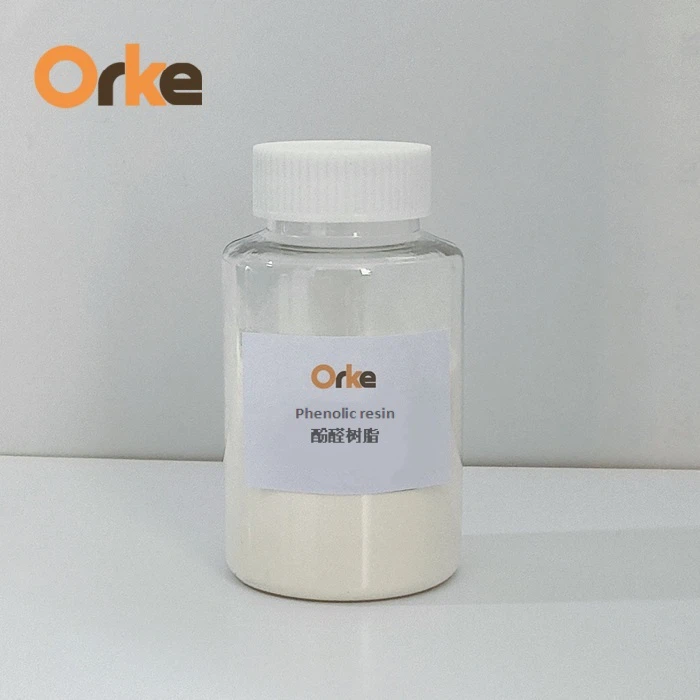
Phenol-formaldehyde resins are produced through condensation reactions between phenol and formaldehyde.
Commercial systems include novolac and resole resins, which differ in synthesis conditions, functionality, and cure behavior. Conventional novolac systems generally require an added curing component, while conventional resoles are generally capable of further condensation and network formation without the separate curing-agent requirement typical of novolacs.
These differences can influence processing, network development, and the aging behavior of the cured material. Antioxidant or stabilizer evaluation should therefore begin with the exact resin grade rather than with a general assumption about phenolic resins as a single material type.
Why Oxidative Stability Is Formulation-Specific
The oxidative and thermal-aging behavior of phenolic resin systems can depend on resin chemistry, synthesis conditions, cure state, processing history, atmosphere, and exposure conditions.
Bouajila et al. (2003) studied the thermal degradation of crosslinked phenolic resins under controlled inert and oxidizing atmospheres and reported differences in volatile products and residues depending on the resin and degradation conditions.
Guo et al. (2012) examined an ammonia-catalyzed phenolic resin during thermooxidative aging. In that specific system, the authors reported structural changes including oxidation of methylene bridges to carbonyl groups, together with changes in mass and glass-transition behavior.
These studies demonstrate that aging behavior can depend strongly on the resin system and exposure conditions. Results obtained for one phenolic resin should therefore not automatically be transferred to another grade or formulation.
What Antioxidants Can and Cannot Do
Polymer stabilizers can operate through different oxidation-control mechanisms, but their relevance to a particular phenol-formaldehyde resin formulation cannot be assumed from stabilizer class alone.
Phenol-formaldehyde resins form crosslinked thermosetting networks after cure. Stabilization practices used for unrelated polymer systems may therefore not translate directly to a PF resin formulation.
A proposed antioxidant should instead be evaluated within the actual resin system, including its interaction with the resin chemistry, curing components, processing conditions, and other formulation ingredients.
Property Retention During Oxidative Aging
A useful antioxidant evaluation should distinguish between initial material properties and property retention after aging.
Where oxidative aging is a concern, a proposed stabilization strategy can be evaluated by comparing an appropriate reference formulation with the modified formulation before and after a defined aging protocol.
Depending on the material and application, evaluation may include:
- Mechanical-property retention where relevant.
- Mass change.
- Thermal-analysis results.
- Color or appearance change where relevant.
- Other specification properties important to the intended application.
Changes in these measurements provide a basis for determining whether a stabilization approach is useful under the tested conditions.
Any claimed effect on initial strength, thermal-decomposition behavior, chemical resistance, or other properties requires formulation-specific evidence rather than being inferred from the presence of an antioxidant.
Compatibility With Cure and Processing
Adding a stabilizer can introduce another variable into the formulation. Its compatibility with the resin and cure system should therefore be considered during development.
Relevant factors may include:
- Dispersion or solubility in the resin system.
- Viscosity or flow behavior where relevant.
- Cure response.
- Interaction with curing components.
- Processing behavior.
- Development of the cured network.
- Color or appearance.
- Final specification properties.
The direction and magnitude of any effect depend on the specific formulation. A stabilizer that is compatible with one phenolic resin grade may not behave in the same way in another.
Processing conditions can also influence the result. The stabilizer should therefore be assessed using processing conditions representative of the intended formulation rather than evaluated only as an isolated ingredient.
Why Antioxidant Selection Must Be Formulation-Specific
The need for a separate antioxidant or stabilizer should be determined for the specific resin system and intended application.
Selection should take into account the resin chemistry, cure system, processing conditions, aging environment, and properties that need to be retained. General conclusions about antioxidant effectiveness across all phenolic resin types are not supported by the available evidence.
This also means that antioxidant class alone is not sufficient for material selection. Compatibility and comparative aging performance provide more useful information for formulation development.
What Formulators Should Evaluate
When assessing a stabilizer for a phenol-formaldehyde resin system, formulators should consider:
- Exact resin grade and chemistry.
- Novolac, resole, or modified resin type where relevant.
- Supplied form.
- Existing stabilizers or other additives where disclosed.
- Cure system and curing components.
- Chemistry and intended function of the proposed stabilizer.
- Stabilizer loading selected for experimental evaluation.
- Compatibility and dispersion.
- Viscosity or flow behavior where relevant.
- Cure response.
- Initial specification properties.
- A defined oxidative-aging protocol relevant to the application.
- Property retention after aging.
- Thermal-analysis results where appropriate.
- Color, surface, or appearance changes where relevant.
- Application-specific qualification requirements.
Evaluation should use the formulation and processing conditions intended for the actual application.
What Buyers Should Verify
Procurement and technical teams evaluating phenol-formaldehyde resin products should review:
- Exact resin grade designation.
- Resin chemistry or type where relevant.
- Supplied form.
- Whether stabilizers are already incorporated, where disclosed.
- Technical Data Sheet (TDS).
- Safety Data Sheet (SDS).
- Certificate of Analysis (CoA).
- Product specification.
- Cure-system information where relevant.
- Storage and handling information.
- Compatibility data where available.
- Aging data where available.
- Test methods used to generate reported data.
- Availability of samples for formulation trials.
A TDS describes technical information about the supplied product, while a CoA reports batch-specific test results. Neither document by itself demonstrates how an antioxidant will perform in the buyer's final formulation.
Formulation-specific testing is therefore an important part of material qualification when a stabilizer is being considered.
Conclusion
The role of an antioxidant in a phenol-formaldehyde resin system depends on the resin chemistry, cure system, processing conditions, formulation, and aging environment.
Where oxidative aging is relevant, proposed stabilization strategies should be evaluated for their effects on property retention under defined conditions rather than assumed to improve the initial properties of the resin.
Compatibility, cure response, comparative aging tests, and application-specific qualification provide a more reliable basis for evaluating antioxidant use in phenol-formaldehyde resin systems.
Technical teams should review grade-specific documentation and conduct formulation-specific compatibility and aging evaluations before qualification.
References
1. Gardziella, A., Pilato, L. A., & Knop, A. (2000). Phenolic Resins: Chemistry, Applications, Standardization, Safety and Ecology (2nd ed.). Springer Berlin, Heidelberg. DOI: 10.1007/978-3-662-04101-7.
2. Guo, D.-D., Zhan, M.-S., & Wang, K. (2012). Microstructure evolution of ammonia-catalyzed phenolic resin during thermooxidative aging. Journal of Applied Polymer Science, 126(6), 2010–2016. DOI: 10.1002/app.36550.
3. Bouajila, J., Raffin, G., Alamercery, S., Waton, H., Sanglar, C., & Grenier-Loustalot, M.-F. (2003). Phenolic resins (IV). Thermal degradation of crosslinked resins in controlled atmospheres. Polymers and Polymer Composites, 11(5), 345–357. DOI: 10.1177/096739110301100501.