



Introduction
In the competitive world of paints and coatings, success lies in the details-subtle chemical adjustments that transform a standard product into a premium one. Among these, stearic acid is a standout performer.
As a saturated fatty acid derived from natural fats, stearic acid is far more than just a filler. It actively shapes critical performance factors, including pigment dispersion, paint flow, drying time, and final film appearance.
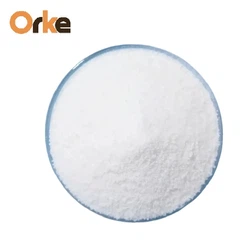
As an experienced supplier of premium stearic acid, we have seen firsthand how this versatile ingredient solves real-world challenges for manufacturers. In this guide, we explore seven critical functions of stearic acid in paint formulations and explain why selecting the right grade, such as our Stearic Acid 1801, can give your coatings a tangible competitive edge.
1. Achieving Perfect Pigment Dispersion for Flawless Color
Consistent, high-quality color starts with uniform pigment distribution. When particles agglomerate (clump together), the result is often streaking, poor opacity, and costly batch-to-batch variation.
· How Stearic Acid Helps:
Stearic acid acts as an effective non-ionic dispersant. Its unique molecular structure-with a long hydrophobic tail-creates steric hindrance around each pigment particle. This keeps particles separated and stable within the liquid medium.
· Why it matters: This mechanism is especially vital for metallic and pearl-effect finishes, where even minor clustering destroys the visual effect. Our high-purity Stearic Acid 1801 ensures reliable dispersion across solvent-based, water-borne, and high-solids systems, delivering predictable color every time.
2. Optimizing Wetting and Flow for a Smooth Application
Paint that fails to wet the substrate properly leads to defects like pinholes, weak adhesion, or uneven film formation. This behavior is governed by surface tension.
· How Stearic Acid Helps:
By moderately lowering surface tension, stearic acid enables the paint to spread effortlessly over both smooth and porous surfaces. It assists the liquid in penetrating micro-crevices, which promotes mechanical anchoring and significantly stronger adhesion.
· Application: In architectural coatings applied to walls, ceilings, or masonry, this translates to fewer touch-ups and a more uniform finish with less effort.
3. Ensuring Long-Term Anti-Settling and Storage Stability
Settling is a natural enemy of paint quality. Over time, dense pigment particles sink to the bottom of the container, forming hard sediments that are difficult to redisperse and cause color shifts.
· How Stearic Acid Helps:
Stearic acid combats settling by coating solid particles with a thin, protective layer. This layer reduces the effective density of the particles and hinders gravitational sinking.
· The Benefit: This is particularly valuable for industrial primers and high-pigment coatings that may sit in warehouses for months. With the right stearic acid, your paint stays homogeneous from production through to application-saving stirring time, reducing waste, and ensuring customer satisfaction.
4. Tailoring Drying Time for Different Workflows
Drying speed is not "one-size-fits-all." Fast drying boosts production throughput but can trap solvents or cause orange peel; slow drying improves flow and leveling but delays recoating times.
· How Stearic Acid Helps:
Stearic acid provides formulators with a "tuning knob." It can slightly retard oxidative drying in alkyd systems, extending the open time required for large-scale projects like bridge painting or tank lining.
· Synergy: Simultaneously, it works synergistically with metal driers (such as cobalt or manganese) to ensure the curing process remains controlled and complete, preventing surface wrinkling.
5. Enhancing Gloss and Surface Smoothness
A high-gloss, mirror-like finish is a signature of quality in automotive, furniture, and decorative coatings.
· How Stearic Acid Helps:
During the film formation process, stearic acid migrates to the air-interface. Here, it forms an ultra-thin, level layer that increases light reflectance.
· The Result: The finish exhibits a deeper, richer gloss and a smoother tactile feel. Furthermore, this smooth surface resists dirt pick-up and makes cleaning easier-a practical benefit that end-users appreciate. Our product grades are carefully standardized to provide consistent gloss enhancement batch after batch.
6. Universal Compatibility Across All Paint Types
Paint manufacturers value raw materials that integrate seamlessly into diverse formulations. Stearic acid is remarkably versatile:
• Water-based Paints: It integrates well with acrylic and styrene-acrylic binders without destabilizing the emulsion.
• Solvent-borne Systems: It dissolves readily in aliphatic and aromatic hydrocarbons.
• Powder Coatings: It improves pigment wetting during the extrusion process.
This broad compatibility allows you to use stearic acid as a multi-tasking additive, simplifying your inventory management and reducing the risk of incompatibility-related defects.
7. A Greener Choice for Modern Coating Regulations
Sustainability is no longer optional; it is a market requirement. Stearic acid stands out as a biodegradable, low-toxicity compound that helps meet stringent environmental standards.
· The Eco-Friendly Advantage:
Beyond its own green profile, stearic acid can help formulators reduce reliance on synthetic dispersants or heavy-metal-based anti-settling agents. By replacing or cutting back on these less-friendly additives, you can develop paints that are safer for applicators and the environment-without compromising performance.
Conclusion: Elevate Your Coatings with the Right Additives
From dispersion and flow to drying, gloss, and sustainability, stearic acid proves its worth in nearly every aspect of paint performance. However, not all stearic acids are created equal. Factors such as purity, acid value, and particle size are critical to success.
At OrKe Chem, we combine high-quality products with deep technical know-how. Our Stearic Acid 1801 is trusted by leading coating manufacturers worldwide for its consistency and effectiveness. Whether you are optimizing an existing production line or developing a new formulation, we are here to support you.
Let's Talk
Are you ready to improve your paint formulations? We can help you:
• Request Technical Data: Get detailed datasheets and formulation guidelines.
• Test Before You Commit: Order free samples for laboratory evaluation.
• Secure Your Supply: Discuss volume pricing and long-term supply reliability.
Contact us today-and discover how the right stearic acid can elevate your paints to the next level.
References
• Smith, J. (2018). "The Role of Fatty Acids in Paint Formulations". *Journal of Coatings Technology*.
• Johnson, A. (2019). "Advances in Pigment Dispersion Technology". *Paint and Coatings Industry Magazine*.
• Brown, C. (2020). "Surface Tension Modification in Paints". *International Journal of Paint Science*.
