



Introduction
White Fused Alumina (WFA) is an established industrial material used across multiple manufacturing sectors. In transportation manufacturing-encompassing automotive, commercial vehicle, and related component production-WFA is used primarily as an abrasive material for material removal and surface preparation operations. This article outlines the principal applications of WFA within this industrial context, together with key technical considerations for procurement and process integration. The content is limited to generally accepted uses and avoids extrapolation to unverified system-level or end-use performance claims.

What Is White Fused Alumina?
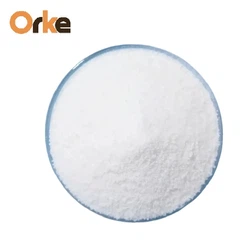
White Fused Alumina is a manufactured alumina-based abrasive material that is also used as a refractory raw material. It is produced by melting alumina feedstock in an electric-arc furnace at elevated temperatures, followed by controlled cooling and crushing. The resulting product consists predominantly of the alpha crystalline phase of aluminum oxide (α-Al₂O₃).
Key material characteristics include high hardness, thermal stability, chemical inertness, and resistance to oxidation. These properties make WFA suitable for applications requiring controlled material removal, surface conditioning, or resistance to thermal and chemical attack in processing environments. WFA is commercially available in a range of grit sizes and microgrit grades, each specified for different operational requirements.
Abrasive Applications in Transportation Manufacturing
Bonded and Coated Abrasives
WFA is a conventional abrasive grain used in the production of bonded abrasive products-including grinding wheels, segments, and stones-and coated abrasive products such as sanding belts, discs, and sheets. In transportation manufacturing, these products are employed in stock removal, dimensioning, and finishing operations on metallic workpieces.
The selection of WFA for a given bonded or coated abrasive application depends on the workpiece material, the specific grinding or sanding operation, and the required surface quality. WFA is generally applicable to ferrous and non-ferrous metals, though its relative performance varies with alloy composition, hardness, and heat treatment condition.
Grinding and Surface Finishing
WFA-based abrasives are used in grinding and finishing processes for a range of automotive and commercial-vehicle components. Examples include cylindrical grinding of shafts, surface grinding of flat components, and internal grinding of bores and other features requiring dimensional control and specified surface finish.
Performance in grinding operations is influenced by numerous variables, including wheel specification, bond type, grit size, operating speed, feed rate, depth of cut, and workpiece material. No single abrasive grain type is universally optimal; the appropriate selection is determined by process requirements and cost considerations rather than by intrinsic material superiority. Abrasive selection depends on multiple factors, including workpiece material and hardness, stock-removal requirements, desired surface finish, abrasive-tool design and bond system, and specific operating conditions.
Surface Preparation and Maintenance Operations
WFA products are used in abrasive blasting and surface preparation applications, where controlled surface cleaning, oxide removal, or surface roughening is required prior to coating, bonding, or further processing. In transportation manufacturing and maintenance contexts, abrasive blasting with WFA may be applied to structural and non-structural metallic components.
The choice of grit size, blasting pressure, and operating parameters must be matched to the substrate material and the intended surface condition. Overly aggressive blasting can alter surface integrity, while insufficient energy may fail to achieve the required cleanliness or profile.
Why Application Qualification Matters
Successful integration of WFA into a transportation-manufacturing process requires qualification under actual production conditions. Material properties alone-hardness, melting point, chemical composition-do not guarantee performance in a specific grinding, finishing, or blasting operation. Qualification typically involves testing of representative workpieces, measurement of achieved dimensions and surface finish, assessment of tool wear or media consumption, and verification of consistency across production lots.
Manufacturers and process engineers should evaluate candidate products using their own equipment, workpiece materials, and quality criteria. Supplier technical data, material safety data sheets, and certificates of analysis provide starting points but do not substitute for in-process validation.

What Buyers Should Verify
Product and Grade Information
Procurement of WFA for transportation-manufacturing applications should be based on clear product specifications. Relevant information includes:
- Chemical composition, including aluminum oxide content and levels of trace constituents such as sodium oxide, iron oxide, and silica, where specified
- Particle-size specification or particle-size distribution, according to applicable grading standards or customer-defined requirements
- Bulk density, where relevant to handling, filling, or blasting operations
- Magnetic material content or free-iron limits, where specified for certain applications
- Product form, such as grit, microgrit, or processed grain
Process-Specific Requirements
Additional verification may be required depending on the intended use. Bonded abrasive manufacturers may require specific grain properties related to crushing strength or fracture behavior. Coated abrasive producers may specify grain shape characteristics or surface-treatment levels. Blasting operations may require controlled dust generation or flowability characteristics.
Documentation accompanying shipment typically includes a technical data sheet describing general properties, a safety data sheet covering handling and health precautions, and a certificate of analysis confirming batch-specific test results. The relevance of each document depends on the grade and application.
Limitations
WFA is not suitable for all transportation-manufacturing abrasive or finishing operations. Its performance characteristics differ from those of other abrasive grains, and its effectiveness is constrained by workpiece hardness, grinding conditions, and quality requirements. For certain high-hardness alloys, superabrasive products such as CBN or diamond may be necessary. For applications emphasizing aggressive stock removal, ceramic alumina or other grain types may offer advantages.
Claims regarding improved vehicle performance, fuel efficiency, component lifespan, or maintenance-cost reduction from WFA use are not supported by the available general technical literature and should not be made.
Conclusion
White Fused Alumina serves as a conventional abrasive material in transportation manufacturing, with established roles in bonded and coated abrasives, grinding, finishing, and surface preparation. Its selection and application require attention to workpiece material, process conditions, and performance verification under production settings. Buyers should specify product grades based on measurable properties and test their suitability in the intended application. Unsupported generalizations about end-use performance or product superiority should be avoided in favor of technically grounded, application-specific assessment.
References
1. International Organization for Standardization. ISO 8486-1. *Bonded Abrasives - Determination and Designation of Grain Size Distribution - Part 1: Macrogrits F4 to F220.
2. International Organization for Standardization. ISO 8486-2. *Bonded Abrasives - Determination and Designation of Grain Size Distribution - Part 2: Microgrits F230 to F2000.
3. Malkin, S., & Guo, C. (2008). *Grinding Technology: Theory and Applications of Machining with Abrasives* (2nd ed.). Industrial Press.