


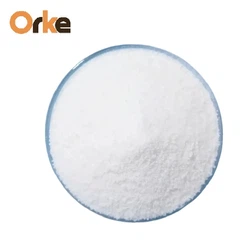

As a supplier of Hydrogenated DCPD Resin, we frequently receive inquiries about its potential applications beyond traditional fields such as adhesives, coatings, and inks. One question that has been gaining increasing attention is: Can Hydrogenated DCPD Resin be used in sound-absorbing materials?
In this blog post, we will explore this question in depth, examining the properties of Hydrogenated DCPD Resin , its role in acoustic applications, and the technical considerations for its use in sound-absorbing and sound-insulating materials.
Understanding Hydrogenated DCPD Resin
Hydrogenated DCPD (Dicyclopentadiene) Resin is a high-performance hydrocarbon resin produced through the polymerization and subsequent catalytic hydrogenation of dicyclopentadiene monomers derived from petroleum cracking. The hydrogenation process saturates the unsaturated bonds in the resin backbone, resulting in a water-white, odorless, and thermally stable product.
Key properties of Hydrogenated DCPD Resin include:
High Heat Resistance:
The saturated cyclic structure provides excellent thermal stability.
Superior Weather Resistance:
Hydrogenation eliminates unsaturated bonds that are susceptible to oxidation and UV degradation.
Excellent Compatibility:
The resin exhibits good compatibility with a wide range of polymers, including butyl rubber (IIR), polyisobutylene (PIB), and various elastomers.
Water-White Color and Low Odor:
Making it suitable for applications where aesthetics and low VOC emissions are critical.
High Stiffness and Rigidity:
The rigid bicyclic molecular architecture provides high density and mechanical strength.
These properties have made Hydrogenated DCPD Resin a preferred choice in adhesives, hot-melt adhesives, high-grade coatings, printing inks, and rubber modification. However, its potential in acoustic applications is an emerging and promising area.
The Role of Hydrogenated DCPD Resin in Acoustic Materials
Before examining the specific roles of Hydrogenated DCPD Resin, it is important to distinguish between two fundamental acoustic concepts:
Sound Absorption:
The process by which sound energy is dissipated (converted into heat) when sound waves enter a porous material and are subjected to viscous friction and thermal conduction within the material's interconnected pore structure. Typical examples include acoustic foams, fiberglass, and mineral wool.
Sound Insulation and Damping:
The process by which sound transmission is blocked (insulation) or vibrational energy is dissipated through internal molecular friction within viscoelastic materials (damping). Typical examples include heavy barrier materials and constrained-layer damping sheets.
Hydrogenated DCPD Resin contributes to acoustic performance through two distinct mechanisms, depending on the application context:
Mechanism 1: Damping Enhancement in Sound Insulation Applications
One of the most significant roles of Hydrogenated DCPD Resin in acoustic applications is as a damping modifier in elastomeric compounds for sound insulation and vibration damping.
When Hydrogenated DCPD Resin is blended with butyl rubber (IIR) and polyisobutylene (PIB) oligomers, the resulting material exhibits high material loss factor (tan δ) and a broad effective damping temperature range. This is the core technical principle behind automotive butyl rubber damping sheets (NVH damping pads).
The mechanism is as follows: Hydrogenated DCPD Resin, with its rigid bicyclic molecular structure, when incorporated into an elastomeric matrix, adjusts the glass transition temperature (Tg) and broadens the damping temperature range of the composite. This allows the material to effectively dissipate vibrational energy (and thus sound energy) across a wider temperature spectrum-a critical requirement for automotive and industrial noise control applications.
In this context, the resin's primary contribution is to damping and sound insulation, rather than sound absorption per se.
Mechanism 2: Structural Reinforcement in Sound Absorption Applications
In porous sound-absorbing materials-such as rubber-plastic acoustic foams, damping panels, and foam noise-reduction sheets-Hydrogenated DCPD Resin serves as a binder and structural modifier.
The resin's role here is twofold:
Maintaining Open-Pore Structure:
Unlike the flawed characterization that resin "fills gaps between fibers," the correct mechanism is that Hydrogenated DCPD Resin, when properly formulated, helps maintain the open-cell structure of porous acoustic materials. It bonds the fibrous or cellular framework together while preserving the interconnected pores that allow sound waves to penetrate and dissipate energy through viscous friction. This is the essence of sound absorption.
Enhancing Mechanical Strength:
The resin's high stiffness and compatibility with the matrix material improve the dimensional stability, ring crush resistance, and durability of the acoustic component, ensuring long-term performance under mechanical stress and environmental exposure.
In this context, the resin's primary contribution is to supporting sound absorption by maintaining the structural integrity of the porous medium.
Advantages of Hydrogenated DCPD Resin in Acoustic Applications
High-Temperature Performance
The excellent thermal stability of Hydrogenated DCPD Resin makes it suitable for acoustic applications in high-temperature environments-such as automotive engine compartments, industrial machinery enclosures, and near-furnace noise barriers-where conventional acoustic materials may degrade or lose effectiveness.
Weather Resistance for Outdoor Applications
For outdoor noise barriers along highways, railways, and construction sites, the resin's superior oxidation resistance and weatherability ensure long-term acoustic performance under sunlight, rain, and temperature fluctuations.
Compatibility with Multiple Polymer Systems
The resin's excellent compatibility with butyl rubber (IIR), polyisobutylene (PIB), and other elastomers enables formulators to create tailored damping compounds with optimized acoustic properties for specific applications.
Low Odor and Environmental Compliance
The hydrogenated nature of the resin eliminates residual unsaturation, resulting in low odor and low VOC emissions. This is particularly valuable in automotive interior acoustic applications and building materials where occupant health and comfort are priorities.
Application Scenarios
Automotive Industry
Hydrogenated DCPD Resin is increasingly used in automotive NVH (Noise, Vibration, and Harshness) control applications. It is incorporated into:
Butyl rubber damping sheets for floor pans, dash panels, and door panels
Acoustic foams for engine compartment and wheel well liners
Sealing and sound-insulating components
Building and Construction
In the construction sector, Hydrogenated DCPD Resin is used in sound-insulating wall panels, damping and sound-insulating boards, and foam noise-reduction sheets. Its weather resistance makes it suitable for both interior and exterior acoustic applications.
Industrial Noise Control
For industrial settings-such as manufacturing facilities, power plants, and equipment enclosures-the resin's high heat resistance and durability make it a valuable component in acoustic barriers and damping treatments.
Aerospace and Specialty Applications
DCPD-based aerogels, which utilize the unique properties of DCPD resins, have been explored for thermal and acoustic insulation in aerospace applications due to their low density, high porosity, and effective acoustic attenuation.


Key Formulation Considerations
Compatibility with Matrix Polymers
Hydrogenated DCPD Resin exhibits excellent compatibility with butyl rubber (IIR), polyisobutylene (PIB), and other non-polar elastomers. However, compatibility with polar polymers may be limited and should be verified through formulation testing.
Optimal Loading Levels
The amount of Hydrogenated DCPD Resin in a damping compound significantly affects performance. Research has shown that blending PIB and HDCPD with IIR adjusts the glass transition temperature and broadens the effective damping temperature range. Optimal loading levels should be determined empirically for each specific application.
Processing Conditions
Proper dispersion of the resin within the polymer matrix is essential for achieving uniform acoustic properties. The mixing process should be carried out at appropriate temperatures to ensure complete melting and homogeneous distribution of the resin.
Balance of Properties
While Hydrogenated DCPD Resin provides stiffness and structural integrity, excessive loading may compromise the flexibility required for certain damping applications. A balanced formulation-combining the resin with appropriate elastomers and plasticizers-is key to achieving optimal acoustic performance.
Market Potential
The global market for sound-absorbing and sound-insulating materials is experiencing robust growth, driven by:
--Increasing urbanization and awareness of noise pollution
--Stricter automotive NVH regulations
--Green building standards emphasizing acoustic comfort
--Industrial safety requirements for noise control
Hydrogenated DCPD Resin, with its unique combination of thermal stability, weather resistance, compatibility, and damping enhancement capabilities, is well-positioned to capture a share of this growing market. As formulation technologies advance and cost-effective solutions are developed, the adoption of Hydrogenated DCPD Resin in acoustic applications is expected to expand.
Conclusion
Can Hydrogenated DCPD Resin be used in sound-absorbing materials? The answer is yes.
Through its roles as a damping modifier in elastomeric compounds for sound insulation and as a structural binder in porous acoustic composites for sound absorption, Hydrogenated DCPD Resin offers a compelling combination of properties for acoustic applications. Its high heat resistance, superior weatherability, excellent polymer compatibility, and low odor make it particularly valuable in automotive, construction, and industrial noise control where performance and durability are paramount.
While formulation optimization is required to achieve the desired acoustic performance for each specific application, the technical foundation is well-established. As the demand for high-performance, durable, and environmentally friendly acoustic materials continues to grow, Hydrogenated DCPD Resin is poised to play an increasingly important role in this dynamic field.
If you are interested in exploring the use of Hydrogenated DCPD Resin in your acoustic material projects or have any questions about our products, please feel free to contact our technical team. We are here to help you find the best solutions for your specific needs.
References
1,European Patent Office. (2003). Resin composition for vibration-damping material, vibration-damping material, and sound-insulating member (European Patent No. EP 1277823 A1).
2,European Patent Office. (2021). An acoustic damping material and use thereof (European Patent No. EP 3766931 A1).
3,China National Intellectual Property Administration. (2021). Composite structure acoustic design method based on temperature-frequency characteristics of damping materials (Chinese Patent Application No. CN 113611379 A).
4,Mildenberg, R., Zander, M., & Collin, G. (2008). Hydrocarbon Resins. Weinheim: Wiley-VCH Verlag GmbH & Co. KGaA. (Chapter 5: Applications in Elastomers and Acoustic Treatments).
5,ASTM International. (2005). Standard Test Method for Measuring Vibration-Damping Properties of Materials (ASTM Standard No. E756-05). West Conshohocken, PA. (Reapproved 2010, 2017, 2023).